

Best overall: fine-mesh gutter guards. Best for larger leaves: perforated metal guards. Best for easy inspection: removable screens. The best gutter guards Austin homeowners should shortlist in 2026 are the ones that match their roof runoff, tree debris, and maintenance needs—not the ones promising maintenance-free gutters.
- The best gutter guards Austin homeowners should shortlist start with fine mesh for small debris and mixed tree cover.
- Perforated metal guards suit larger leaves; removable screens make gutter access straightforward.
- Every gutter guard needs inspection: surface debris, roof valleys, and downspouts still matter.
- Atxseamlessgutters installs gutter guards and maintains gutters for Austin and Central Texas homeowners.
Why this matters
A gutter guard separates debris from water. It does not correct a sagging gutter, clear an obstructed downspout, or repair a leaking connection. Covering those problems makes them harder to see while leaving the drainage problem in place.
For your 2026 project, start with the gutter system rather than a guard sample. Identify where water enters, where debris collects, and where runoff leaves the property. A guard is useful only when the complete route works.
Atxseamlessgutters is a local option for Austin homeowners who need gutter guard installation and ongoing gutter maintenance. Its services include installing, repairing, cleaning, and maintaining seamless gutters and gutter guards across Central Texas.
What makes the best gutter guards for Austin homes?
Use these criteria before choosing a material or installation method:
- Debris fit: Openings should match the material landing on your roof. Broad leaves, small seeds, and needles present different filtering problems.
- Water entry: The guard must admit runoff where the roof sends it, including concentrated flow below valleys.
- Gutter condition: The existing gutter needs sound attachment, effective drainage, and working outlets before a cover goes on.
- Roof attachment: You need a clear explanation of how the guard attaches and whether installation changes anything at the roof edge.
- Cleaning access: Surface cleaning and access to the gutter interior must remain practical after installation.
For a 2026 shortlist, give cleaning access the same attention as debris exclusion. A tightly secured guard is not automatically a good choice if routine servicing becomes difficult. Ask the installer to demonstrate how a section comes off and goes back on.
Gutter guard types at a glance
This ranking compares guard designs, not named products. Construction and installation vary within each type, so inspect the proposed guard rather than treating its category name as proof of performance.
| Rank and guard type | Best for | Standout feature | Key limitation |
|---|---|---|---|
| 1. Fine mesh | Mixed leaves and smaller debris | Small openings separate debris from runoff | Fine material can collect on the surface |
| 2. Perforated metal | Broad leaves and larger debris | A rigid cover with punched openings | Small debris can pass through the holes |
| 3. Removable screen | Straightforward inspection and gutter access | Open screening with accessible sections | Debris can lodge in or pass through openings |
| 4. Reverse curve | Larger leaves where installation geometry fits | Curved surface directs water toward an entry gap | Performance depends on water following that curve |
| 5. Brush inserts | Homeowners prepared for hands-on cleaning | Bristles occupy the gutter channel | Leaves and fine debris can become entangled |
1. Fine mesh: best gutter guards for mixed tree debris
Fine-mesh guards place a closely spaced screen above the gutter channel. Water passes through the mesh while debris larger than the openings stays above it. This makes fine mesh the strongest starting point when your roof receives a mix of leaves and smaller material.
The important distinction is between keeping debris out of the gutter and keeping the guard surface clear. Fine mesh handles the first job by design; it does not eliminate the second. A layer of wet leaves or accumulated fine debris still needs attention.
Fine-mesh pros:
- Small openings exclude debris that larger screens admit.
- The filtering surface covers the gutter opening.
- Surface buildup is visible during inspection.
Fine-mesh cons:
- Fine debris and organic residue can obstruct the surface.
- Interior gutter access depends on how sections attach.
Best for: Homes with mixed leaf sizes, seeds, or needles where smaller openings serve a clear purpose.
Ask how the installer handles concentrated runoff and removes collected material from the mesh. Also inspect the support beneath it: a filtering surface needs secure attachment and an installation that follows the gutter layout.
Verdict: Buy fine mesh as the default shortlist choice, provided the installation addresses runoff and cleaning access.
2. Perforated metal: best gutter guards for larger leaves
Perforated metal guards use a solid cover with punched openings. The cover keeps debris larger than those openings above the gutter while allowing water through. They belong on your shortlist when broad leaves are the main problem and small particles are less central to your maintenance needs.
Opening size matters more than the word metal. Look at an actual sample alongside the debris you remove from your gutters. If that debris fits through the holes, the guard cannot exclude it.
Perforated-metal pros:
- A rigid panel spans the gutter opening.
- Punched holes provide a visible, inspectable water-entry path.
- Larger leaves remain above the cover when they exceed the openings.
Perforated-metal cons:
- Small seeds, fragments, and needles can enter through suitable openings.
- Debris can collect over the holes and restrict water entry.
Best for: Roofs receiving predominantly larger leaves, with an accessible surface-cleaning plan.
Check panel joints and corners as carefully as the main cover. Gaps between sections can become debris entry points even when the panel itself fits your needs. Ask how the installer finishes those transitions.
Verdict: Buy perforated metal when its openings match your actual debris; skip it when small material is the main problem.
3. Removable screen: best gutter guards for easy inspection
Removable screens place an open barrier over the gutter and allow sections to be lifted or detached for servicing. Their main advantage is access, provided the proposed installation genuinely permits removal. Do not assume every screen sold as removable is equally easy to service once installed.
Screen openings differ. A design that stops broad leaves can still admit smaller material or catch debris within the opening itself. Choose this option for its serviceability, not a promise that you will never clean the gutter again.
Removable-screen pros:
- Accessible sections simplify checking the gutter interior.
- Open screening makes trapped debris visible.
- Removal provides a route to clear material beneath the guard.
Removable-screen cons:
- Smaller debris can pass through the openings.
- Material caught in the screen still requires removal.
Best for: Homeowners who prioritize inspectable gutters and have a safe, practical maintenance arrangement.
Ask for a removal demonstration using the fastening method planned for your home. The demonstration should include refitting the section securely, not merely lifting a loose display sample. Access only helps if the cover can be restored properly afterward.
Verdict: Buy removable screens for serviceability; skip them when fine-debris exclusion is your main requirement.
4. Reverse curve: best gutter guards for larger-leaf shedding
Reverse-curve guards guide water across a cover and around a curved edge toward an opening. Larger debris is intended to continue past the gutter rather than follow the water. This is a different approach from filtering runoff through holes.
The design relies on water following the intended path. Roof runoff, guard positioning, and the condition of the entry area therefore deserve close attention. A curved sample alone does not establish how an installed system will handle your roof.
Reverse-curve pros:
- The cover blocks direct access to much of the gutter opening.
- The design separates water entry from the main upper surface.
- Larger leaves have a route past the gutter edge.
Reverse-curve cons:
- Water that does not follow the curve bypasses the intended entry.
- Access to the gutter interior depends on the installed cover arrangement.
Best for: Larger-leaf problems where an installer can explain how the design fits the roof edge and concentrated runoff.
Request a clear account of valley treatment and inspection access. Avoid treating the leaf-shedding concept as evidence that the entire drainage system will remain clear. Downspouts and gutter outlets still need checking.
Verdict: Hold reverse curve until the proposed installation answers your runoff and maintenance questions.
5. Brush inserts: best gutter guards for hands-on maintenance
Brush inserts sit inside the gutter, using bristles to intercept debris while leaving space for water to move through the channel. They differ from covers because the debris barrier occupies the gutter itself. Cleaning involves removing material caught around and between the bristles.
That makes brushes a maintenance choice, not a maintenance escape. If your goal is to stop handling gutter debris, this design works against that goal. Consider it only when you understand and accept the cleaning process.
Brush-insert pros:
- Inserts provide a barrier without covering the entire gutter opening.
- Removable sections allow inspection of the channel beneath them.
- Trapped material is accessible when the insert is removed.
Brush-insert cons:
- Leaves, needles, and fine debris can become entangled in the bristles.
- The insert occupies channel space and must be kept clear.
Best for: Homeowners who deliberately choose removable inserts and accept recurring hands-on cleaning.
Before selecting brushes, ask how corners and outlets remain accessible. Check what removal involves when the insert contains wet debris rather than inspecting only a clean sample.
Verdict: Skip brush inserts when reducing hands-on cleaning is your primary objective.
Check the gutter before choosing the guard
Use 3 inspection points for your 2026 project: the roof edge, the gutter channel, and the downspout outlet. These are inspection locations, not a performance rating. Each reveals a different reason water can miss its intended route.
Roof edge
Look for concentrated runoff below valleys and places where water overshoots the gutter. A guard recommendation should explain these locations specifically. Do not accept a single attachment detail as the answer for every part of the roof.
Gutter channel
Check for visible sagging, leaking joints, standing water, and debris around outlets. Repair the gutter before covering it. A guard cannot create drainage where the existing channel does not drain correctly.
Downspout outlet
Check where discharged water goes and whether the outlet is obstructed. Keep observations at ground level whenever possible; avoid climbing onto a wet roof to diagnose a drainage problem.
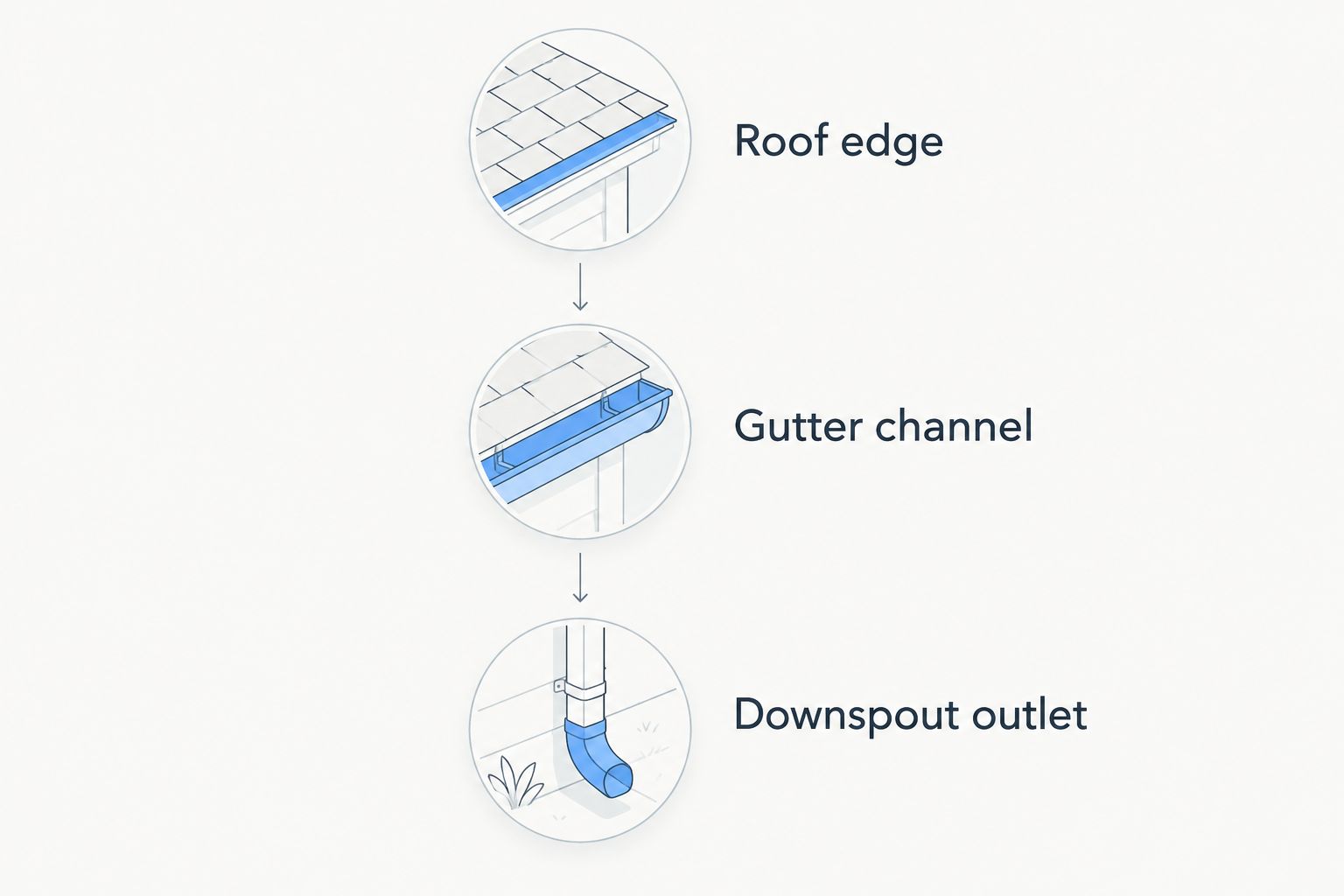
Take 2 photos per problem area: a wider view showing its location and a closer view showing the visible symptom. Photograph safely from the ground. These views help you explain an overflow or debris pattern without relying on a vague description.
Ask these questions before installation
Use 5 questions to compare 2026 proposals on the same basis:
- What debris is this guard designed to exclude?
- How will it handle the roof valleys on this house?
- What gutter repairs are needed before installation?
- How is a section removed for cleaning or repair?
- What inspection and cleaning tasks remain afterward?
Get answers tied to your roof and gutters. General claims about a guard category do not replace an installation plan. Atxseamlessgutters provides gutter guard installation alongside gutter repair, cleaning, and maintenance, so those tasks belong in the same project discussion.
Discuss your gutter guard project
Ask about guard installation, existing gutter repairs, and ongoing cleaning needs.
How this ranking works
This 2026 ranking prioritizes debris fit, water entry, gutter condition, roof attachment, and cleaning access. Fine mesh leads because small openings address a broader mix of debris; removable screens earn their place through service access. Reverse curve and brushes require more specific reasons to choose them.
The ranking compares design principles, not measured performance from product testing. A well-matched installation matters more than the category label. Your final choice should follow inspection of the existing drainage system.
Which gutter guards should you choose?
Start with fine mesh if you are undecided. Then compare its cleaning requirements and attachment method with a perforated cover or removable screen using debris from your own gutters.
Choose perforated metal for larger leaves when its openings fit the problem. Choose removable screens when easy interior access is your priority. Hold reverse curve until runoff handling is explained, and skip brushes if you want less direct contact with trapped debris.
FAQ
What are the best gutter guards Austin homeowners should consider?
Fine-mesh gutter guards are the default shortlist choice for Austin homes with mixed leaves and smaller debris. Perforated metal and removable screens serve different needs, so compare the proposed design against your roof runoff and cleaning requirements.
Are fine-mesh gutter guards better than perforated guards?
Fine mesh is better suited to excluding smaller debris, while perforated guards suit material larger than their punched openings. Neither design eliminates surface cleaning or the need to inspect gutter outlets.
Do gutter guards stop all gutter cleaning?
No, gutter guards do not eliminate gutter cleaning. Debris can collect on the cover, and the gutter interior and downspouts still need inspection.
Should I repair my gutters before installing guards?
Yes, repair drainage and attachment problems before installing gutter guards. A cover does not correct sagging, leaking connections, or an obstructed outlet.
Can gutter guards handle water from roof valleys?
Roof valleys require an installation plan that addresses concentrated runoff. Ask how the proposed guard admits water at those locations rather than accepting a general claim about the guard type.
Are brush gutter guards a good low-maintenance choice?
Brush inserts are not the right choice when your main goal is reducing hands-on debris removal. Material can become caught in the bristles, requiring removal and cleaning.
Does Atxseamlessgutters install gutter guards in Austin?
Atxseamlessgutters installs and maintains gutter guards for homeowners in Austin and across Central Texas. Its services also include seamless gutter installation, repairs, and cleaning.
One last thing
For your 2026 decision, separate water flowing over a guard from water leaking behind a gutter. They are different symptoms and need different remedies. Record where the water starts before choosing a new cover.
Ask Atxseamlessgutters to discuss the drainage problem and the guard together. The useful outcome is a clear water path with manageable maintenance—not simply a covered gutter.