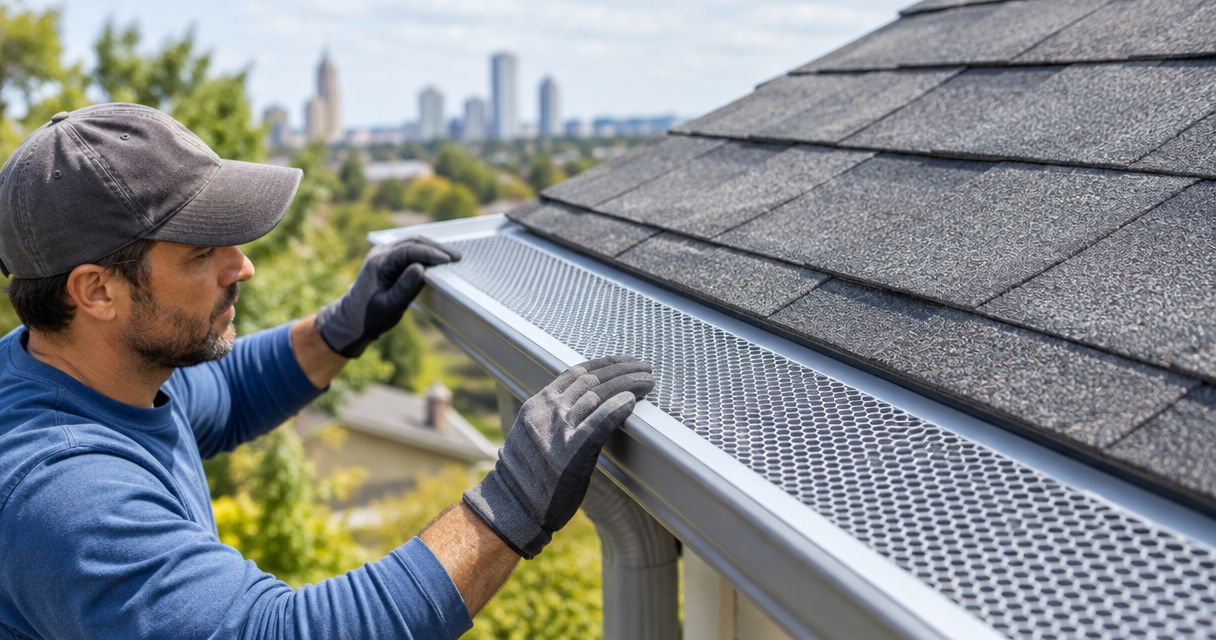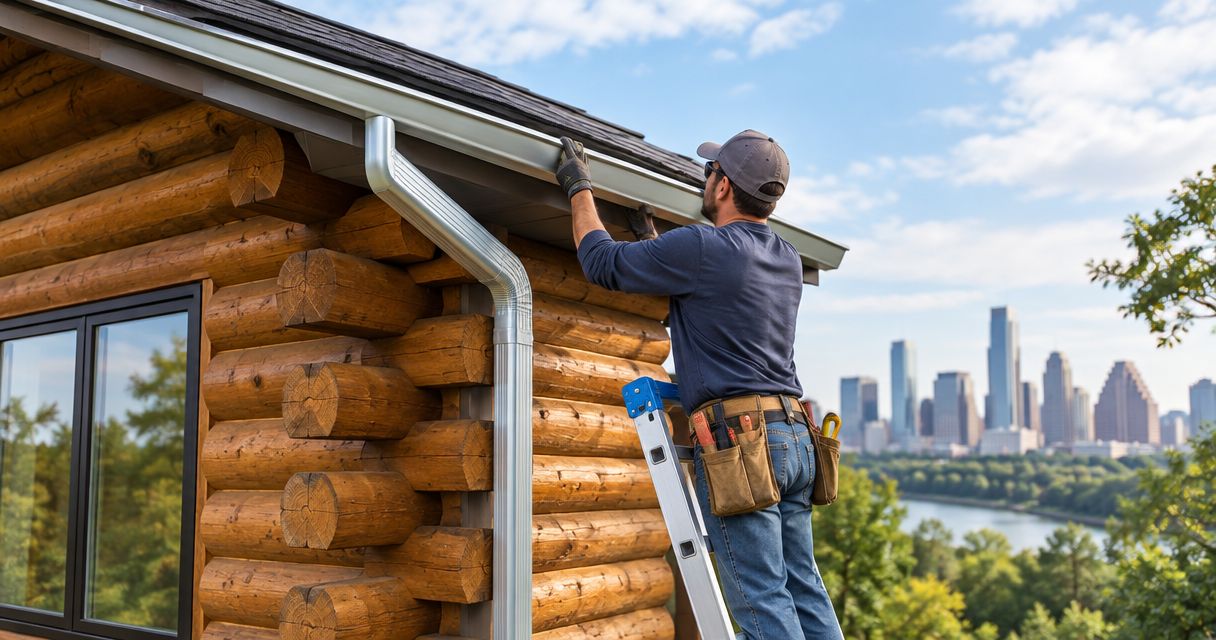
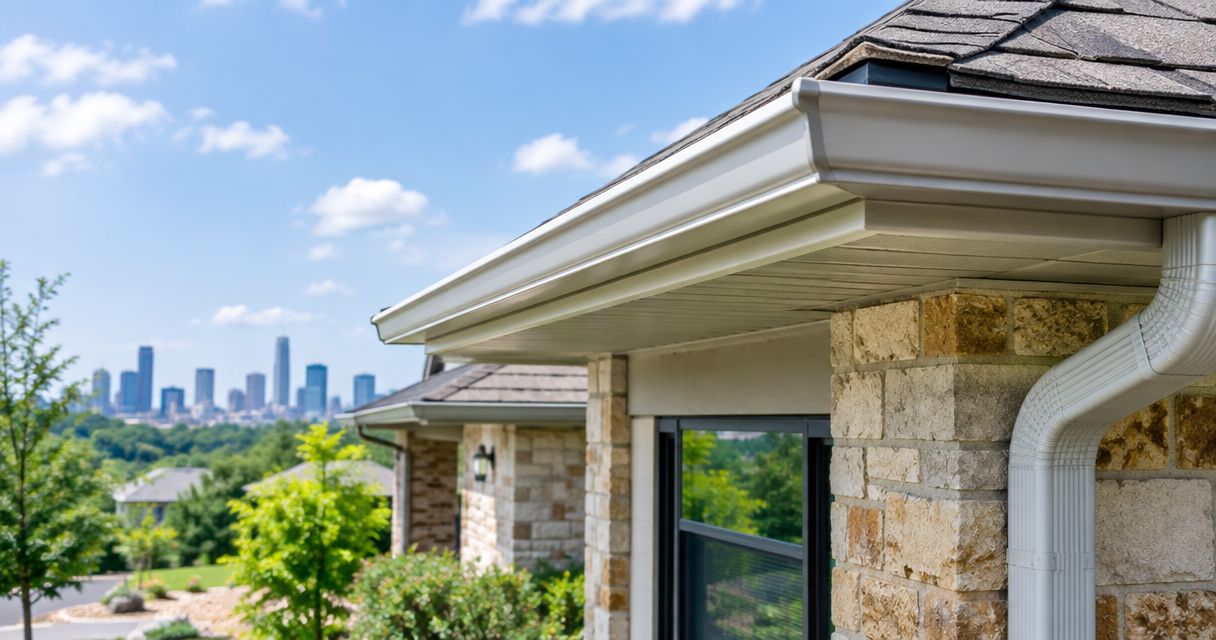
Best overall: aluminum. Best for impact resistance: steel. Best for architectural character: copper. Best for a natural patina without copper’s color: zinc. This 2026 guide compares the best seamless gutter materials Texas homeowners should consider, with aluminum as the default for most homes and roof drainage design as the deciding factor.
- For best seamless gutter materials Texas comparisons, aluminum is the default for most homes; drainage design still matters.
- Steel suits impact-focused projects, but protective coatings and exposed edges need attention.
- Copper and zinc suit architectural projects; confirm fabrication methods before calling either system seamless.
- Atxseamlessgutters serves Central Texas homeowners who need seamless gutter installation, repairs, cleaning and maintenance.
Why this matters
Texas weather puts different demands on a gutter system: intense rain tests drainage, hail tests resistance to dents, and heat makes expansion details important. Changing the metal does not fix an undersized outlet, poor slope or a downspout that discharges against the house.
Choose the material and drainage layout together. A gutter needs to collect roof runoff, carry it to an outlet and discharge it away from vulnerable areas. Failure at any step leaves you with a drainage problem regardless of the material.
Atxseamlessgutters installs, repairs, cleans and maintains seamless gutters and gutter guards for Central Texas homeowners. Use the comparison below to decide what to ask about before approving an installation.
What makes the best seamless gutter material?
These criteria set the order of the recommendations, rather than appearance alone:
- Corrosion behavior: Understand whether the metal rusts, develops a protective surface or depends on a coating.
- Impact resistance: Compare the material and thickness together; no gutter metal makes a system hail-proof.
- Continuous-run fabrication: Confirm that the proposed material can be formed into the gutter runs your roof needs.
- Movement and attachment: Heat-driven expansion requires suitable fastening and connection details.
- Maintenance access: Debris removal, outlet inspection and repairs remain necessary with every material.
- Architectural fit: Choose a finish whose aging behavior suits the house, not just the installation-day appearance.
For your 2026 project, ask the installer to identify the actual metal, thickness and finish in writing. A description such as heavy-duty gutters does not tell you enough to compare proposals.
Seamless gutter materials at a glance
| Material | Best for | Standout feature | Key limitation |
|---|---|---|---|
| Aluminum | Most residential seamless installations | Lightweight, rust-free metal suited to continuous forming | Dents more readily than comparable steel |
| Steel | Projects prioritizing impact resistance | Greater rigidity than aluminum at comparable dimensions | Exposed steel can rust when protection fails |
| Copper | Homes where visible metal is an architectural feature | Develops a distinctive patina | Requires compatible metals and skilled joint detailing |
| Zinc | Projects seeking a muted, weathered metal finish | Develops a protective patina | Fabrication and installation details need specialist attention |
This ranking compares material properties and installation requirements. It does not treat copper or zinc as automatically interchangeable with a roll-formed aluminum system.
1. Aluminum: best seamless gutters for most Texas homes
Aluminum is the default choice because it combines low weight, resistance to red rust and suitability for continuous gutter forming. Aluminum itself does not rust like steel, although finishes, fasteners and connections still need inspection.
For a typical residential project, focus on the specified thickness and installation details rather than choosing aluminum by name alone. Common residential aluminum gutter specifications include 0.027-inch and 0.032-inch material; those figures describe metal thickness, not gutter capacity.
Aluminum pros:
- Low weight reduces the material load on the gutter supports.
- The base metal does not develop red rust.
- Continuous forming reduces joints along straight runs.
- Painted finishes offer an alternative to exposed, weathering metal.
Aluminum cons:
- Hail, ladders and falling branches can dent it.
- Poorly supported runs still sag or pull away.
- Damaged finishes and incompatible metal contact deserve attention even though aluminum does not rust like steel.
Best for: Homeowners who want a conventional seamless installation without making exposed metal a major architectural feature.
Ask the installer which thickness fits your roof layout and how the supports attach to sound fascia. A thicker gutter does not compensate for rotten wood or weak fastening.
Verdict: Buy aluminum as the default for a 2026 residential project; approve the drainage and attachment plan with it.
2. Steel: best seamless gutters for impact-focused projects
Steel offers greater rigidity than aluminum at comparable dimensions. That makes it a useful material to discuss when resistance to physical damage is a priority, but steel is not a guarantee against hail damage.
Galvanized steel uses a zinc coating to protect the underlying metal. Cut edges, scratches and damaged coatings require attention because exposed steel can rust; painted steel also depends on the condition of its protective finish.
Steel pros:
- Greater rigidity helps resist deformation compared with similar aluminum profiles.
- Protective coatings separate the steel from moisture.
- Continuous forming is possible with suitable steel gutter systems.
- A painted finish avoids the changing appearance of exposed copper.
Steel cons:
- Exposed base metal can rust after coating damage.
- Greater weight makes attachment details important.
- Coating maintenance remains part of ownership.
Best for: Homeowners who prioritize rigidity and accept ongoing inspection of coatings, edges and connections.
Ask exactly which steel product the proposal specifies. Galvanized steel and stainless steel are not interchangeable descriptions, and their corrosion behavior differs. Do not accept a generic metal gutter specification as proof of corrosion protection.
Verdict: Buy steel when impact resistance drives the decision; skip it if you will ignore damaged coatings.
3. Copper: best seamless gutters for architectural character
Copper gutters make the drainage system a visible part of the house. Exposed copper changes appearance as it weathers, so the initial metallic color is not the permanent finish.
Copper does not develop red rust, but that does not eliminate installation risks. Joints, thermal movement and contact with other metals need appropriate detailing; the contractor must also explain which runs are continuous and where connections remain.
Copper pros:
- The metal develops a distinctive weathered surface.
- It suits projects where gutters are intended to remain visually prominent.
- It avoids the red-rust behavior of exposed ordinary steel.
- Custom fabrication can address architectural gutter details.
Copper cons:
- The appearance changes over time rather than staying bright.
- Mixed-metal connections require careful compatibility checks.
- Fabrication and joint work need relevant installer experience.
Best for: Homeowners restoring or designing a house where visible copper belongs in the architectural plan.
For a 2026 copper proposal, ask about the gutter profile, joint method and materials used for hangers and fasteners. Confirm that the installer expects weathering rather than promising a permanently polished appearance.
Copper is not the default simply because it is a distinctive material. Choose it when you want the finish and accept the detailing it requires.
Verdict: Buy copper for a deliberate architectural choice; skip it if you want an unchanging metal color.
4. Zinc: best gutters for a muted natural patina
Zinc develops a protective patina and offers a different appearance from copper. It belongs in the discussion when the roofline calls for exposed, weathering metal rather than a painted finish.
A zinc gutter proposal needs more scrutiny than a material label. Ask how the gutters will be fabricated, how joints will be made and whether the proposed system actually provides continuous runs; do not assume a custom zinc system matches conventional seamless aluminum construction.
Zinc pros:
- The exposed surface develops a protective patina.
- Its weathered appearance differs from copper’s changing tones.
- It avoids the need to select a painted gutter color when used unpainted.
- It can suit architecture that calls for visible metal detailing.
Zinc cons:
- Fabrication and connection methods require specialist knowledge.
- Contact with incompatible materials can cause problems.
- A zinc specification alone does not establish that the system is seamless.
Best for: Homeowners whose architectural plans specifically call for a muted, naturally weathering metal.
Request details on thermal movement, compatible components and the proposed joint locations. The installation approach matters as much as the surface appearance.
Verdict: Wait on zinc until the installer provides a clear fabrication and connection plan.
Size and drainage matter more than the material ranking
Common residential K-style profiles include 5-inch and 6-inch gutters. These are nominal profile sizes, not promises about how much water a particular roof can drain.
A larger gutter does not solve every overflow problem. Roof area, slope, valleys, rainfall intensity, outlets and downspout layout all affect performance, and a concentrated stream from a roof valley needs particular attention.
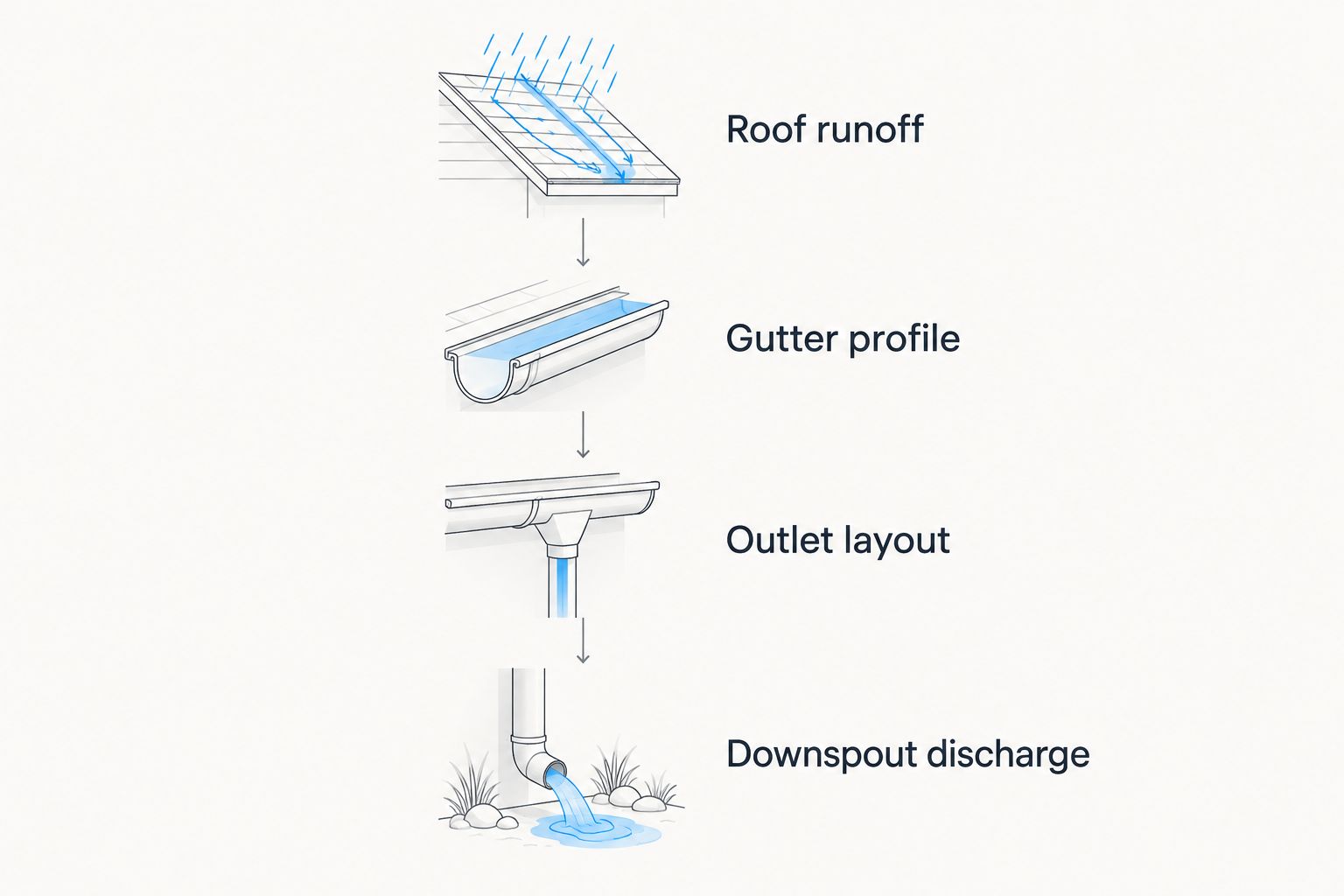
Before selecting your 2026 system, review these parts together:
- Roof runoff: Identify where roof planes and valleys concentrate water.
- Gutter profile: Match the collection channel to the roof’s drainage demands.
- Outlet layout: Make sure collected water can leave the gutter.
- Downspout discharge: Direct the water away from vulnerable areas around the house.
Inspect overflow before blaming the metal. Water spilling over a gutter can result from blocked outlets, poor slope or concentrated runoff; switching from aluminum to copper does not address those causes.
What to ask before approving an installation
A useful proposal describes the system, not just the gutter material. You need enough detail to understand what will be attached to your house and where the water will go.
Ask these questions before signing:
- What metal, thickness and finish does the proposal specify?
- Which runs will be continuous, and where will joints remain?
- How will the hangers attach, and is the fascia sound?
- Where do roof valleys discharge into the gutters?
- How are outlets and downspouts arranged?
- Which maintenance tasks remain if gutter guards are included?
Atxseamlessgutters is a gutter-service option for Central Texas homeowners comparing seamless gutter materials. Its stated services include installation, repairs, cleaning and maintenance; request project-specific details rather than assuming every material in this guide is part of a particular proposal.
Discuss your gutter project
Review seamless gutter installation, repairs, cleaning or maintenance for your Central Texas home.
How we ranked these materials
The order prioritizes corrosion behavior, practical continuous-run construction, physical durability and maintenance demands. Architectural appearance distinguishes copper and zinc, but it does not make either the default for every house.
Aluminum leads because its properties fit conventional residential seamless construction. Steel takes the impact-focused slot; copper and zinc serve different architectural preferences. No ranking substitutes for a roof-specific drainage plan.
Which seamless gutter material should you choose?
Choose aluminum unless your project has a clear reason to specify another metal. Move to steel when rigidity matters more than avoiding coating upkeep, copper when its changing appearance belongs on the house, or zinc when the architectural specification and fabrication plan justify it.
For your 2026 decision, compare installation details before comparing finishes. Ask Atxseamlessgutters to explain the proposed seamless gutter material alongside the supports, outlets and downspout discharge points.
FAQ
What's the best seamless gutter material for Texas weather?
Aluminum is the default choice for most residential seamless gutter projects in Texas. It is lightweight, does not develop red rust and suits continuous forming, but sizing and installation still determine drainage performance.
Are steel gutters better than aluminum gutters for hail?
Steel offers greater rigidity than aluminum at comparable dimensions, but neither material is hail-proof. Compare thickness, profile and support details, and include coating inspection in a steel system's maintenance plan.
Do seamless gutters have any joints?
Seamless gutters reduce joints along straight runs rather than eliminating every connection. Corners, outlets, end caps and transitions still require proper detailing and inspection.
Should I choose 5-inch or 6-inch gutters?
Choose the gutter profile from the roof's drainage requirements, not material preference alone. Roof area, valleys, rainfall intensity, outlets and downspouts all affect the appropriate design.
Are copper gutters better than aluminum for every Texas house?
Copper is not the default for every Texas house; it is an architectural choice with specific detailing requirements. Aluminum remains the practical default when you do not need copper's exposed, changing appearance.
Can I get zinc gutters made as a seamless system?
Confirm the proposed zinc fabrication method before describing the installation as seamless. The material name alone does not establish continuous runs or identify where joints will remain.
Do gutter guards eliminate gutter cleaning?
Gutter guards do not eliminate inspection and maintenance. Debris can accumulate on the guard surface, and outlets and downspouts still need to remain clear.
One last thing
Watch the discharge point, not just the gutter edge. A system can collect roof runoff successfully and still leave you with a problem if the downspout sends it into a vulnerable area beside the house.
Before approving the project, walk the proposed discharge route with the installer. That conversation belongs in the material decision, not after installation.