Best overall: aluminum downspouts. Best for buried conveyance: solid-wall PVC pipe. Best for temporary surface diversion: corrugated polyethylene extensions. The best downspout materials for clay soil drainage in Austin depend on where the material sits: use metal at the roof edge and a suitable drainage pipe beyond the downspout, with a defined outlet for your 2026 drainage plan.
- For best downspout materials for clay soil drainage Austin, choose aluminum above ground and solid-wall PVC for buried conveyance.
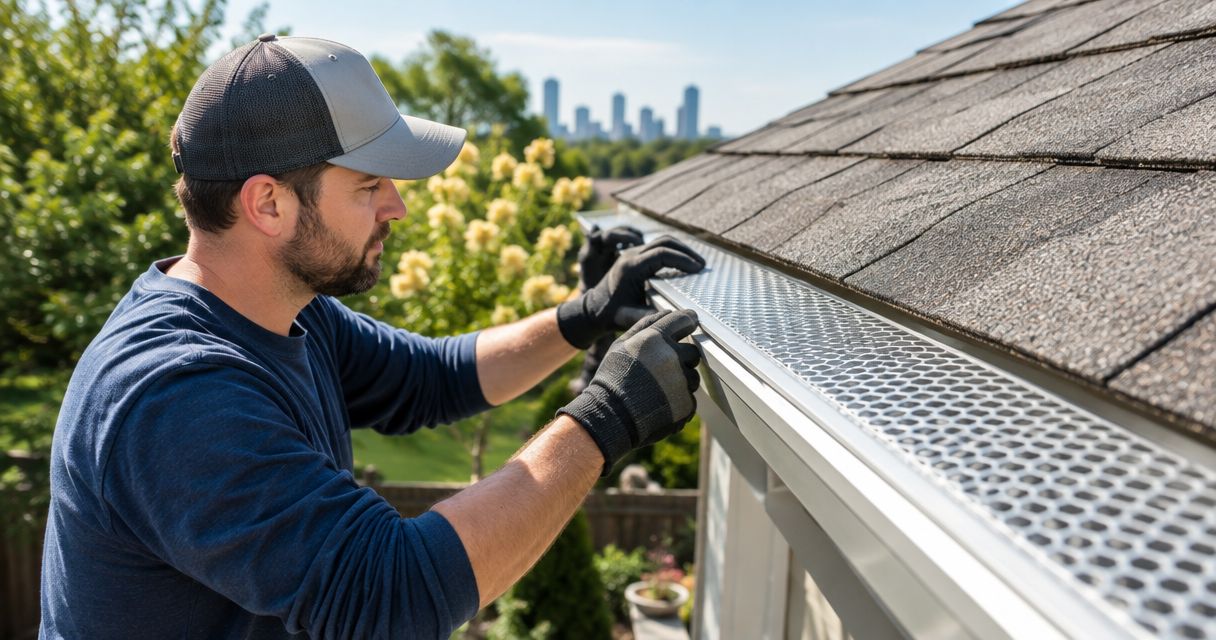
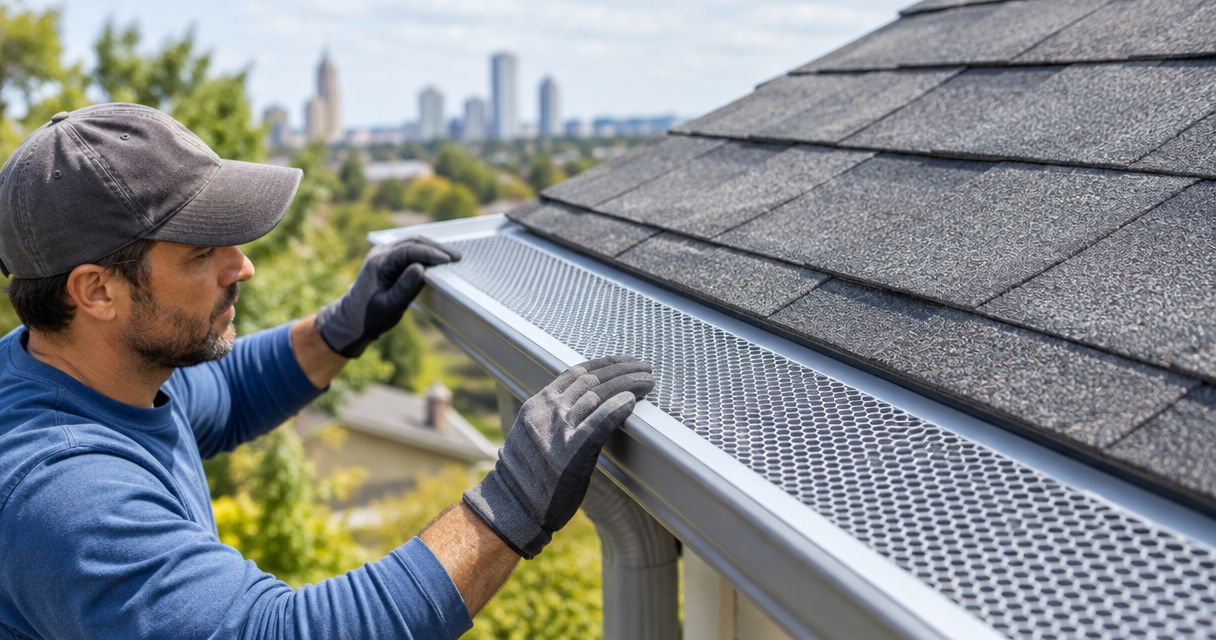
- ATX Gutters installs, repairs, cleans, and maintains seamless gutters and gutter guards for Central Texas homeowners.
- Clay soil drainage needs a defined discharge route; changing downspout material alone does not create one.
- Use corrugated polyethylene for temporary surface diversion, not as the default buried drainage choice.
Why this matters
A downspout collects concentrated roof runoff. Clay-rich soil can absorb water slowly, and expansive clay changes volume as its moisture content changes. A discharge point beside the house therefore deserves attention even when the downspout itself has no leaks.
Material selection comes after deciding where the water will go. ATX Gutters is a locally owned Austin contractor serving homeowners across Central Texas with gutter installation, repairs, cleaning, maintenance, and gutter guards.
For scale, 1 inch of rainfall over 1,000 square feet of horizontal roof catchment represents approximately 623 US gallons before losses. That is a rainfall-volume calculation, not a downspout capacity rating. Your 2026 plan needs to account for the collection area, rainfall intensity, outlet route, and existing drainage—not just the material attached to the wall.
What makes the best downspout material?
Judge the complete route from gutter outlet to discharge point. These criteria separate an appropriate material from an attractive but misplaced one:
- Exposure: Above-ground components face sunlight and accidental impact; buried pipe faces soil loads and ground movement.
- Interior shape: Smooth interiors provide fewer places for roof debris to catch than corrugated interiors.
- Joint design: Connections need to remain secure without creating leaks beside the house or obstructions inside the pipe.
- Service access: You need a practical way to inspect and clear the route, especially at bends and transitions.
- Outlet performance: The discharge point must remain open and direct water away from vulnerable areas without creating a problem elsewhere.
No material wins every criterion. Aluminum suits a vertical roof-to-ground run, while rigid PVC suits a properly designed buried conveyance route. Treating those components as interchangeable leads to the wrong purchase.
Downspout materials at a glance
This 2026 comparison separates permanent roof drainage from buried conveyance and temporary extensions. The order reflects those use cases, not a claim that every home needs every material.
| Material | Best for | Standout feature | Key limitation |
|---|---|---|---|
| Aluminum | Standard above-ground downspouts | Lightweight metal suited to gutter connections | Dents under impact; not a substitute for buried drainage pipe |
| Solid-wall PVC | Permanent buried conveyance | Smooth interior and purpose-made drainage fittings | Requires supported installation, suitable slope, and accessible maintenance points |
| Corrugated polyethylene | Temporary surface diversion | Flexible routing without rigid elbows | Corrugations catch debris; unsupported runs sag |
| Vinyl | Sheltered, accessible above-ground runs | Does not rust and is easy to handle | Expansion, joints, and impact damage need attention |
| Copper | Matching existing copper gutters | Metal continuity with a copper gutter system | Dissimilar-metal connections require care; does not improve soil drainage |
1. Aluminum: best downspout material for standard exterior runs
Aluminum is the default choice for carrying water from a gutter down an exterior wall. It is lightweight, does not develop iron rust, and works with formed elbows and straps. Its job ends at the discharge connection; it does not solve a poorly located outlet.
Aluminum pros:
- Suits conventional exterior downspout layouts.
- Places relatively little weight on wall attachments.
- Allows accessible inspection of elbows and connections.
- Fits naturally with an aluminum gutter system.
Aluminum cons:
- Ladders, equipment, and other impacts can dent or crush it.
- Loose straps and poorly assembled joints compromise the installation.
- Thin formed downspout sections are not the default choice for burial.
Choose the route before choosing the finish. Keep the lower elbow accessible, and avoid a connection that allows backed-up underground drainage to escape unnoticed beside the foundation.
Best for: Homeowners replacing ordinary exterior downspouts while keeping a separate plan for ground-level discharge.
Verdict: Buy aluminum for standard above-ground drainage; pair it with an appropriate outlet or conveyance system.
2. Solid-wall PVC: best material for buried downspout conveyance
Solid-wall PVC drainage pipe carries collected roof runoff through a defined underground route. Its smooth interior offers fewer debris-catching surfaces than corrugated pipe. It is a conveyance component, not a vertical gutter downspout and not a guarantee that water will infiltrate clay soil.
Solid-wall PVC pros:
- Provides a smooth internal flow path.
- Uses fittings designed for deliberate connections and changes of direction.
- Supports the inclusion of cleanouts and accessible maintenance points.
- Keeps collected water in a defined route when correctly assembled.
Solid-wall PVC cons:
- Rigid pipe needs proper bedding and support.
- Settling or soil movement can stress poorly installed joints.
- A blocked or unsuitable outlet defeats the entire run.
Do not confuse solid conveyance pipe with perforated drainage pipe. A perforated system exchanges water with surrounding soil; a solid system transports water to an outlet. Those are different jobs, and the right choice follows the site design.
Nominal 3-inch and 4-inch drainage components are common examples, not universal sizing recommendations. Diameter alone does not establish capacity: roof catchment, rainfall intensity, slope, fittings, and outlet conditions also matter.
Best for: Homeowners who need a permanent underground connection to a suitable discharge point.
Verdict: Buy solid-wall PVC for a designed buried route; skip burial until the outlet and maintenance access are settled.
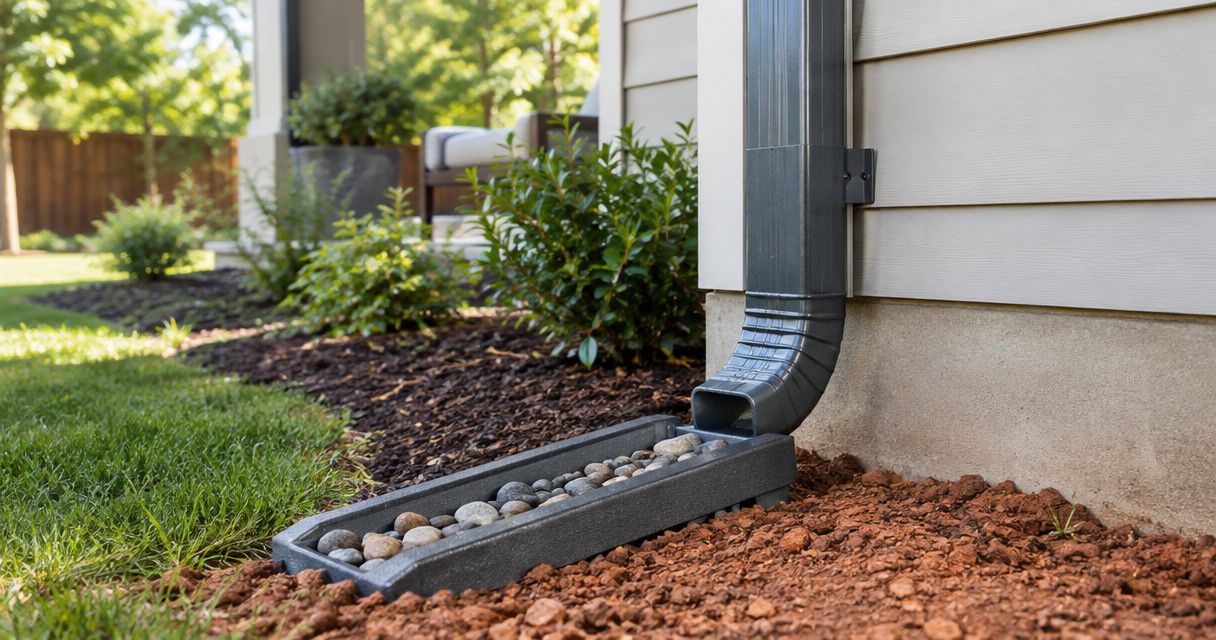
3. Corrugated polyethylene: best for temporary surface diversion
Corrugated polyethylene extensions bend around obstacles and move a downspout discharge point without a rigid assembly. That flexibility makes them useful for temporary above-ground routing. It also makes unsupported sections vulnerable to sagging and low spots.
Corrugated polyethylene pros:
- Bends around existing landscape features.
- Allows temporary routing without a fixed elbow layout.
- Remains visible and removable when used above ground.
Corrugated polyethylene cons:
- Interior corrugations provide places for debris to collect.
- Flexible runs sag when they lack continuous support.
- Exposed extensions interfere with mowing and pedestrian routes.
Use a surface extension to direct runoff along an intentional route, not to hide the discharge beneath mulch. Check its position after yard work and after rainfall. A flexible extension that has shifted uphill or kinked no longer serves its intended purpose.
For permanent burial, flexibility is not a substitute for a specified pipe, supported trench, and serviceable design.
Best for: Homeowners needing an accessible temporary extension while arranging a permanent drainage solution.
Verdict: Buy corrugated polyethylene for temporary surface diversion; skip it as an automatic permanent underground choice.
4. Vinyl: best for sheltered, easy-access above-ground runs
Vinyl downspouts provide a nonmetal alternative for carrying water down an exterior wall. They do not rust, and their low weight makes individual sections easy to handle. Their suitability depends on exposure, support, and the condition of their joints.
Vinyl pros:
- Does not develop metal corrosion.
- Is lightweight to handle during installation or replacement.
- Keeps connections accessible in an above-ground assembly.
Vinyl cons:
- Temperature changes cause expansion and contraction.
- Weathering and impact can damage sections.
- Multiple joints create additional locations to inspect for separation or leakage.
Choose vinyl for a location where you can inspect it without difficult access. Follow the component manufacturer's support and assembly instructions rather than treating vinyl as a direct substitute for every metal configuration.
Vinyl changes the vertical pipe material, not the drainage behavior of the soil. A sound vinyl downspout still needs a stable transition and a suitable destination for runoff.
Best for: Sheltered exterior runs where inspection and replacement remain straightforward.
Verdict: Hold vinyl unless exposure, support, and access suit the installation; aluminum remains the default exterior recommendation.
5. Copper: best for matching an existing copper gutter system
Copper downspouts belong in the decision when the existing gutter system is copper or material continuity is a priority. Copper develops a patina through weather exposure. Neither its appearance nor its metal composition changes how clay soil receives discharged water.
Copper pros:
- Matches an existing copper gutter system.
- Provides a metal downspout without iron rust.
- Develops a weathered surface rather than relying on a painted finish.
Copper cons:
- Connections involving dissimilar metals require attention to galvanic corrosion.
- Compatible joints and installation details need deliberate selection.
- Copper does not correct an undersized route or poorly placed outlet.
Do not select copper as a soil-drainage upgrade. Select it because the gutter system and installation details call for copper, then assess the ground-level conveyance separately.
Best for: Homeowners maintaining an existing copper gutter system or specifying matching exterior metalwork.
Verdict: Buy copper for material continuity; skip it when the sole objective is improving clay soil drainage.
Plan the complete drainage route
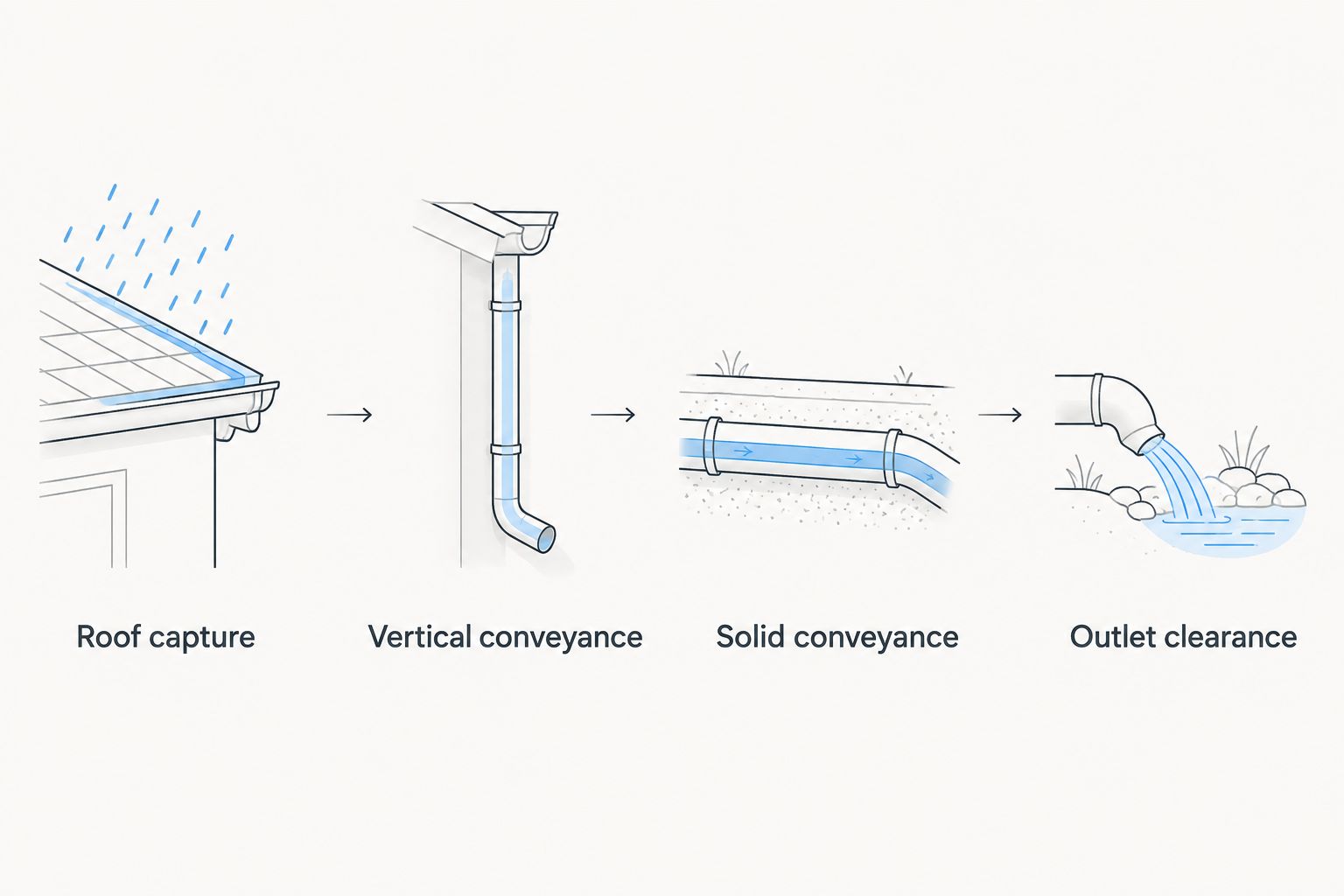
A useful 2026 drainage plan divides the system into distinct jobs. Walk the proposed route before committing to the downspout or digging a trench.
- Roof capture: Identify the gutter outlet, contributing roof area, and debris entry points.
- Vertical conveyance: Check the downspout, straps, elbows, and lower connection.
- Solid conveyance: Determine how collected water reaches the intended discharge point without escaping beside the house.
- Outlet clearance: Confirm that the outlet remains open and does not discharge onto a neighboring property or create erosion.
A new downspout can fix a damaged vertical run while leaving the ground-level problem untouched. Review each part independently.
Observe runoff from a safe ground-level position during rainfall. Record overflow, leaking connections, ponding, and the final discharge location. Those observations distinguish a gutter blockage from a conveyance problem or an unsuitable outlet.
Before excavation, arrange utility locating through 811 and confirm applicable local requirements. Avoid improvised discharge changes that send concentrated runoff across a walkway or onto adjoining land.
How the materials are ranked
The 2026 ranking prioritizes suitability for the job, interior shape, joint design, maintenance access, and outlet performance. Aluminum leads for ordinary exterior downspouts; solid-wall PVC leads for a designed buried route. Flexible extensions, vinyl, and copper occupy narrower use cases.
The ranking does not assign unsupported lifespans or promise performance from material alone. Installation and drainage layout remain part of the decision.
Which downspout material should you choose?
Choose aluminum above ground and solid-wall PVC for buried conveyance when your site requires an underground route. Keep the connection serviceable and identify the outlet before installation. Use a temporary flexible extension only where you can inspect it and keep it out of pedestrian routes.
ATX Gutters is a fit for Austin homeowners seeking gutter installation, repairs, cleaning, or maintenance as part of a roof-runoff plan. Separate the gutter work from any underground drainage design so the required work is clear.
Plan your gutter work
Review gutter installation, repair, cleaning, and maintenance for your Austin home.
FAQ
What's the best downspout material for Austin clay soil?
Aluminum is the default choice for an above-ground downspout, while solid-wall PVC suits a properly designed buried conveyance route. The discharge location matters more than changing the vertical downspout material alone.
Is PVC better than aluminum for downspout drainage?
PVC is better suited to buried conveyance, while aluminum is better suited to an ordinary exterior downspout. They serve different parts of the drainage route rather than competing for every application.
Should I use solid or perforated pipe for roof runoff?
Use solid pipe when the job is transporting roof runoff to a defined outlet. Perforated pipe exchanges water with surrounding soil and belongs in a drainage design that specifically calls for that function.
Can I bury a corrugated downspout extension?
Do not treat an above-ground corrugated extension as a permanent buried system by default. Buried installations need a suitable pipe specification, support, connections, maintenance access, and an appropriate outlet.
Will a larger downspout fix standing water beside my house?
A larger downspout does not fix an unsuitable discharge point. Check for blockages, outlet restrictions, surface grading problems, and leaks before changing component size.
How much does a downspout drainage upgrade cost?
Request a site-specific quote based on the vertical run, connections, discharge route, and any excavation. ATX Gutters installs and services gutters for Central Texas homeowners; define any underground drainage work separately.
Do gutter guards mean I can stop checking my downspouts?
No, gutter guards do not eliminate the need to inspect outlets and downspouts. Check for accumulated debris, loose connections, and restricted discharge as part of ongoing maintenance.
One last thing
For your 2026 drainage review, inspect the outlet before buying a replacement downspout. A clear vertical pipe connected to a blocked outlet is still a failed drainage route. Photograph the outlet and any ponding from ground level; that gives your contractor a more useful starting point than a material preference alone.