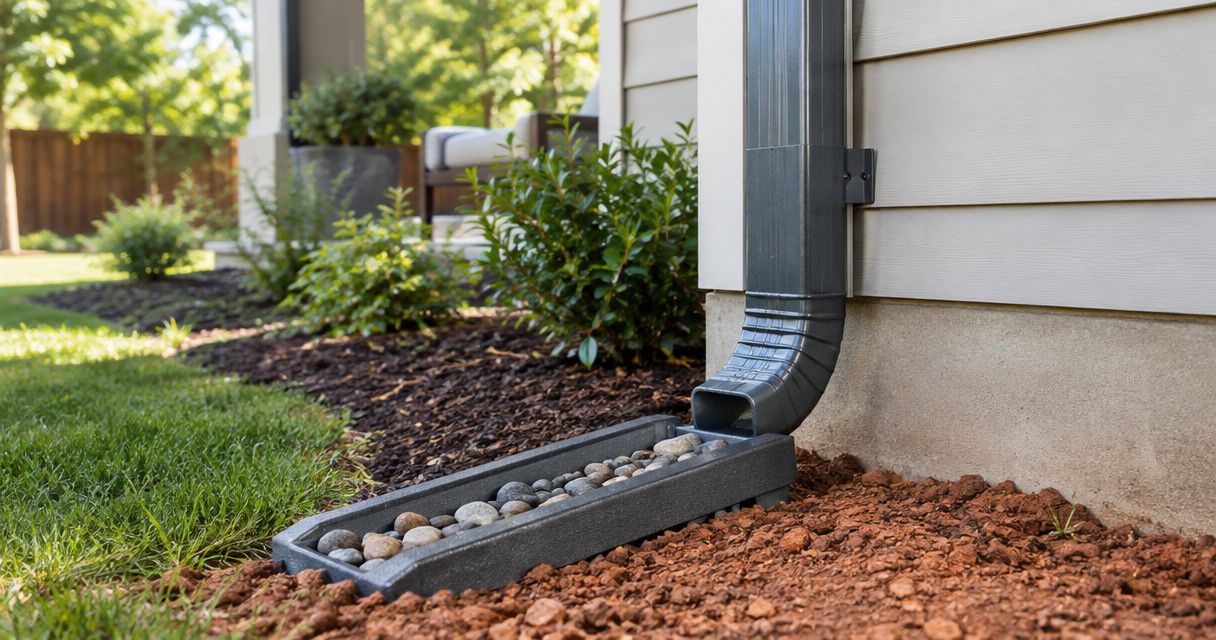

Best overall: micro-mesh gutter guards. Best for broad leaves with easier surface cleanup: perforated metal guards. Best for a simple, removable leaf barrier: coarse screens. For Austin’s oak leaf season in 2026, choose by the debris reaching your roof—not leaves alone—and make cleaning access part of the decision.
- For best gutter guards for oak leaf season Austin, start with micro-mesh where small oak debris accompanies leaves.
- Perforated metal guards suit broad-leaf exposure, but smaller debris can pass through their openings.
- No gutter guard eliminates maintenance; surface buildup and blocked downspouts still need attention.
- Atxseamlessgutters installs gutter guards and maintains gutters for homeowners across Central Texas.
Why this matters
Oak debris creates more than one gutter problem. Whole leaves can bridge an opening, while broken leaf pieces and catkins—the hanging flower clusters—collect differently. A guard that stops large leaves does not necessarily stop smaller material.
Your 2026 choice should account for the gutter beneath the cover, too. A blocked outlet, loose gutter, or poor drainage remains a problem after guards are added. Fix the water path before choosing the cover.
Atxseamlessgutters is a local gutter-service option for Austin homeowners who need guard installation and ongoing gutter maintenance. The contractor installs, repairs, cleans, and maintains seamless gutters and gutter guards across Central Texas.
What makes the best gutter guards for oak leaf season?
Use these criteria before comparing guard designs:
- Debris exclusion: Match opening size to the leaves, fragments, and catkins landing on your roof. Smaller openings exclude more small debris but still need surface cleaning.
- Water entry: Look at where runoff meets the gutter, especially below roof valleys. A clear guard surface matters as much as the material.
- Secure attachment: Check how the guard connects to the gutter and interacts with the roof edge. Installation details differ between systems.
- Cleaning access: You need a practical way to clear the surface and reach the gutter outlet. Removable does not automatically mean easy to remove.
- Gutter condition: Check slope, attachment, joints, and downspouts before covering anything. Guards are debris barriers, not repairs for drainage defects.
For an oak-covered property, small-debris exclusion and service access belong ahead of appearance. You will still see the guard after installation, but you will live with its maintenance requirements longer.
Gutter guards at a glance
This 2026 comparison ranks guard designs, not specific manufacturers. Materials, attachment methods, and opening sizes vary within each category, so inspect the actual system before approving installation.
| Guard type | Best for | Standout feature | Key limitation |
|---|---|---|---|
| Micro-mesh | Mixed oak leaves and small debris | Fine filtering surface | Small debris can collect on top |
| Perforated metal | Predominantly broad-leaf exposure | Rigid cover with defined openings | Small fragments can enter through holes |
| Fine-mesh screen | Homes needing a finer screen with service access | Closer spacing than coarse screens | Mesh and attachment quality vary |
| Coarse screen | A simple, removable leaf barrier | Open screen structure | Catkins and fragments can pass through |
| Brush inserts | Homeowners specifically seeking an in-gutter insert | Bristles occupy the gutter channel | Debris can become trapped within bristles |
1. Micro-mesh: best gutter guards for mixed oak debris
Micro-mesh places a fine filtering surface over the gutter opening. It is the strongest starting point when your debris includes whole leaves, leaf fragments, and catkins rather than leaves alone. The mesh keeps debris above the channel, where it still needs clearing.
That distinction matters during oak leaf season. Keeping debris out of the gutter does not make the debris disappear; accumulated material can interfere with water entering through the screen. Compare the actual mesh, supporting frame, and cleaning method rather than choosing by the micro-mesh label alone.
Micro-mesh pros:
- Addresses smaller debris as well as broad leaves.
- Keeps excluded material above the gutter channel.
- Offers a useful starting point for mixed oak-tree exposure.
Micro-mesh cons:
- Fine material can accumulate across the surface.
- Cleaning needs remain, particularly beneath overhanging branches.
- Performance depends on fit, support, and installation details.
Best for: Austin homes receiving a mixture of oak leaves and smaller tree debris.
Verdict: Buy micro-mesh when small-debris exclusion is your main requirement, with a clear cleaning plan.
2. Perforated metal: best gutter guards for broad-leaf exposure
Perforated metal guards use holes in a formed cover to admit water while keeping larger material above the gutter. They belong on your shortlist when broad leaves are the main issue and you want a rigid surface rather than woven mesh.
The holes define the trade-off. A leaf larger than an opening stays above the cover, but smaller fragments can enter. Check the debris already inside your gutters before treating a perforated cover as a complete answer to oak leaf season.
Perforated metal pros:
- Blocks leaves larger than its openings.
- Provides a formed cover over the gutter channel.
- Makes the opening pattern visible for comparison before installation.
Perforated metal cons:
- Small oak debris can pass through the holes.
- Leaves can collect above the cover and obstruct water entry.
- Outlet access depends on how sections attach and remove.
Best for: Homes where whole leaves dominate and small debris is a secondary concern.
Verdict: Buy perforated metal for broad-leaf control; skip it as your default if catkins dominate the problem.
3. Fine-mesh screens: best gutter guards for accessible servicing
Fine-mesh screens bridge the gap between very fine micro-mesh and coarse leaf screens. Their smaller openings exclude more debris than a coarse screen, but the term does not define a universal opening size or attachment method.
Choose this category only after checking the actual screen. If a section is designed for removal, confirm how it comes off and goes back securely. Service access is useful when you need to inspect outlets or clear debris beneath the guard.
Fine-mesh screen pros:
- Screens out material that passes through larger openings.
- Offers a middle-ground design between coarse screens and micro-mesh.
- Removable designs provide access beneath the screen.
Fine-mesh screen cons:
- The category name alone does not establish filtration performance.
- Small debris can remain caught on the surface.
- Flexible screens need adequate support and secure attachment.
Best for: Homeowners prioritizing a finer screen and a verified way to access the gutter below it.
Verdict: Hold until you inspect the opening size, support, and removal method.
4. Coarse screens: best gutter guards for a basic leaf barrier
Coarse screens cover the gutter with relatively large openings. They are a straightforward option when your main objective is keeping whole leaves out while preserving access through removable sections.
They are not the strongest answer to mixed oak debris. Catkins and small fragments can pass through the openings, leaving material inside the gutter. Think of this category as leaf screening, not fine filtration.
Coarse screen pros:
- Stops leaves larger than the screen openings.
- Uses a simple, visible screening structure.
- Removable sections allow inspection of the channel beneath.
Coarse screen cons:
- Smaller oak debris passes through larger openings.
- Leaves can lodge in or lie across the screen.
- You still need to inspect the gutter interior and outlet.
Best for: Homes needing a basic whole-leaf barrier where small-debris exclusion is not the priority.
Verdict: Buy for a narrow leaf-screening job; skip for heavy catkin exposure.
5. Brush inserts: best gutter guards for an insert-based approach
Brush inserts sit inside the gutter rather than covering it with a sheet or screen. Their bristles occupy the channel and intercept debris while leaving spaces for water to move through.
The drawback is where the debris ends up. Leaves and smaller material can become tangled in the bristles, turning removal and cleaning into part of routine service. For oak debris, that makes brush inserts a less suitable default than a guard that holds material above the gutter.
Brush insert pros:
- Uses an in-channel design instead of a cover panel.
- Provides a removable component for inspection.
- Offers a distinct alternative when you specifically want an insert.
Brush insert cons:
- Catkins and leaf fragments can become trapped in the bristles.
- Cleaning involves the insert as well as the gutter.
- Debris remains within the gutter channel until removed.
Best for: Homeowners deliberately choosing an insert and accepting its cleaning requirements.
Verdict: Skip as the default for oak leaf season; choose only with a workable removal and cleaning plan.
Check the gutter before choosing the guard
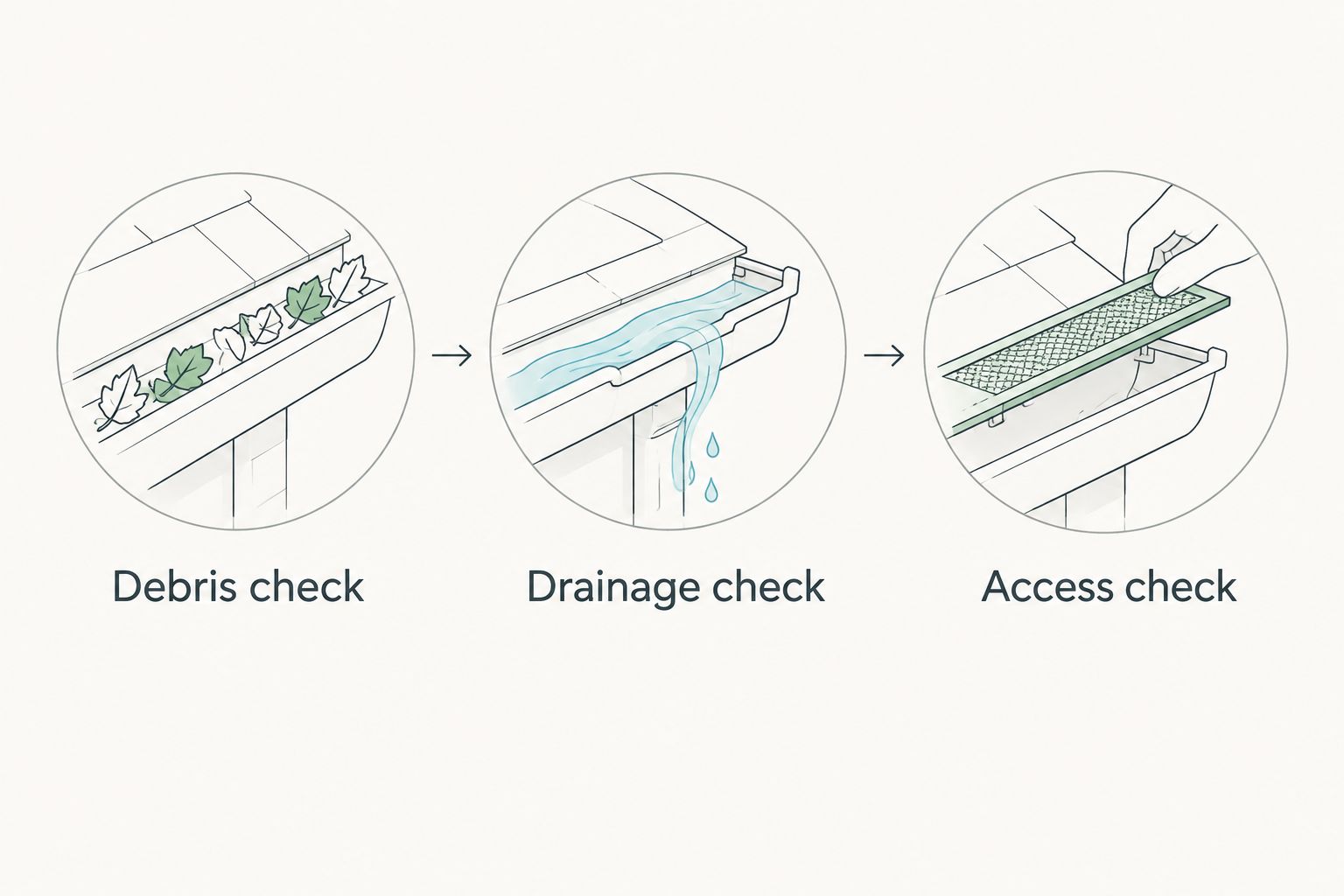
Use these 3 inspection checks when planning a 2026 installation. They separate a debris problem from a drainage problem and give you a clearer installation scope.
Debris check
Look at what has collected in the gutter, not just what is visible on the lawn. Whole leaves point toward a different screening requirement than fine fragments and catkins. Note which roof sections sit beneath branches; exposure does not have to be equal around the house.
Drainage check
Identify backed-up outlets, standing water, leaks, and runoff that overshoots the gutter. Inspect from the ground where possible, and leave roof-level inspection to someone equipped for the work. A cover should not conceal an unresolved drainage defect.
Access check
Ask how the surface will be cleared and how the gutter underneath will be reached. Confirm whether sections remove, what tools servicing requires, and whether cleaning access changes at corners or outlets. A guard without a service plan is an unfinished decision.
When discussing gutter guards with Atxseamlessgutters, ask for the proposed design and cleaning method together. Installation and maintenance are both part of the company’s stated services; the scope for your home should identify what work the existing gutter needs before guards are fitted.
Discuss your gutter guard installation
Ask about guard selection, existing gutter condition, and a practical cleaning plan for your Austin home.
Keep maintenance in the decision
For your 2026 maintenance plan, use visible buildup and drainage behavior as triggers for inspection rather than assuming a guard makes cleaning unnecessary. Check after substantial leaf shedding and when runoff behaves differently during rain.
From the ground, look for debris piled along the guard, water spilling over the front, and discharge failing to reach its intended drainage route. Those signs call for inspection; they do not identify the cause by themselves.
Avoid climbing onto the roof to investigate a blocked surface. Arrange appropriate access for cleaning, and check the outlet as well as the cover. Clearing leaves from the top does not resolve a blockage farther down the water path.
How these gutter guard types rank
This ranking uses debris exclusion, water entry, attachment, cleaning access, and gutter condition—not a claim of field testing. Micro-mesh leads because mixed oak debris calls for fine screening. Perforated metal and coarse screens earn narrower recommendations because their openings admit smaller material.
Fine-mesh screens require closer inspection of the actual design. Brush inserts rank last for this use because debris caught within bristles adds an in-channel cleaning task. The ranking changes when the debris and servicing requirements change.
Which gutter guards should you choose?
Start with micro-mesh for Austin oak leaf season in 2026. Then verify that the proposed system fits your gutters, handles the roof’s runoff entry points, and allows practical maintenance.
Choose perforated metal when broad leaves are the main problem. Choose a coarse screen only when a basic leaf barrier meets your needs. Do not select a guard solely because it sounds maintenance-free; surface buildup, outlets, and downspouts still need attention.
FAQ
What are the best gutter guards for oak leaf season in Austin?
Micro-mesh is the best starting point when Austin oak debris includes leaves, small fragments, and catkins. Check the actual mesh, installation method, and cleaning access before selecting a system.
Is micro-mesh better than perforated metal for oak debris?
Micro-mesh is better suited to excluding small oak debris, while perforated metal suits predominantly broad-leaf exposure. Both need surface cleaning when material collects above the gutter.
Do gutter guards stop oak catkins?
Fine screening is better suited to excluding catkins than large-opening screens. Check the actual openings, and expect to clear catkins that collect on the surface.
Will gutter guards eliminate gutter cleaning?
No, gutter guards do not eliminate gutter cleaning. Surfaces collect debris, and outlets and downspouts still need inspection and clearing when blocked.
Should I repair my gutters before installing guards?
Yes, resolve existing drainage and attachment problems before adding guards. A guard does not repair a loose gutter, correct its slope, or clear a blocked downspout.
Who installs and maintains gutter guards in Austin?
Atxseamlessgutters installs gutter guards and cleans and maintains gutters for homeowners across Central Texas. Ask for a scope that addresses existing gutter condition and future cleaning access.
What should I ask a gutter guard installer in 2026?
Ask which debris the proposed guard excludes and how the system will be cleaned. Also ask how the installer will address roof runoff, gutter condition, and access to outlets.
One last thing
Check below the roof valley before approving the guard. A valley brings runoff from adjoining roof slopes toward a concentrated entry point, so that location deserves attention even when the rest of the gutter looks clear.
Ask the installer to explain how the proposed guard handles that entry point and how debris will be removed there. That specific conversation is more useful than a general promise about keeping leaves out.