Yes, you can install gutter guards on existing gutters when the gutters are sound, securely attached, draining correctly, and compatible with the guard’s mounting method. Guards do not fix leaks, sagging sections, damaged fascia, or blocked downspouts, so those problems need attention before installation.
- You can install gutter guards on existing gutters when the drainage system is sound and the guards fit correctly.
- Repair leaks, loose hangers, and drainage problems before adding gutter protection.
- Gutter guards reduce debris entry; they do not eliminate cleaning or inspections.
- ATX Gutters provides gutter installation, repair, cleaning, maintenance, and gutter guards for Central Texas homeowners.
Can you install gutter guards on existing gutters?
Yes. Gutter replacement is not automatically necessary just because you want gutter guards. The deciding factors are the condition of your existing system and whether the selected guard fits its profile, opening, and roof-edge arrangement.
Start with the gutter itself, not the cover. If you see separated joints, loose attachments, or sections pulling away from the house, review whether old gutters can be repaired instead of replaced before choosing protection.
Use this decision table when planning a retrofit in 2026:
| Existing gutter condition | Best for | Recommended next move | Main limitation |
|---|---|---|---|
| Sound, secure, and draining correctly | Homeowners keeping a working system | Fit compatible guards after cleaning | Guards still need inspection and surface cleaning |
| Repairable leaks or loose attachments | Homeowners preserving usable gutters | Repair first, then assess guard fit | Covering the gutter does not correct the defect |
| Significant deterioration or failed support | Homeowners with damaged gutter sections | Address replacement or structural repairs first | Guards cannot restore gutter strength |
| Overflow with no obvious debris blockage | Homeowners troubleshooting water escape | Check pitch, outlets, downspouts, and runoff | Guards alone do not solve a drainage problem |
Why this matters
A gutter guard sits over a drainage system; it does not replace that system. Water still needs to enter the gutter, move toward an outlet, and leave through a downspout without escaping at the roof edge.
Installing guards over an unresolved problem makes later troubleshooting harder because the covered channel is less accessible. Keep sound gutters, repair defective components, and choose protection only after the drainage path works.
What should you check before adding gutter guards?
You do not need to identify every component yourself. You do need an inspection that separates debris problems from attachment, roof-edge, and drainage problems.
Gutter condition
Look for visible splits, open joints, deformation, and areas where water escapes through the gutter rather than over its edge. A cover does not seal a leaking seam or restore a distorted channel.
Check the gutter’s front edge as well. Some guards attach there, so damage at that point affects more than appearance: it affects whether the guard can sit and fasten as intended.
Hangers and fascia
The gutter needs secure support before anything is attached to it. Loose hangers, pulling fasteners, or deteriorated fascia require attention rather than concealment beneath a new cover.
A guard’s attachment method must work with the existing support arrangement. Ask the installer to explain how the guard will be secured without treating a weak gutter edge as a sound mounting surface.
Drainage and outlets
A gutter that holds standing water after debris removal needs investigation. Pitch, low spots, outlet restrictions, and downspout blockages are separate issues from leaves entering the channel.
Inspect the discharge path, too. Moving water into a downspout is only part of the job; the outlet must also direct water away from places where pooling creates a problem.
Roof edge and guard fit
Gutter width alone does not establish compatibility. The guard must also suit the gutter profile, hanger placement, roof-edge clearance, and its manufacturer’s installation requirements.
For your 2026 project, ask for the proposed attachment method before work begins. If installation involves the roof covering, confirm that the method follows both the guard instructions and the applicable roofing requirements.
How do you prepare existing gutters for guards?
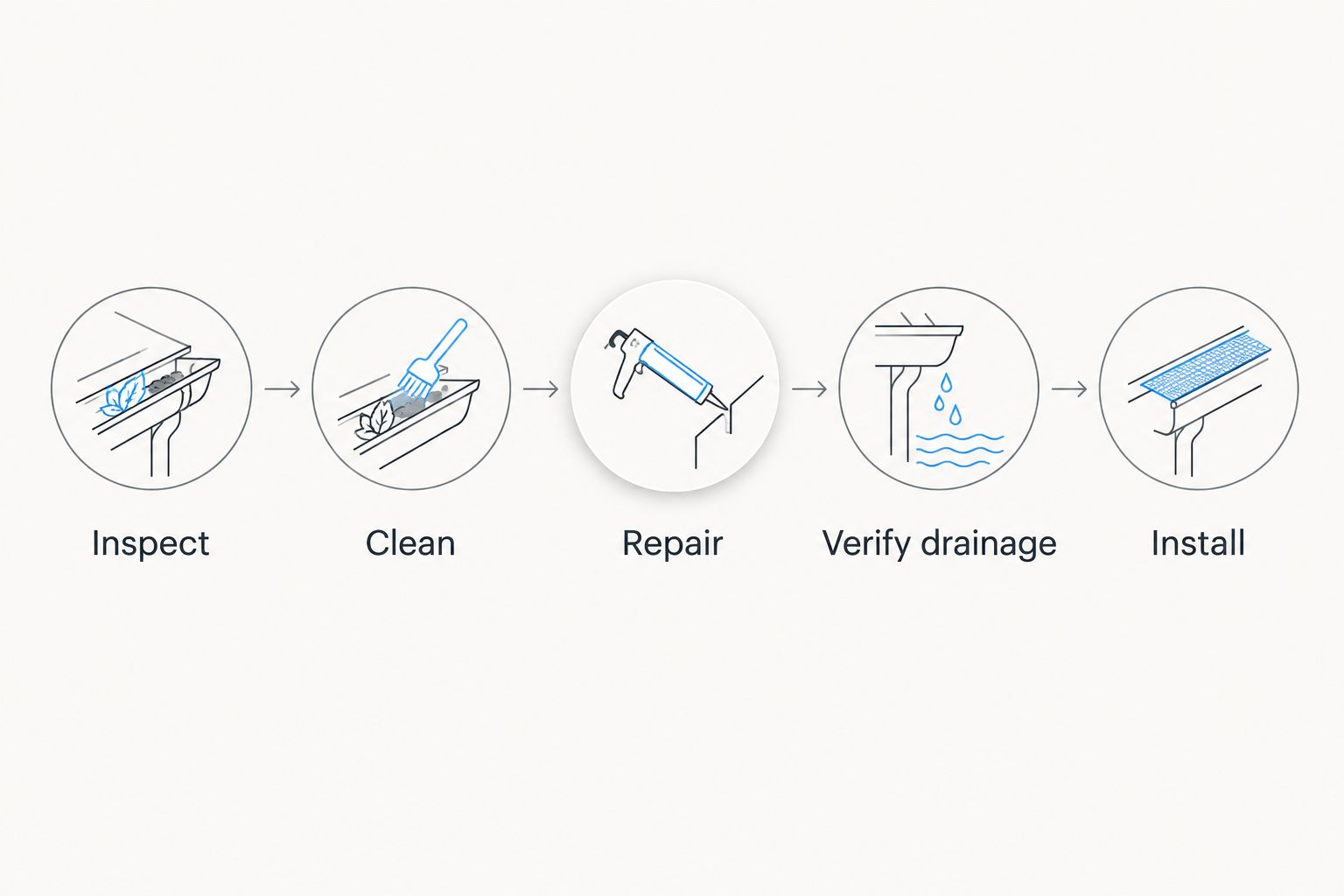
Inspect, clean, repair, verify drainage, and then install. That order prevents a new cover from hiding an old problem.
- Inspect. Examine the gutter runs, joints, supports, outlets, and adjacent fascia. Record visible defects before deciding what stays.
- Clean. Remove accumulated debris from the gutter and clear blocked outlets and downspouts. Covering debris leaves the obstruction in place.
- Repair. Address leaks, loose attachments, damaged sections, and support problems. Correct drainage defects rather than expecting guards to compensate.
- Verify drainage. Check that water travels toward the outlets and exits through the downspouts. A controlled water check helps reveal leaks and restrictions, but it does not reproduce every storm.
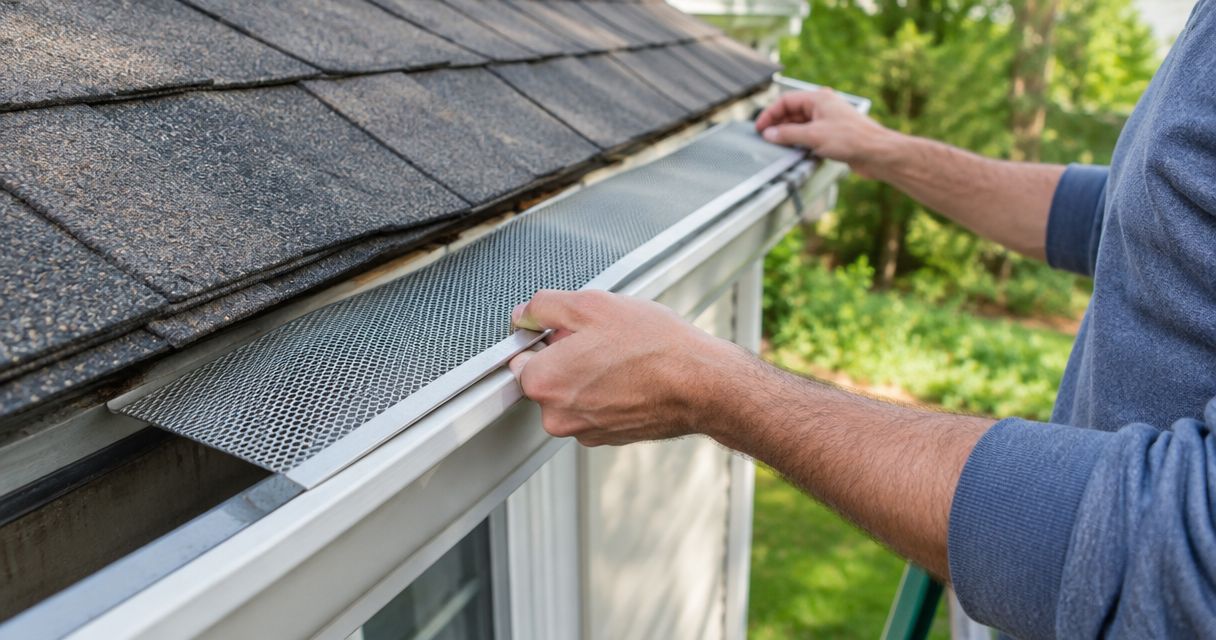
- Install. Fit and fasten compatible guards according to the manufacturer’s instructions. Check joints, corners, and ends rather than looking only at straight sections.
The sequence matters more than how quickly the cover goes on. A finished installation should leave you with a working gutter system and a clear explanation of how to inspect and maintain it.
Why does gutter guard compatibility vary?
Two homes can have usable gutters yet need different guard attachment details. Choose from the actual roof edge and gutter configuration, not from a general claim that a cover fits existing systems.
- Gutter profile: The shape of the channel and front lip affects how a guard sits and attaches.
- Gutter opening: The guard must fit the opening without unsupported gaps or an unsuitable overhang.
- Roof-edge clearance: Roofing, flashing, and the gutter’s position affect the available installation space.
- Hanger placement: Existing supports must not prevent the guard from seating or fastening correctly.
- Debris exposure: Leaves, twigs, and fine debris create different cleaning demands on the guard surface.
- Runoff path: Water concentrated at roof valleys needs attention at the point where it reaches the gutter.
None of these factors justifies ignoring the underlying gutter condition. A compatible guard on a damaged system is still a cover on a damaged system.
Can you keep seamless gutters when adding guards?
Yes, existing seamless gutters can remain when they are serviceable and compatible with the selected guards. Seamless describes the construction of the gutter runs; it does not mean the entire system has no joints, outlets, or corners to inspect.
Check end caps, corners, outlets, and attachment points as part of the retrofit. Those details still matter even when the long gutter runs are in good condition.
The benefit of keeping sound gutters is straightforward: you avoid removing a functioning drainage channel merely to add debris protection. The limitation is equally clear: the existing dimensions and roof-edge arrangement constrain which guards fit.
Do gutter guards fix overflowing gutters?
Gutter guards do not fix every cause of overflow. They help limit debris entering the channel, but they do not correct inadequate drainage capacity, poor pitch, blocked downspouts, or a damaged gutter.
Watch where water escapes. Overflow beside a debris pile calls for a different response from water shooting past the gutter at a roof valley or leaking behind the gutter along the fascia.
Before approving a 2026 installation, ask what caused the overflow and what part of the proposed work addresses it. An explanation that amounts to adding a cover without identifying the cause leaves the central problem unresolved.
Will you still need to clean gutters after installation?
Yes, gutter guards still need inspection and cleaning. Debris can collect on the surface, and material that passes through or enters at gaps still needs removal.
That changes the maintenance task rather than ending it. Instead of assuming the channel is protected indefinitely, check for surface buildup, displaced sections, blocked outlets, and water escaping during rain.
Ask how the selected guard is opened or removed for service. A retrofit should preserve a practical way to inspect the gutter and reach outlets without damaging the cover or its attachments.
Can you install gutter guards yourself?
A do-it-yourself retrofit requires safe access and the ability to follow the selected guard’s installation instructions. The work also requires you to recognize when the gutter or roof edge needs repair rather than simply fastening on a cover.
Do not use the gutter as ladder support. Avoid working from a ladder when the reach, surface conditions, height, or roof access makes the task unsafe; professional help is the appropriate next step when you cannot maintain safe access.
For your 2026 plan, distinguish product installation from drainage diagnosis. A cover that appears secure from the ground can still have gaps, obstructed outlets, or attachment problems that need close inspection.
What should you ask a gutter guard installer?
Ask for a scope that explains what happens beneath the cover. The answers should connect the proposed work to the condition of your existing gutters.
- What needs repair first? Request a clear distinction between cleaning, gutter repairs, and guard installation.
- How will the guards attach? Ask which surfaces receive fasteners and whether the roof covering is involved.
- How will you check drainage? Confirm that the gutter, outlets, and downspouts are assessed rather than only the guard fit.
- How will corners and ends be handled? These transitions need attention alongside the straight runs.
- How will maintenance work? Ask how you will remove surface debris and obtain access beneath the guard.
ATX Gutters is a local gutter service option for Central Texas homeowners who need installation, repairs, cleaning, maintenance, and gutter guards. That service range is relevant when your project requires more than adding a cover, but it does not remove the need to confirm the proposed guard’s compatibility and maintenance requirements.
You can discuss your existing system with ATX Gutters. Describe the problem you want solved—debris buildup, overflow, leaks, or difficult access—rather than requesting a cover without a diagnosis.
Discuss your existing gutters
Ask about gutter repairs, cleaning, and guard installation for your Central Texas home.
FAQ
Can you install gutter guards on existing gutters without replacing them?
Yes, you can install gutter guards on existing gutters when the gutters are sound, securely attached, draining correctly, and compatible with the selected guard. Repair existing defects before covering the channel.
Do old gutters need cleaning before gutter guards go on?
Yes, existing gutters and blocked downspouts need cleaning before guard installation. A cover does not remove debris already inside the drainage system.
Can gutter guards go on existing seamless gutters?
Yes, guards can go on existing seamless gutters when the profile, opening, supports, and roof-edge arrangement suit the selected guard. Inspect corners, outlets, and end caps as well as the long runs.
Will gutter guards stop gutters from overflowing?
Gutter guards do not stop every cause of overflow. Poor pitch, blocked downspouts, drainage capacity problems, and concentrated roof runoff require separate assessment.
Do gutter guards mean I never have to clean again?
No, gutter guards do not eliminate cleaning or inspections. Check for surface debris, blocked outlets, loose sections, and water escaping during rain.
Should I repair sagging gutters before adding guards?
Yes, repair sagging gutters before adding guards. The cause can involve supports, fasteners, fascia, or gutter alignment, and a cover does not correct those problems.
Does ATX Gutters work on existing gutter systems?
ATX Gutters installs, repairs, cleans, and maintains seamless gutters and gutter guards for homeowners across Central Texas. Discuss the existing system’s condition and the work needed before choosing a guard.
One last thing
Before signing off on your 2026 retrofit, ask the installer to show you how the gutter remains accessible for cleaning. The best time to understand removal, inspection, and outlet access is before debris collects—not after water starts spilling over a covered channel.
Judge the finished job by water movement, not just the appearance of the cover. Secure guards matter, but a working drainage path underneath them is the reason to do the project.