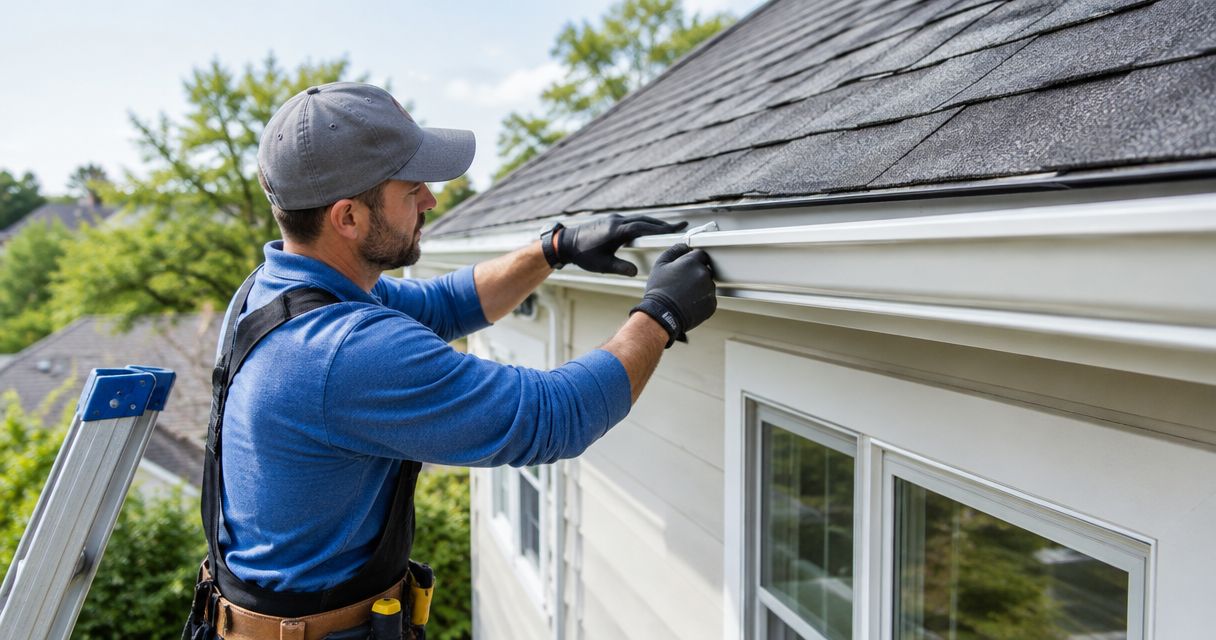
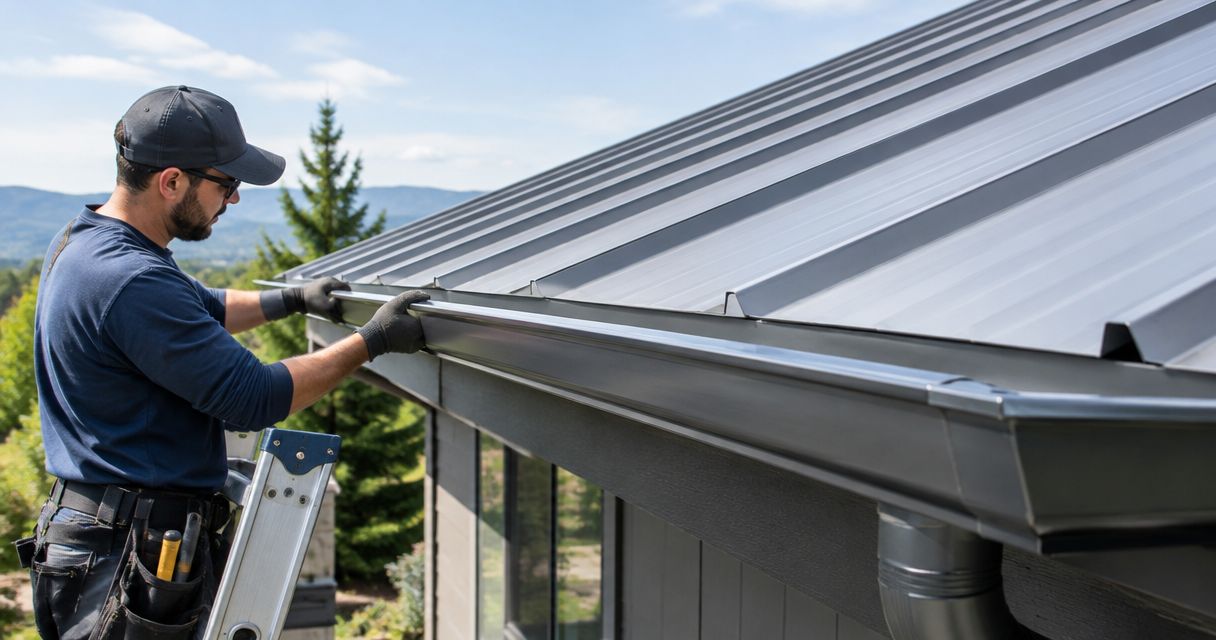
Yes, seamless gutters can be installed on a metal roof when the mounting method, roof-edge position, and drainage capacity match the house. The critical caveat is that gutter installation must preserve the roof’s water-shedding details and follow the applicable roofing and gutter manufacturers’ instructions.
- Seamless gutters metal roof installations work when mounting, roof-edge clearance, and downspout capacity match the house.
- Fasten gutter supports into suitable backing; do not treat roof panels as a universal attachment point.
- A larger gutter cannot correct a blocked outlet or an unsuitable discharge route.
- Atxseamlessgutters serves Central Texas homeowners who need seamless gutter installation, repairs, cleaning, or maintenance.
Can seamless gutters be installed on a metal roof?
Yes. A metal roof does not rule out seamless gutters, but it does change what your installer needs to inspect before choosing the attachment and placement. The gutter must intercept runoff without obstructing the roof’s drainage details or relying on unsound backing.
For your 2026 project, separate two questions: where the gutter will attach and where the water will go. A straight-looking installation does not prove either one is correct. Start with a seamless gutter contractor who can assess the existing eave rather than quote from roof material alone.
| Mounting approach | Best for | Advantage | Limitation |
|---|---|---|---|
| Fascia attachment | Eaves with sound fascia and suitable backing | Supports the gutter without using the roof panel as the primary attachment | Deteriorated fascia or inadequate backing needs correction first |
| Designed alternative support | Eaves without usable fascia | Provides an attachment approach tailored to the existing construction | Requires compatible components and a verified load path |
| Roof-related attachment | Assemblies whose manufacturer permits the specific detail | Addresses conditions where conventional fascia attachment is unsuitable | Must preserve waterproofing and accommodate the roof assembly’s requirements |
Choose the mounting detail from the building’s construction, not from the fact that the roof is metal. Roof-related attachment is not a blanket recommendation to drill through panels.
Why this matters
A gutter collects runoff at the roof edge, but the whole drainage route determines whether it works. Water must enter the trough, reach an outlet, pass through a downspout, and discharge somewhere appropriate.
Metal roofing also has installation details that gutters must respect. Those include the panel overhang, edge flashing, attachment system, and provisions for thermal movement. Changing an edge detail without checking its purpose risks creating a roof problem while trying to solve a drainage problem.
For an existing home, inspect the fascia and trim before covering them with new gutters. A gutter cannot repair deteriorated wood behind it. Addressing that condition first keeps the new installation from depending on damaged material.
What should an installer check before attaching gutters?
A useful 2026 installation proposal should describe the existing conditions and the planned response. You need more than a gutter profile and a color selection.
Inspect the backing
The installer should identify the material behind the proposed fasteners and confirm that it can support the assembly. Painted trim alone does not establish sound backing. Soft wood, loose boards, or visible deterioration calls for further inspection before installation.
Ask where the fasteners will engage and whether any repair is needed first. If the answer is simply that longer screws will solve everything, request an explanation of the actual attachment.
Check the edge
The installer should examine how far the roof projects past the fascia, how the flashing directs water, and whether runoff has a clear route into the gutter. Positioning a gutter against the trim without considering the roof edge leaves a key part of the job unresolved.
The goal is to collect water without pushing the gutter into the roof’s drainage path. Any proposed alteration to flashing should be checked against the roof assembly’s installation requirements.
Size the drainage
Gutter capacity depends on more than trough width. Roof drainage area, roof geometry, local design rainfall, outlets, and downspouts all affect the system’s ability to carry water.
Ask what informed the proposed gutter and downspout arrangement. A familiar size is not a substitute for assessing the roof it will serve.
Plan the discharge
Trace each downspout to its final discharge location. Water should not simply be moved from the roof to a troublesome spot beside the house, across a walkway, or onto neighboring property.
Existing underground drainage needs its own assessment. Connecting a new downspout to an obstructed drain does not create a working drainage route.
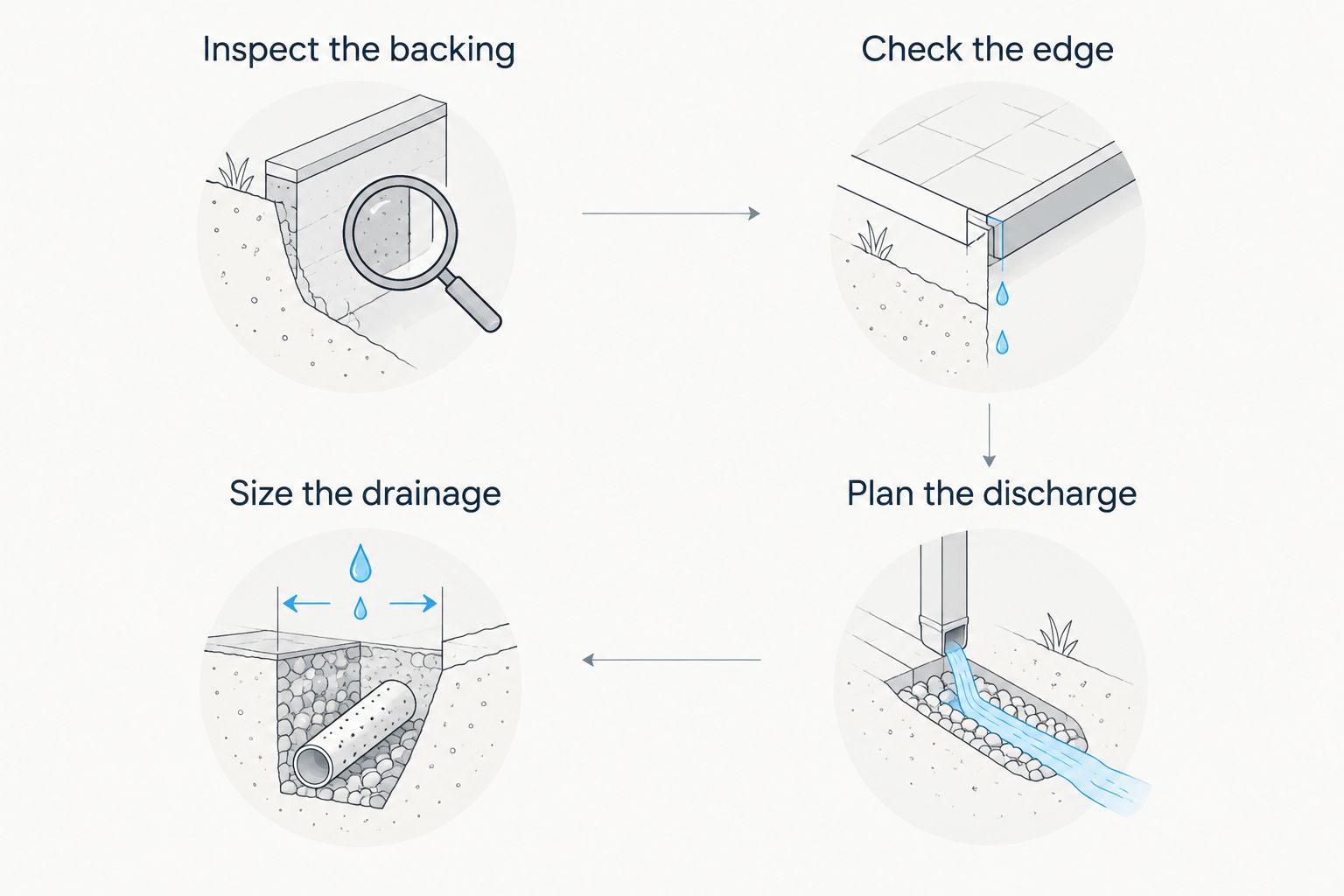
A written proposal should make these checks understandable. You do not need to design the assembly yourself, but you should know what supports it and where collected water ends up.
Does a metal roof need a larger seamless gutter?
A metal roof does not automatically require a particular gutter size. Size the drainage system for the roof area it serves, the local design rainfall, and the layout of its outlets and downspouts.
Roof valleys deserve particular attention because they concentrate runoff at specific locations. A gutter that handles evenly distributed runoff can still have trouble where a valley delivers a concentrated stream.
Use the guide to gutters for metal roofs in Texas to frame the selection questions, then have the installer assess your actual roof. A category recommendation cannot determine the right capacity for an unmeasured house.
A wider gutter also has limits. It does not correct poor positioning, a clogged outlet, insufficient downspout capacity, or a discharge line that backs up. Ask the installer to explain the complete system rather than presenting gutter width as the entire solution.
Why seamless gutter installation varies on metal roofs
These factors explain why neighboring houses can need different installation details in 2026:
- Fascia condition: Sound backing supports a conventional attachment; deterioration requires repair or another designed approach.
- Roof overhang: The relationship between the panel edge and gutter opening affects whether runoff enters the trough.
- Roof geometry: Valleys, corners, and separate roof planes change where runoff concentrates.
- Drainage area and rainfall: The roof area served and local design rainfall inform capacity requirements.
- Material compatibility: Gutter metal, roof metal, flashing, and fasteners need compatible detailing to limit corrosion risks.
- Outlet and discharge layout: Downspout placement and the route beyond each outlet affect the whole system’s performance.
Do not accept a universal answer based only on the words metal roof. An installer should connect the proposed detail to a condition visible on your house or documented in the relevant installation instructions.
Will installing gutters damage a metal roof or void its warranty?
Gutter installation does not inherently require damaging a metal roof. Whether a particular attachment affects warranty coverage depends on the roof manufacturer’s written terms and the installation detail used.
For your 2026 installation, ask whether the work requires any panel penetrations, flashing changes, or attachments involving the roofing. If it does, obtain the applicable instructions before authorizing that detail. A verbal assurance is not a replacement for written requirements.
Fascia attachment can avoid using the roof panel as the primary support, but it still needs suitable backing and correct positioning. Conversely, an alternative attachment is not automatically wrong; it needs documentation showing why it fits that roof assembly.
Keep the approved proposal and photographs of the completed roof edge. These records help explain what changed if you later discuss a leak, maintenance issue, or warranty question with another contractor.
Can you keep existing gutters when replacing a metal roof?
You can keep existing gutters if their condition, capacity, attachment, and position remain suitable for the replacement roof. Reuse is not a decision to make from appearance alone.
New roofing can change the edge details or reveal damaged fascia that was previously concealed. Have the roofer and gutter installer agree on the finished relationship between the panel edge, flashing, and gutter before treating reuse as settled.
Check the existing system for loose supports, leaking joints, restricted outlets, and corrosion. Seamless gutter runs still have joints at corners, outlets, and end caps, so the word seamless does not mean there are no potential leak points.
Keep a serviceable gutter only when it fits the finished roof, not merely because it is already attached. If repairs or repositioning are needed, put them in the project scope rather than leaving them for an unspecified later visit.
Should you add gutter guards to a metal roof installation?
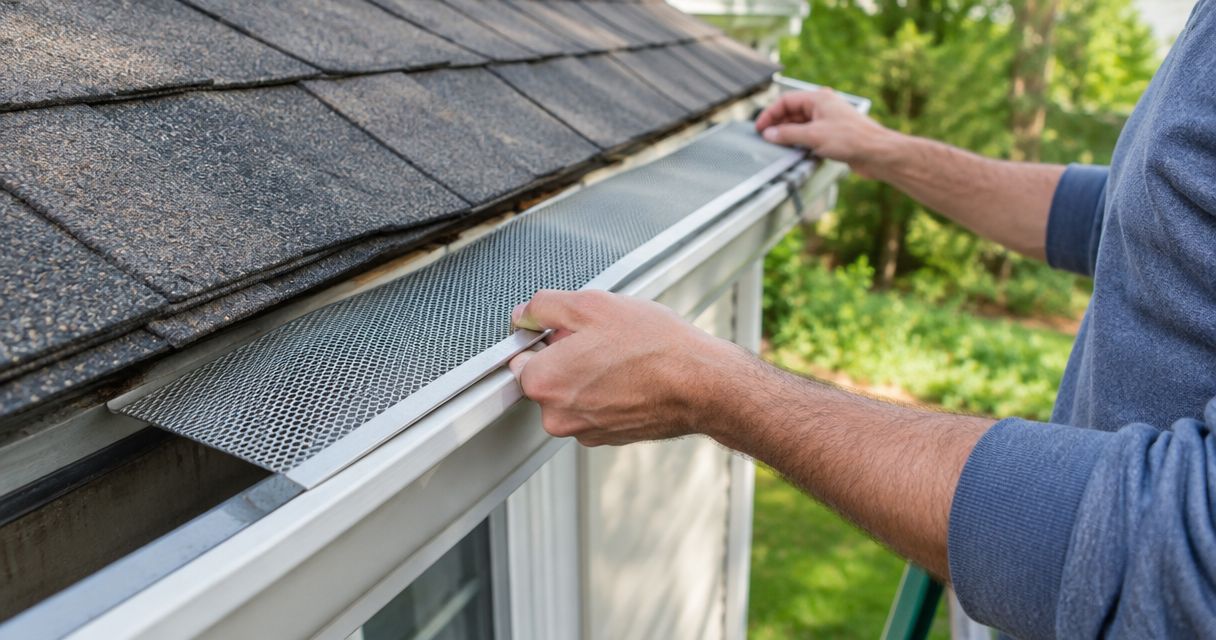
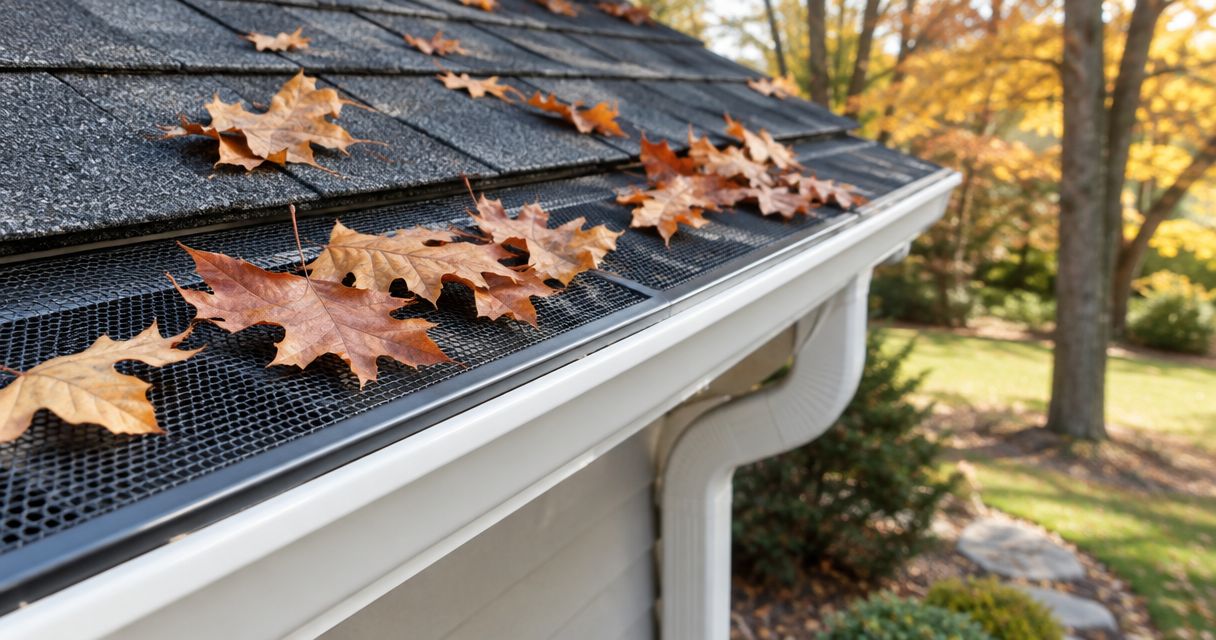
Gutter guards are a separate decision from whether seamless gutters can be installed. Their purpose is to limit debris entering the trough; they do not replace adequate drainage capacity or suitable mounting.
Ask how the proposed guard attaches and whether that attachment interacts with the roof edge. Check its cleaning requirements too. A guarded gutter still needs inspection, and debris can collect on top of a cover or around an outlet.
If concentrated runoff is already overshooting the gutter, diagnose the cause before adding a guard. Covering the opening does not correct an unsuitable gutter position, and the guard’s water-entry characteristics become another part of the drainage assessment.
For a 2026 project, approve the underlying gutter layout first. Then evaluate guards against your debris conditions, roof details, and maintenance access instead of assuming they belong on every installation.
What should you ask before approving the installation?
Ask the contractor to answer these questions in the written scope:
- What supports the gutter? Identify the backing, attachment method, and any repairs required before installation.
- What changes at the roof edge? State whether the work affects panels, flashing, or existing drainage details.
- How is runoff handled? Explain gutter positioning, concentrated-flow areas, outlets, and downspouts.
- Where does collected water discharge? Identify the destination rather than stopping the plan at the bottom elbow.
- What needs maintenance afterward? Explain inspection access, cleaning, and any guard-specific requirements.
Atxseamlessgutters is best suited to Central Texas homeowners seeking a local contractor for seamless gutter installation and maintenance. The company also repairs and cleans gutters and installs gutter guards. Those services are relevant when an existing system needs assessment rather than automatic replacement; suitability for a particular metal-roof attachment still depends on the house and the proposed detail.
Discuss your gutter installation
Ask Atxseamlessgutters about seamless gutters for your Central Texas home.
FAQ
Can seamless gutters be installed on a standing-seam metal roof?
Yes, seamless gutters can be installed alongside a standing-seam metal roof when the mounting and roof-edge details are compatible. Do not assume the panel seams themselves are approved gutter attachment points; check the applicable manufacturers’ instructions.
Do seamless gutters have to be screwed through metal roof panels?
No, seamless gutters do not automatically require screws through metal roof panels. Sound fascia and suitable backing can support a fascia-mounted installation, while other conditions require a documented alternative.
Will a bigger gutter stop water from overshooting a metal roof?
A bigger gutter alone does not guarantee that overshooting will stop. Check its position relative to the roof edge, concentrated runoff from valleys, and whether outlets or downspouts are restricting drainage.
Are seamless gutters completely leakproof?
No, seamless gutters are not completely leakproof. Continuous runs reduce joints along straight sections, but corners, outlets, and end caps still require sound connections and maintenance.
Can aluminum gutters be used with a metal roof?
Aluminum gutters can be used with compatible metal-roof assemblies. The installer must assess the roof metal, flashing, fasteners, and exposure conditions rather than assuming every combination is suitable.
Do gutter guards eliminate cleaning on a metal roof?
No, gutter guards do not eliminate inspection or cleaning. Debris can collect on the guard surface, and outlets and downspouts still need to remain clear.
Who installs seamless gutters for Central Texas homeowners?
Atxseamlessgutters installs seamless gutters for homeowners across Central Texas. The locally owned Austin contractor also provides gutter repairs, cleaning, maintenance, and gutter guards.
One last thing
Watch where the water misses, not just where the gutter hangs. During rain, observe safely from the ground and note whether water overshoots the front, drips behind the trough, or backs up near an outlet. Those are different symptoms and deserve different checks.
Share those observations with your installer before approving a replacement. A photograph of a wet fascia or a short video of concentrated runoff can make the problem clearer than a general report that the gutters overflow. Stay off ladders and the roof during wet conditions.