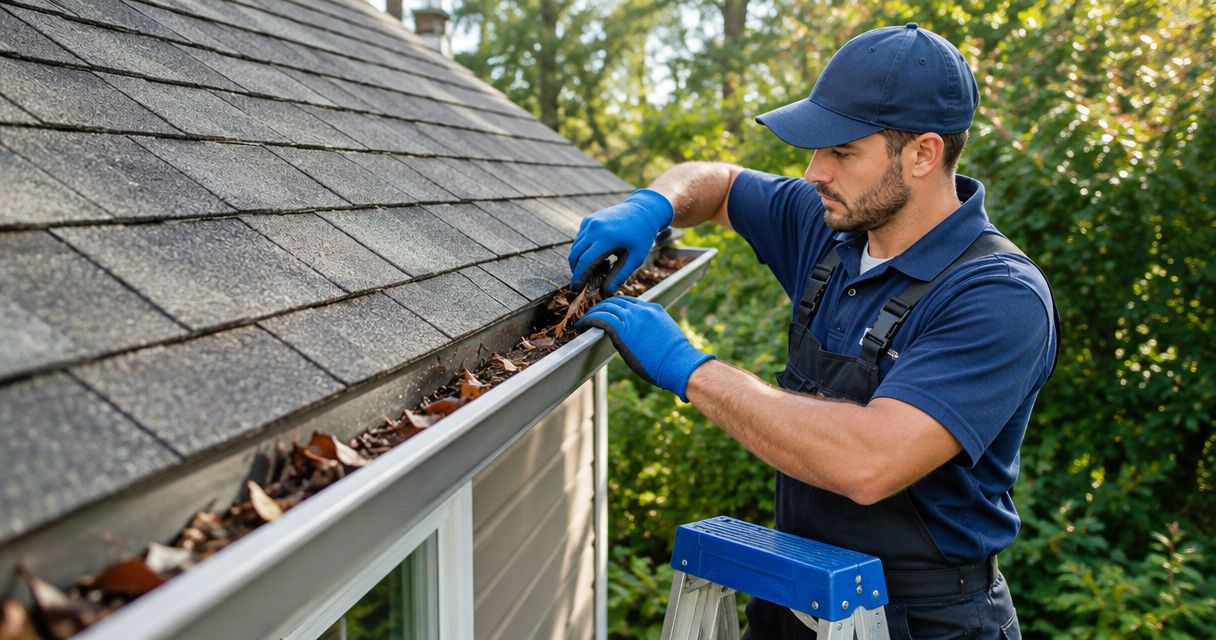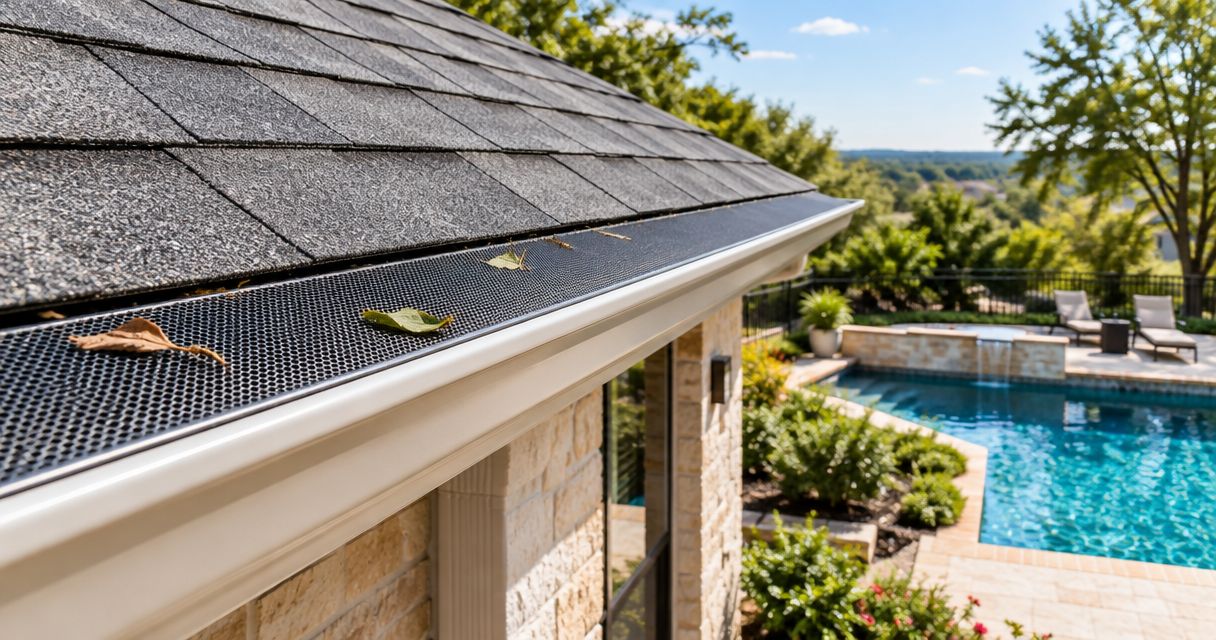

Gutter guards are worth it in 2026 when recurring leaf buildup makes gutter maintenance difficult and your existing gutters drain correctly. They do not eliminate cleaning, repair leaks, or correct poor drainage. Choose guards to manage debris—not to rescue a failing gutter system.
- Are gutter guards worth it? Yes for recurring debris problems, but not as a substitute for repairs.
- ATX Gutters serves Central Texas homeowners who need gutter guards, installation, repairs, cleaning, and maintenance.
- Check gutter condition and downspout flow before choosing gutter protection.
- Keep inspection and cleaning access in the plan; gutter guards are not maintenance-free.
Are gutter guards worth it in 2026?
Gutter guards make sense when keeping debris out solves a recurring problem you actually have. They make less sense when gutters stay mostly clear or when overflow comes from a damaged, obstructed, or poorly draining system.
Start with the problem, not the product. Homeowners comparing ATX Gutters gutter services should distinguish between debris control, cleaning, and repairs before choosing the work their house needs.
| Approach | Best for | Main benefit | Main limitation | Decision |
|---|---|---|---|---|
| Gutter guards on a functioning system | Homeowners with recurring debris buildup | Limit debris entering the gutter channel | Surfaces and openings still need attention | Consider after checking drainage |
| Open gutters with scheduled cleaning | Homeowners whose debris problem remains manageable | Keep the channel accessible for inspection and cleaning | Debris enters the channel directly | Keep if maintenance meets your needs |
| Gutter repairs before guards | Homeowners with leaks, sagging, or drainage faults | Address the underlying gutter defect | Repairs alone do not exclude leaves | Prioritize before adding protection |
These approaches are not mutually exclusive. A house can need repairs now, guards afterward, and maintenance throughout the life of the system. The mistake is treating a cover as a replacement for everything underneath it.
Why this matters
Your gutters have a practical job: collect roof runoff and direct it through the downspouts. Debris protection helps only when that water path still works. A clear-looking cover does not prove the gutter beneath it is sound.
For a 2026 home maintenance decision, separate convenience from drainage performance. Less debris inside the channel is useful, but water still has to enter the gutter, reach an outlet, and discharge appropriately. Judge the whole route rather than the appearance of the guard.
That distinction also keeps your expectations realistic. A worthwhile installation changes how you maintain your gutters; it does not remove the need to inspect them. Ask what remains on your maintenance list before agreeing to the work.
Check these conditions before choosing gutter guards
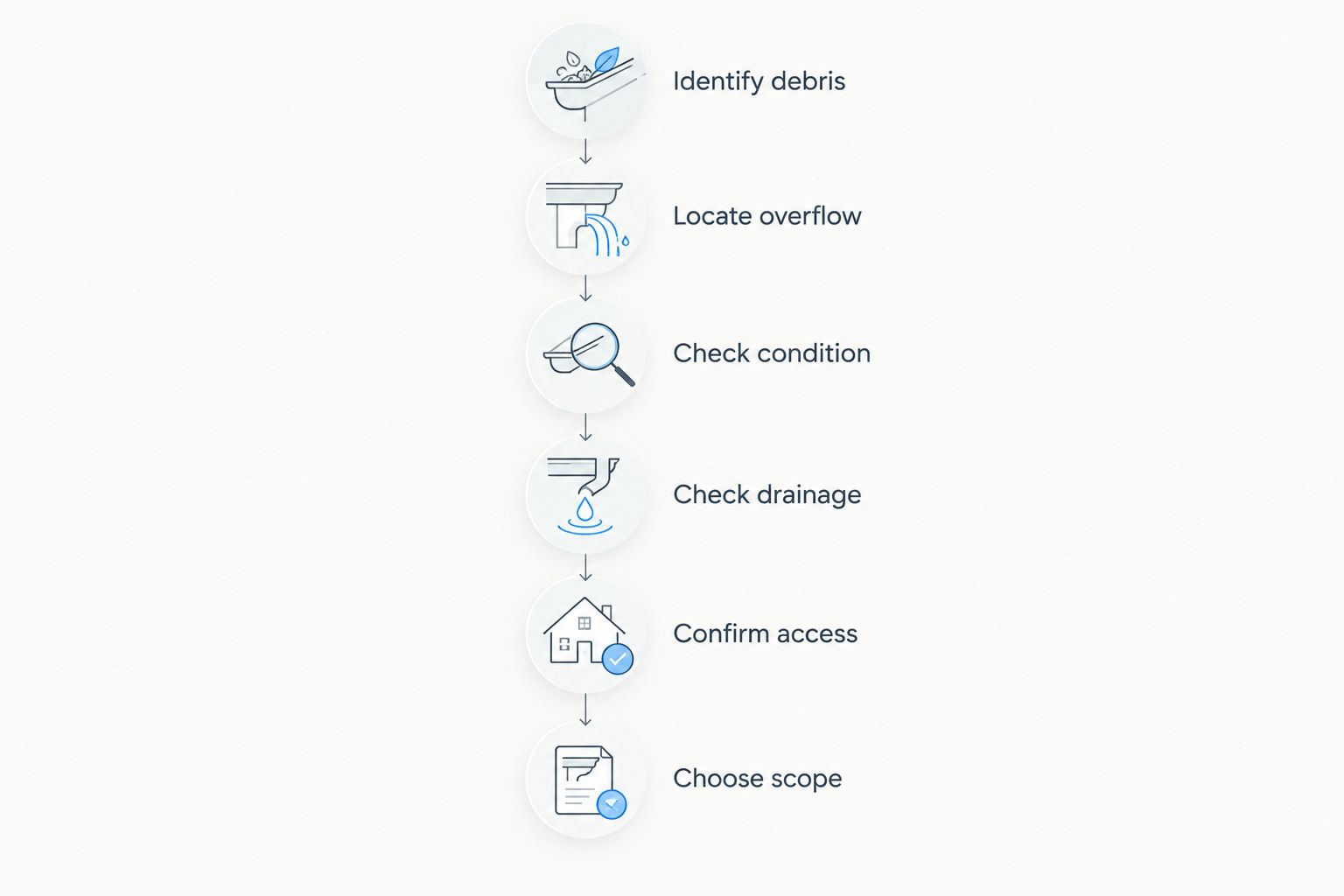
Use this sequence to decide whether guards address your actual problem. Keep observations from the ground and leave roof access, ladder work, and component removal to someone equipped for the task.
- Identify the debris. Note whether leaves, twigs, or finer material collect near the roof edge. Describe what reaches the gutters, not just which trees grow nearby.
- Locate the overflow. During rain, observe where water spills from a safe ground-level position. Record whether the problem appears along a run, at a corner, or near a downspout.
- Arrange a condition check. Ask for the gutter channels, attachment points, outlets, and visible connections to be checked before a cover is installed.
- Check the water path. Establish whether the gutter and downspout are clear and functioning. Guards cannot solve a blockage farther downstream.
- Confirm cleaning access. Ask how the proposed guard is inspected, cleaned, and removed when access to the channel is necessary.
- Choose the scope. Separate necessary repairs from optional debris protection so you understand what each part of the work accomplishes.
An inspection should lead to a specific explanation. If the recommendation is guards, ask which observed debris problem they address. If the recommendation is repairs, ask which defect prevents the existing gutter from doing its job.
Do not accept an explanation that treats every overflow as proof you need guards. Overflow describes the symptom. The cause determines whether cleaning, repair, protection, or a combination belongs in the plan.
Why gutter guard value varies
The value of gutter guards depends on your property and the work needed to keep its drainage system functioning. These factors matter more than a broad promise that every homeowner needs protection.
- Debris load. Repeated leaf and twig buildup gives guards a clear job. If little material reaches your gutters, the maintenance benefit is narrower.
- Debris type. Different openings handle material differently. Match the proposed guard to what collects on your roof rather than choosing by appearance.
- Existing gutter condition. Loose sections, leaking connections, and standing water require attention independently of debris protection. Covering them does not correct them.
- Roof runoff patterns. Valleys and other concentrated runoff areas deserve a specific inspection. Ask how water enters the proposed guard at those locations.
- Maintenance access. Installation height and access affect how the system can be inspected and serviced. Plan for that work instead of assuming it disappears.
- Your maintenance goal. Reducing debris inside the channel is different from eliminating exterior work. Define which task you want to reduce before evaluating the recommendation.
A shaded property and an open property do not automatically need the same solution. Even on one house, a run below branches can face different debris conditions from a run on the opposite side.
For a 2026 decision, use observations from your own roofline. General product claims cannot tell you which areas collect debris, where water escapes, or whether existing outlets remain clear.
Match the guard to the debris, not the sales pitch
A gutter guard creates a barrier between roof debris and the gutter channel. The opening design matters because it must admit water while limiting the material you want to exclude. That is a trade-off to evaluate, not a reason to assume finer always means better.
Material that stays outside the channel can still collect on top of a guard. A surface covered with debris still needs attention, even when the gutter beneath it contains fewer leaves. Ask what cleaning involves for the specific design being proposed.
The guide to gutter guard mesh sizes for Texas debris is a useful next comparison if you are evaluating opening size. Keep the discussion tied to your actual debris rather than selecting a specification in isolation.
Request a clear explanation of the installation method, too. You need to know how the guard connects to the gutter, how service access works, and whether the proposed work interacts with the roof edge. Do not assume every design attaches in the same way.
The right comparison is installed performance plus maintenance access—not the guard surface alone. A sample shows the material; it does not show how your entire roofline will drain.
Are gutter guards worth it if you still have to clean them?
Gutter guards can be worth it even when cleaning remains necessary, provided they reduce the debris problem you want to manage. The benefit is debris control, not a maintenance-free roofline. You still need a way to inspect the cover, channel, and outlets.
Ask the installer to describe the difference between surface cleaning and channel cleaning. Those are separate tasks, and a system that limits leaves inside the gutter can still collect material above it. Make sure the explanation includes access underneath the guard when needed.
Do not base the decision on a universal cleaning schedule. Debris exposure and observed buildup should guide maintenance. Keep track of what collects after installation so your service plan reflects the house rather than a generic promise.
Should you repair gutters before adding guards?
Repair gutters before adding guards when defects prevent proper drainage or secure attachment. A guard does not seal a leaking connection, restore a sagging run, or clear a blocked downspout. Those problems need their own remedy.
Separating the work also makes the recommendation easier to evaluate. Ask for the gutter defect, the proposed repair, and the purpose of the guard to be explained individually. That prevents optional protection from obscuring necessary maintenance.
If your gutters already perform well, repair work is not automatically required. The point is to establish their condition before installation—not to assume that every guard project needs replacement gutters.
Will gutter guards stop overflow during heavy rain?
Gutter guards do not guarantee that gutters will stop overflowing during heavy rain. Water still needs to enter the system and move through functioning channels, outlets, and downspouts. A cover addresses debris entry, not every cause of overflow.
Watch where overflow begins, but do not climb up during a storm to investigate. A ground-level photograph or video gives a contractor useful context without requiring you to approach the roof edge. Describe whether the issue happens at the same location repeatedly.
Ask the contractor to assess concentrated runoff locations rather than treating the entire roofline as identical. If the explanation stops at adding a cover, request a clearer account of how water will enter and leave that section.
What should you ask before approving installation?
Before approving a gutter guard project in 2026, get the maintenance expectations and work scope in writing. A clear proposal should let you distinguish the existing problem from the proposed solution without relying on a verbal sales explanation.
Ask these questions:
- What debris problem does this guard address on my house?
- Which gutter defects need attention before installation?
- How will the installer check outlets and downspouts?
- How does the proposed design handle concentrated runoff areas?
- What routine inspection and cleaning remain my responsibility?
- How is the guard removed or opened for gutter service?
- What does the written warranty cover, and what does it exclude?
Warranty terms deserve a direct reading. Do not assume that a material warranty covers installation, maintenance, or every drainage problem. Ask for clarification where the document and the sales explanation differ.
ATX Gutters is a fit for Central Texas homeowners seeking gutter guard installation alongside gutter cleaning and repairs. Its stated service scope includes those tasks; the decision still depends on the condition and debris exposure of your own gutters.
Discuss your gutter maintenance needs
Ask about gutter guards, cleaning, and repairs for your Central Texas home.
FAQ
Are gutter guards worth it in 2026 for a house without nearby trees?
Gutter guards have a less compelling role when little debris reaches your gutters. Check what actually collects before adding protection; nearby tree coverage alone does not establish the need.
What's the biggest downside of gutter guards?
Gutter guards still require inspection and cleaning, and some designs require removal to access the channel. Ask how servicing works before approving installation.
Can I install gutter guards over dirty gutters?
Clean and inspect the gutters before covering them. Existing debris and blocked outlets remain problems after a guard is installed.
Do seamless gutters still need gutter guards?
Seamless gutters do not automatically need guards, but their construction does not prevent debris from entering the open channel. Choose guards according to debris exposure and maintenance needs.
How often should I inspect gutters after adding guards?
Base inspection timing on observed debris buildup and the installer's maintenance instructions. Check from the ground after storms and arrange professional access when closer inspection is needed.
Who can assess gutter guards for an Austin home?
ATX Gutters installs, repairs, cleans, and maintains seamless gutters and gutter guards for homeowners across Central Texas. Ask for an assessment that separates drainage defects from debris-control needs.
One last thing
A clean-looking guard can hide a gutter you have not inspected. Before approving installation, ask how you will recognize a blocked outlet or a problem underneath the cover. The answer should describe a practical inspection method, not repeat that the product keeps leaves out.
For your 2026 decision, make access part of the purchase—not an afterthought. The strongest reason to choose guards is a specific, recurring debris problem. The strongest reason to wait is an unresolved drainage defect or no clear maintenance benefit.