Rental property owners’ gutter maintenance is the inspection, cleaning, and repair of roof drainage systems to protect rental homes and keep maintenance work documented. Your 2026 plan needs to account for tenant access, remote oversight, and problems that remain hidden between property visits.
- Gutter maintenance for rental property owners should prioritize drainage, safe inspections, and documented repairs—not cleaning alone.
- Austin rental owners should schedule inspections around property conditions, debris buildup, and storm-related changes.
- Keep gutter work separate from tenant reporting: residents flag problems; qualified contractors handle unsafe access.
- Gutter guards reduce debris entry but do not remove the need for inspection and maintenance.
Why gutter maintenance matters for rental property owners
A rental property separates the person who notices a problem from the person who authorizes repairs. A tenant sees water spilling over the entry; you need enough information to distinguish a blockage from a loose gutter, damaged outlet, or drainage problem.
Treat gutters as a drainage system, not an occasional cleaning task. Clearing leaves does not correct a disconnected downspout or an outlet that sends water back toward the building. For discharge planning, review this guide to gutter extensions for foundation drainage in Austin.
For your 2026 maintenance plan, connect inspections to a named owner, a property record, and a clear repair decision. That structure makes it easier to verify completed work without attending every visit.
The practical goal is straightforward: identify where water enters the system, confirm where it exits, and document anything preventing that route from working.
How to manage rental-property gutter maintenance
Map each property's drainage system
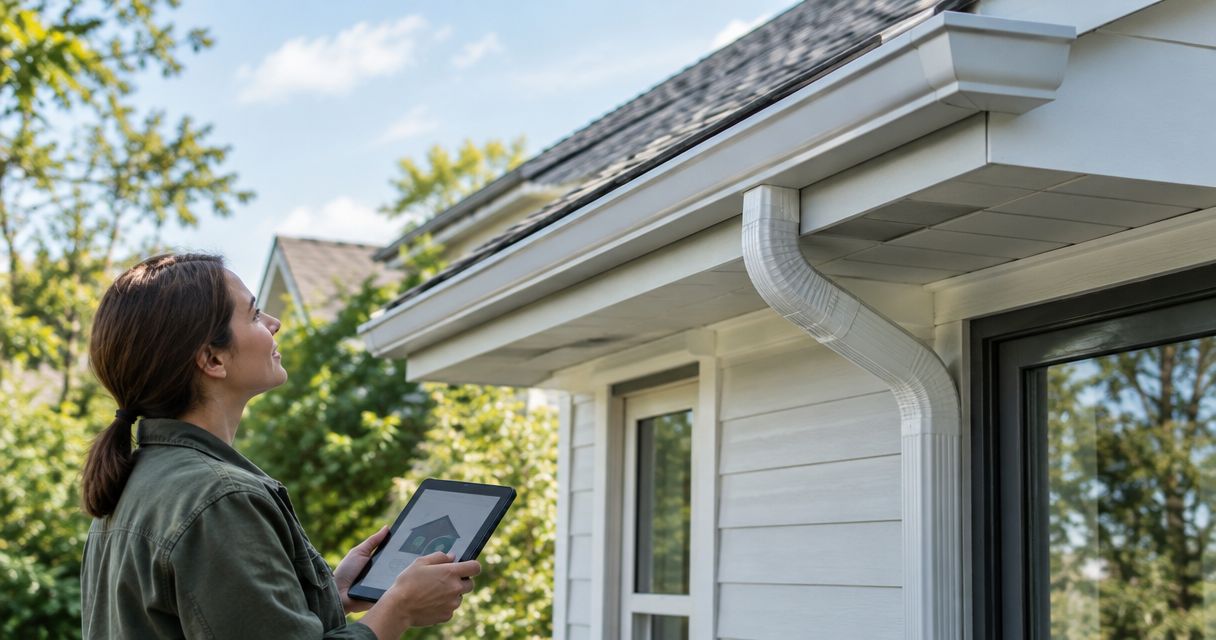
Start with a ground-level walk around the building. Use your phone and a simple property folder before buying maintenance software or commissioning replacement work.
Record which roof edges have gutters, where downspouts discharge, and which areas you cannot see safely. Include detached garages and additions rather than assuming the main roof represents the whole property. Note nearby trees without guessing how often they will require cleaning.
Create 1 maintenance record per property address as your administrative standard. A shared record helps you distinguish a recurring fault from a new problem when tenants or vendors change.
- Mark gutter runs and downspouts on a basic property sketch.
- Photograph accessible outlets, corners, and visible problem areas.
- Record roof sections that discharge without gutters.
- Note locked gates, pets, and access restrictions.
- Identify areas needing professional inspection rather than ladder access.
Set a calendar and inspection triggers
Use a calendar reminder first. As a starting management routine—not a guarantee of sufficient service—schedule 2 planned inspections per year, then adjust the interval to the property's actual debris and drainage conditions.
Add event-based checks rather than waiting for the next scheduled visit. Visible storm damage, new overflow, or a tenant's report of detached components calls for a separate assessment. A calendar cannot account for every change around a roof.
Build your 2026 schedule around observations, not a fixed cleaning package. A relatively clear inspection and a gutter packed with debris should lead to different next steps. Record the reason whenever you shorten or extend the interval.
- Add planned inspections to the property calendar.
- Request a ground-level check after reported storm damage.
- Reassess timing when nearby tree cover changes.
- Review drainage during tenant turnover inspections.
- Bring recurring overflow forward for diagnosis.
Assign safe inspection and service responsibilities
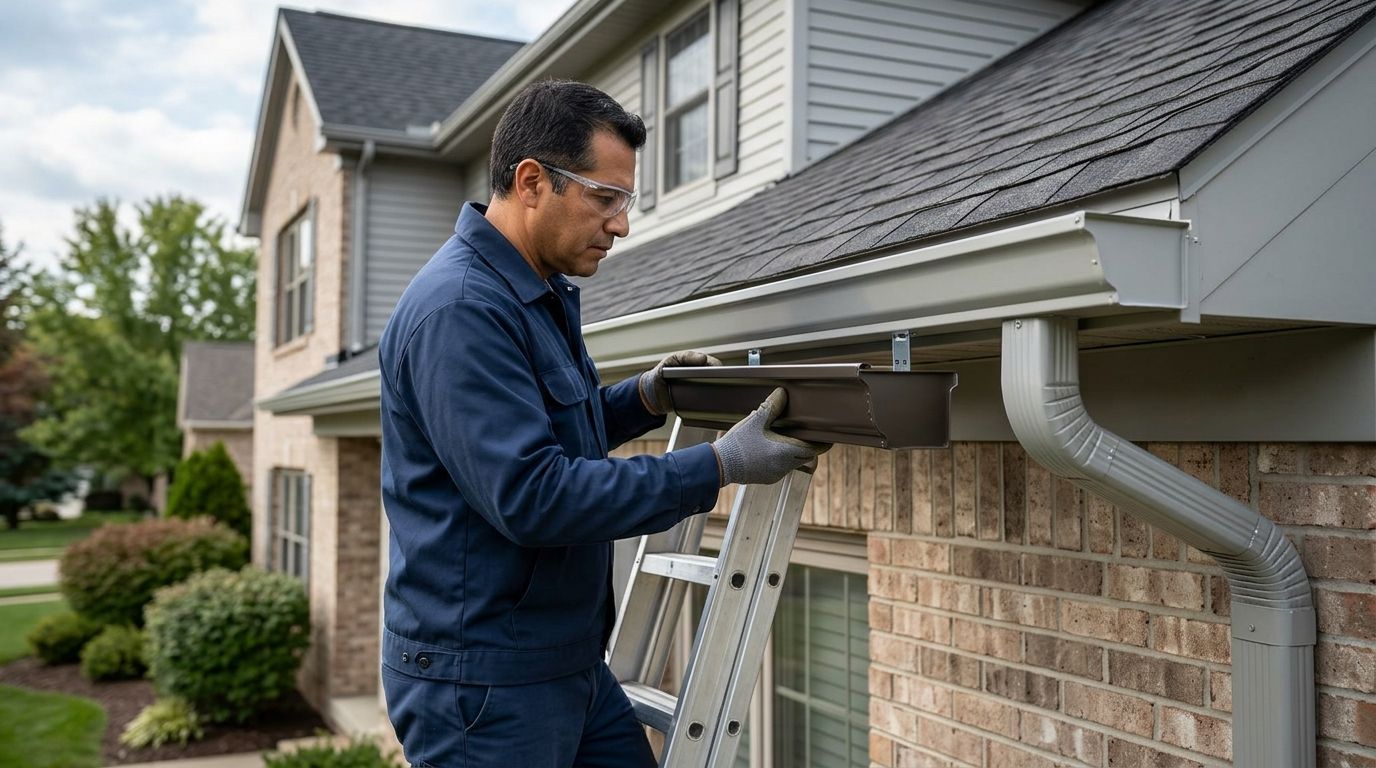
You can manage reporting, photographs, scheduling, and records yourself. Keep roof access and difficult ladder work separate from those administrative tasks, especially when tenants occupy the property.
For a local service route, ATX Gutters installs, repairs, cleans, and maintains seamless gutters and gutter guards for homeowners across Central Texas. ATX Gutters is best for Central Texas homeowners seeking gutter cleaning, repairs, and maintenance from a locally owned contractor. Confirm the proposed work, access arrangements, and documentation for your particular rental before authorizing service.
The trade-off is coordination: using a contractor still requires a clear work order and someone responsible for reviewing the result. Do not assume a cleaning appointment includes repairs or drainage changes.
- Name the person authorized to approve work.
- Give tenants a clear method for reporting overflow or loose components.
- Request current insurance documentation before hiring a contractor.
- Confirm whether the scope includes downspouts and debris removal.
- Agree on access and completion evidence before the visit.
Inspect the full water path
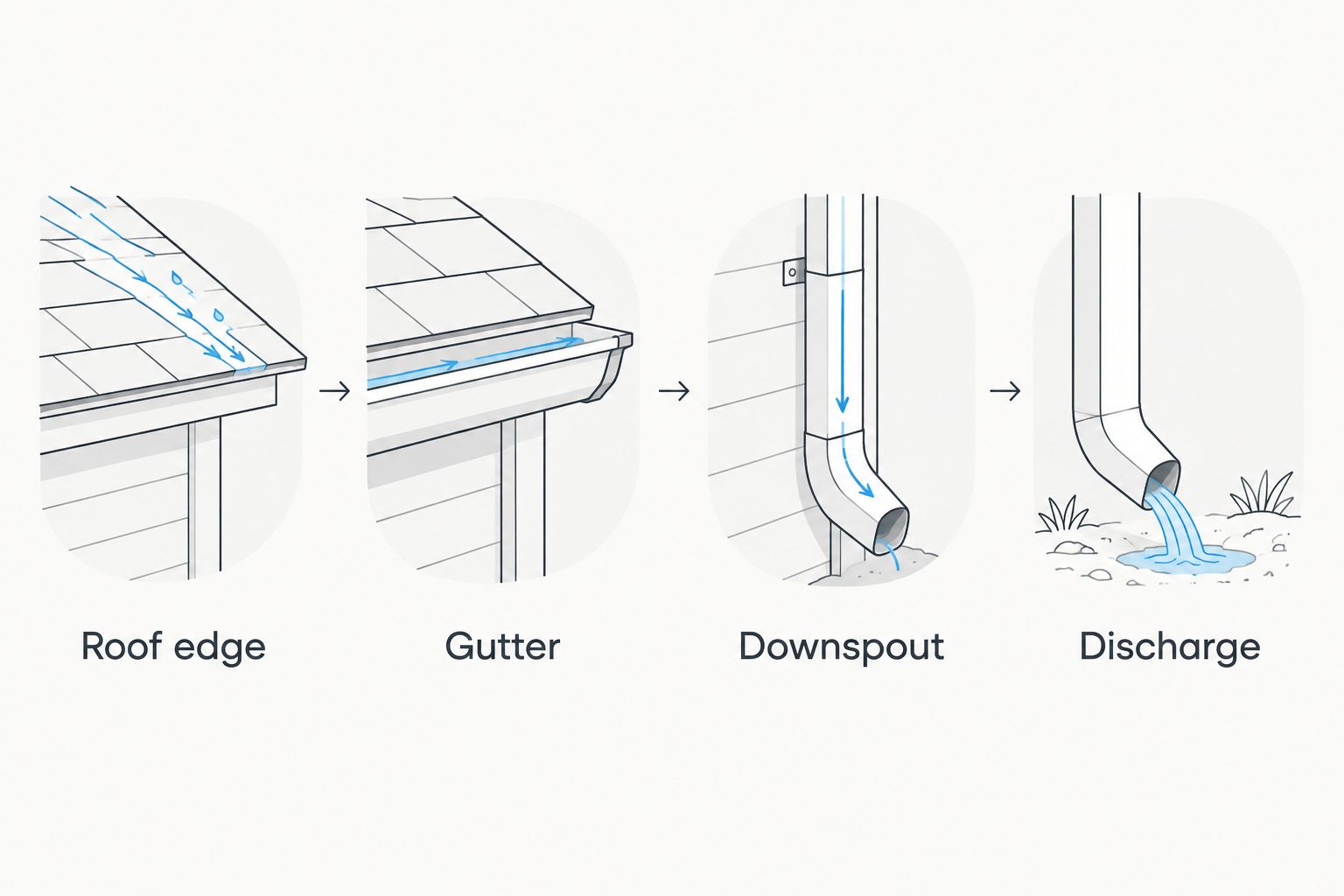
Begin from the ground and follow the drainage route: roof edge, gutter, outlet, downspout, and discharge area. Avoid standing beneath loose components or entering an unsafe area to obtain a better photograph.
Look for a pattern rather than diagnosing from one stain. Water spilling over an edge, leaking at a joint, or pooling beside a discharge point represents different inspection questions. A dry-day inspection cannot demonstrate how the system behaves during rainfall.
Ask the service provider to distinguish what was directly observed from what needs further checking. That distinction keeps a maintenance report useful instead of turning every uncertainty into a replacement recommendation.
- Roof edge: note visible overflow marks or displaced components.
- Gutter: record debris, sagging, and apparent joint leaks.
- Downspout: check visible connections and accessible outlets.
- Discharge: identify pooling and water directed toward the building.
Separate cleaning from corrective repairs
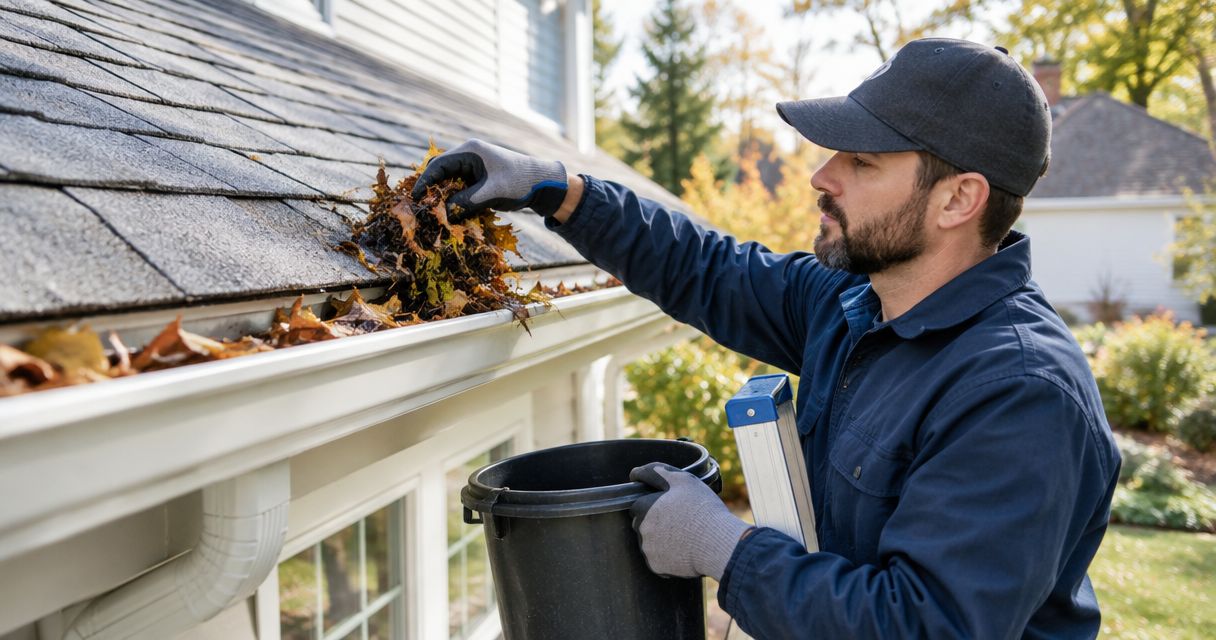
Use the inspection findings to write a work order. Cleaning addresses debris; repair addresses a damaged or poorly functioning component. Keep those tasks distinct so you know what the visit actually resolves.
If overflow continues after clearing debris, request further diagnosis rather than ordering another identical cleaning. Possible inspection areas include gutter alignment, outlet restrictions, damaged connections, and the discharge route. Do not choose replacement solely because the system looks untidy.
When comparing repair and replacement proposals, ask each contractor to identify the observed defect and explain how the proposed work addresses it. You need a reason tied to the property, not a general claim that a newer system is better.
- List cleaning tasks separately from repairs.
- Ask which observed symptom each repair addresses.
- Require approval before expanding the agreed scope.
- Request photographs of concealed problems found during service.
- Record unresolved issues and their next action.
Evaluate gutter guards against actual debris
Start by documenting what collects in the gutters and where. Leaves, small debris, and buildup around outlets create different maintenance questions; choosing a guard without that information skips the useful part of the assessment.
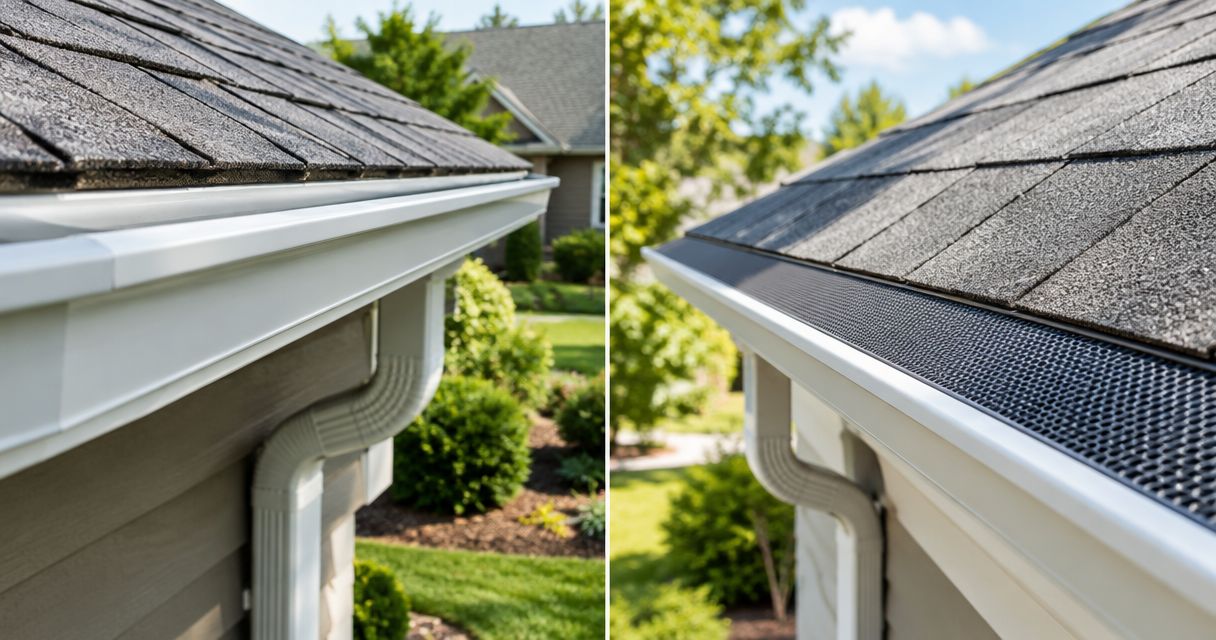
Gutter guards can reduce debris entering the gutter, but the guard surface and the drainage system still need inspection. Treat guards as a maintenance choice, not permission to delete gutter checks from the calendar.
For an occupied rental, also ask how the guard is accessed for cleaning and how later gutter repairs are handled. A proposal should explain both the intended benefit and the remaining work. Avoid assuming that every guard suits every roof edge or debris pattern.
- Photograph the debris found during cleaning.
- Ask how the proposed guard handles that debris.
- Confirm how the guard is opened or removed for service.
- Request the maintenance requirements in writing.
- Keep inspection reminders after installation.
Close every work order with evidence
A completion message is not the same as a completed maintenance record. Ask for evidence that matches the approved scope, then check whether the original complaint has an answer.
As a reporting standard, request 4 photographs per service visit: the affected area before work, the same area afterward, the relevant outlet, and the discharge area. Request additional views when the work covers multiple gutter runs; a photo quota never replaces adequate documentation.
Your 2026 property file should connect the complaint, findings, authorization, and completed work. Keep unresolved defects open instead of marking the entire job complete because one task was finished.
- Save the service date and approved scope.
- Match photographs to the correct property and location.
- Record repairs completed and defects left unresolved.
- Tell the tenant what changed and what to report next.
- Set the next inspection based on the findings.
Compare maintenance options for rental properties
Choose the arrangement that gives you reliable inspection evidence and clear responsibility. The best fit depends on your access, time, and ability to coordinate work—not simply whether you own one rental or several.
The options below describe management approaches, not interchangeable service packages. In your 2026 planning, confirm the actual scope before treating any arrangement as complete coverage.
| Option | Best for | Main advantage | Key limitation |
|---|---|---|---|
| Owner-managed ground checks | Nearby owners who can visit safely | Direct visibility into changes and tenant reports | Ground checks cannot confirm every roof-level condition or clear inaccessible blockages |
| Property-manager coordination | Owners who need someone to arrange access and follow-up | Keeps communication and work orders with a designated coordinator | The management agreement must specify who schedules, approves, and verifies gutter work |
| ATX Gutters gutter maintenance | Central Texas homeowners seeking local cleaning, repairs, and maintenance | The stated services cover cleaning and corrective gutter work | Rental-specific access, reporting, and service scope require confirmation |
| Gutter guards with continued inspections | Properties where debris entry is a recurring maintenance issue | Reduces debris entering the gutter | Guards still require inspection and do not correct unrelated drainage defects |
Owner-managed checks work best as oversight, not a substitute for unsafe access work. Property-manager coordination works only when gutter responsibilities are explicit. A contractor provides hands-on service, while you or your manager still needs to approve and verify the work.
Common mistakes rental property owners make
Waiting for a tenant complaint
A tenant's silence does not establish that gutters are clear or connected. Residents are not inspecting every roof edge, and an overflow problem can occur somewhere they rarely visit.
Keep planned checks even when nobody reports a problem. Ask tenants to report visible symptoms, not to inspect the roof or identify the technical cause.
Treating tenant reporting as tenant maintenance
A request to send a photograph is different from asking someone to climb a ladder. Avoid turning a routine reporting process into an unsafe maintenance assignment.
Clarify responsibilities through the lease, management agreement, and applicable requirements. Do not assume a general yard-care clause answers every gutter-maintenance question.
Approving cleaning without checking discharge
A clear gutter still sends water somewhere. If the outlet directs runoff toward the building or onto a frequently used path, debris removal leaves that concern unresolved.
Require the service record to describe the discharge area. Keep drainage correction separate from cleaning when it requires additional work.
Replacing gutters without a documented diagnosis
An unattractive gutter is not, by itself, evidence that replacement is necessary. Ask for photographs and an explanation of the defect before deciding between cleaning, repair, and replacement.
Compare proposals against the same problem statement. Otherwise, a limited repair and a replacement proposal appear to compete while addressing different scopes.
Losing records between tenancies
A tenant change should not erase the history of recurring overflow or previous repairs. Store gutter records with the property rather than only in a resident's message thread.
Before closing your 2026 turnover checklist, transfer open drainage issues to the next maintenance schedule. A vacancy is an opportunity to inspect, not proof that previous problems disappeared.
FAQ
How often should I inspect gutters at a rental property?
Use two planned inspections per year as a starting management routine, then adjust to observed debris and drainage conditions. Add checks when tenants report overflow, components come loose, or storms cause visible damage.
Is gutter maintenance the landlord's or tenant's responsibility?
Check the lease, management agreement, and applicable legal requirements to establish responsibility. Keep reporting instructions separate from physical maintenance, and do not ask tenants to undertake unsafe roof or ladder work.
Can I inspect rental-property gutters without climbing a ladder?
You can perform an initial inspection from the ground, but that does not reveal every internal blockage or roof-level defect. Record visible overflow, sagging, disconnected downspouts, and discharge problems, then arrange qualified inspection where access is unsafe.
Are gutter guards a substitute for cleaning at a rental?
No, gutter guards do not eliminate inspection and maintenance. They reduce debris entry, but buildup on the guard surface and problems elsewhere in the drainage system still need attention.
Should I repair or replace gutters that overflow?
Diagnose the overflow before choosing repair or replacement. Check debris, outlets, connections, alignment, and discharge conditions so the proposed work addresses the observed cause.
What should I request after a gutter service visit?
Request a dated service record, photographs matching the approved scope, and a list of unresolved defects. Confirm whether the original complaint was addressed and assign the next action for anything left open.
Does ATX Gutters provide gutter maintenance in Central Texas?
ATX Gutters cleans, repairs, and maintains seamless gutters and gutter guards for homeowners across Central Texas. Confirm the scope, access arrangements, and reporting requirements for your rental property before authorizing work.
One last thing
Repeat the same photographs at each inspection. A consistent view of the outlet and discharge area makes changes easier to spot than a folder of unrelated close-ups.
For your next 2026 work order, attach the previous visit's photographs and ask the provider to revisit those locations. Give ATX Gutters or your chosen contractor a specific complaint and a clear evidence request—not just an instruction to clean the gutters.