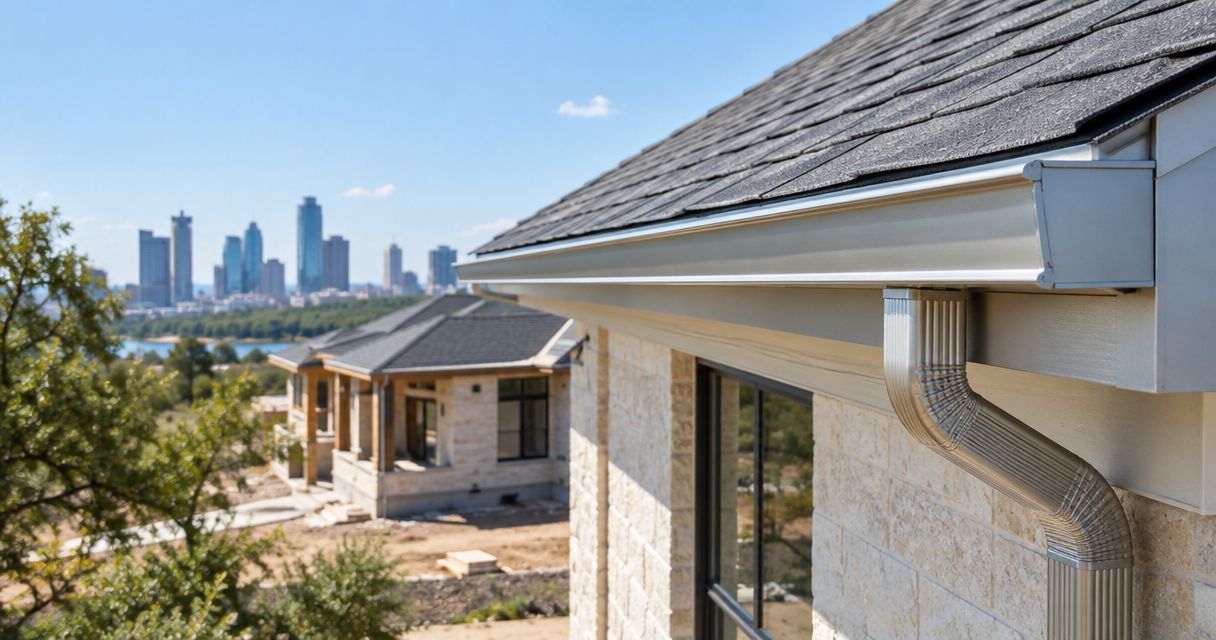
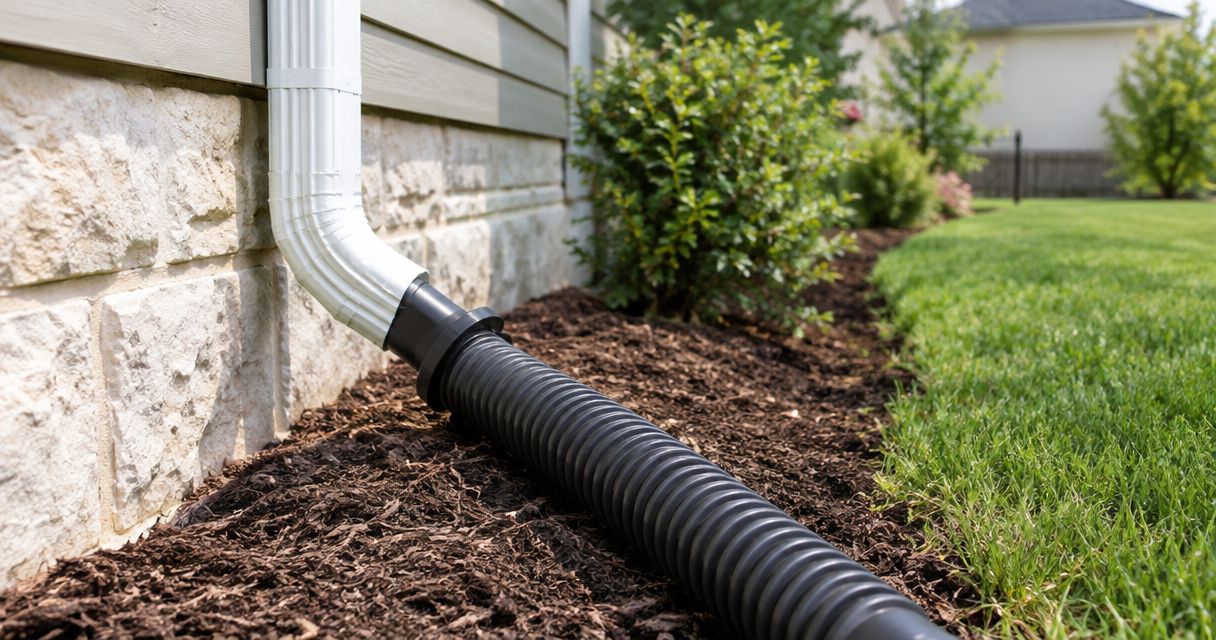
Best overall: rigid above-ground downspout extensions. Best for crossing a walkway: buried solid drainpipe. Best for an awkward temporary route: flexible extensions. This 2026 guide compares gutter extensions for Austin foundation drainage and explains when to ask Atxseamlessgutters to check the gutter system before changing its outlet.
- Best gutter extensions for foundation drainage Austin: choose rigid extensions when an unobstructed downhill route exists.
- Buried solid drainpipe suits walkway crossings, but needs a suitable outlet and access for cleaning.
- Flexible extensions solve awkward routing; unsupported bends and low spots undermine drainage.
- Atxseamlessgutters installs, repairs, cleans, and maintains seamless gutters for Central Texas homeowners.
Why this matters
A downspout extension moves roof runoff away from your house. It does not fix a yard that slopes toward the foundation, a blocked gutter, or a discharge point that sends water straight back. Choose the outlet first, then choose the extension.
Austin homeowners should distinguish drainage from foundation repair. An extension addresses concentrated roof runoff; it cannot diagnose foundation movement or correct every source of moisture around a slab. Water from neighboring ground, irrigation, and poor grading needs separate attention.
For your 2026 drainage plan, follow the flow from roof edge to final discharge. Atxseamlessgutters provides gutter installation, repair, cleaning, and maintenance; those services address the roof-drainage portion of that route. A buried yard drain requires its own layout and outlet assessment.
What makes the best gutter extension?
The best extension is the one that delivers water to a suitable destination without introducing a blockage, trip hazard, or maintenance problem. Judge every option against these criteria:
- Discharge location: Water must reach ground that carries it away from the house, not another low spot beside the foundation.
- Continuous fall: The route needs a downhill path without sags that retain water and debris.
- Connection fit: Match the downspout outlet and any adapter. A loose connection can release runoff at the wall.
- Cleaning access: You need a practical way to remove leaves and sediment, especially from buried sections.
- Yard clearance: Account for walking routes, mowing, gates, and access around the house.
- System condition: A new extension cannot stop overflow caused by a blocked or incorrectly pitched gutter upstream.
Material matters, but routing comes first. The guide to downspout materials for Austin clay soil drainage covers another part of that decision. Do not select an extension solely because its material matches your existing downspout.
How far should runoff travel?
The U.S. Department of Energy's Building America guidance recommends discharging downspouts at least 5 feet from the foundation. Treat that as a starting point, not proof that your outlet works: water discharged onto inward-sloping ground still returns toward the house.
For surface grading, the International Residential Code's model provision describes a fall of 6 inches within the first 10 feet away from foundation walls, with alternatives where site constraints prevent that slope. This is grading guidance, not a universal extension length or a statement of Austin's applicable permit requirements.
Use those distances to evaluate your 2026 layout, then check the actual destination. A longer extension that empties into a trapped depression is not better drainage.
Gutter extensions at a glance
| Rank and option | Best for | Standout feature | Key limitation |
|---|---|---|---|
| 1. Rigid above-ground extension | Clear, downhill yard routes | Visible route that is easy to inspect | Can obstruct mowing and walking |
| 2. Buried solid drainpipe | Walkway crossings and permanent routing | Moves the drainage route below ground | Requires outlet planning and cleaning access |
| 3. Flexible extension | Awkward temporary connections | Bends around nearby obstacles | Sags and corrugations can retain debris |
| 4. Hinged extension | Lawn areas requiring mowing access | Lifts out of the way | Must return to its drainage position |
| 5. Splash block | Outlet erosion control on suitable grades | Spreads the immediate discharge | Provides limited separation from the foundation |
1. Rigid extensions: best for clear downhill routes
A rigid above-ground extension connects to the downspout and carries runoff along a fixed path. Its main advantage is visibility: you can see the connection, check the route, and inspect the discharge point without opening a buried system.
Choose this option when the yard offers a clear route away from the foundation. Support and secure the extension so ordinary yard activity does not shift its outlet back toward the house. Check how water leaves the end, not just whether the connection stays attached.
Rigid extension pros:
- The exposed route is easy to inspect.
- Straight sections avoid the folds of flexible tubing.
- Accessible connections simplify debris removal.
- You can observe discharge during rainfall.
Rigid extension cons:
- The extension can become a trip or mowing obstruction.
- An exposed section needs protection from impacts and displacement.
- It still fails if the receiving ground slopes inward.
Best for: Homeowners with an unobstructed, downhill side-yard or backyard route.
Verdict: Buy a rigid extension when you can keep its entire route clear and its outlet directed away from the foundation.
2. Buried solid drainpipe: best for walkway crossings
Buried solid drainpipe carries roof runoff below the surface to a planned discharge point. Unlike perforated drainage pipe, solid conveyance pipe keeps collected roof water inside the route until it reaches the outlet.
This is the strongest layout option when an above-ground extension would cross a walkway or interfere with everyday access. The installation needs continuous fall, suitable connections, and a way to clear blockages. Burying a pipe does not create a working outlet where none exists.
Buried solid drainpipe pros:
- Keeps the drainage route out of walking and mowing areas.
- Carries runoff without releasing it along a perforated trench.
- Supports a permanent route to a suitable discharge location.
Buried solid drainpipe cons:
- Excavation requires advance planning around buried utilities.
- Blockages are harder to locate than in an exposed extension.
- A poorly placed outlet can back up or leave standing water.
Best for: Homeowners who need a permanent route beneath an access area and have a suitable outlet.
Verdict: Hold until the route, outlet, utility locations, and cleaning access are confirmed; then choose solid conveyance pipe.
3. Flexible extensions: best for temporary awkward routes
Flexible extensions bend to connect a downspout with a nearby discharge route. They are useful when a straight connection cannot negotiate an offset or when you need a temporary arrangement while planning a permanent layout.
The trade-off is shape control. An unsupported flexible section can sag, and its internal corrugations give debris places to collect. Stretching a tube across a lawn without securing its position does not establish dependable drainage.
Flexible extension pros:
- Bends around nearby obstructions.
- Accommodates offsets between the downspout and the route.
- Is accessible for inspection when kept above ground.
Flexible extension cons:
- Low spots can retain water and sediment.
- Corrugated interiors make debris removal less straightforward.
- A movable outlet can shift into an unsuitable position.
Best for: Temporary routing or a short, awkward connection that you can support and inspect.
Verdict: Buy for a specific routing problem; skip an unsupported flexible run as your permanent drainage solution.
4. Hinged extensions: best for lawn access
A hinged extension pivots upward so you can move it out of the way for mowing or other yard work. In its lowered position, it functions as an above-ground route away from the downspout.
Its weakness is operational rather than hidden: someone must put it back. A raised extension leaves the downspout discharging near the house. Select this design only if resetting it fits your normal yard-care routine.
Hinged extension pros:
- Clears the mowing route without removing the full assembly.
- Keeps the drainage path visible for inspection.
- Provides a defined discharge direction when lowered.
Hinged extension cons:
- Offers no useful extension when left raised.
- The hinge and connection need inspection for looseness.
- Its lowered position can still obstruct a walking route.
Best for: Lawn areas where a fixed extension interferes with mowing but not daily pedestrian access.
Verdict: Buy if you will reliably lower it after yard work; skip it where people routinely leave it raised.
5. Splash blocks: best for outlet erosion control
A splash block sits beneath a downspout outlet and spreads the immediate flow across a surface. It helps protect the ground directly below the outlet from concentrated discharge.
It is not equivalent to a pipe that carries water farther away. A splash block relies on the surrounding grade to continue the drainage route. If runoff collects beside the foundation, adding a block addresses the impact point without solving the destination problem.
Splash block pros:
- Makes the immediate discharge point easy to inspect.
- Reduces direct water impact on bare ground beneath the outlet.
- Works without an enclosed passage that needs internal cleaning.
Splash block cons:
- Provides limited reach away from the foundation.
- Can settle or shift into an inward-facing position.
- Depends on suitable grading beyond its end.
Best for: Outlet erosion control where the yard already carries runoff safely away.
Verdict: Buy as an outlet accessory on suitable ground; skip it as the sole answer to foundation-side pooling.
How we ranked these extensions
This 2026 ranking prioritizes a dependable discharge route, inspection access, and compatibility with how you use the yard. It compares extension types rather than claiming measured performance for particular brands.
Rigid extensions lead because their route stays visible and accessible. Buried solid pipe wins where surface access rules out that route. Flexible and hinged options solve narrower problems, while splash blocks address the outlet impact rather than extended conveyance.
No extension earns the top choice when its discharge point is wrong. The ranking changes with your property layout, not with a product label.
Which gutter extension should you choose?
Choose a rigid extension by default if your Austin yard has an open downhill route. Move to buried solid pipe when a walkway, gate, or regular access makes an exposed run impractical. Use flexible or hinged options only for the specific constraint each solves.
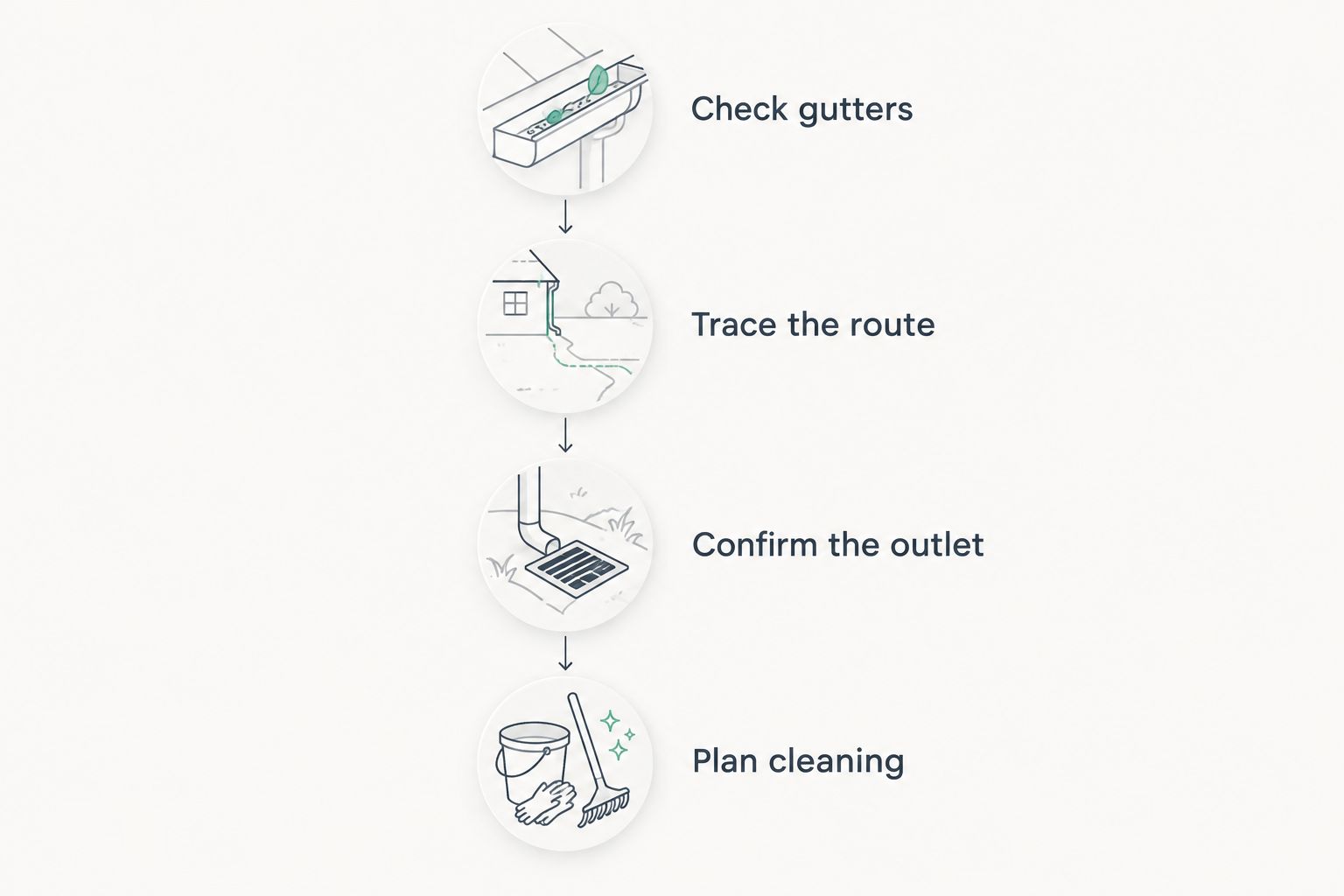
Before selecting your 2026 extension, walk the route in this order:
- Check gutters: Look for accumulated debris, overflow, loose connections, and water escaping before it reaches the downspout.
- Trace the route: Identify where runoff travels now and whether the proposed path has continuous fall.
- Confirm the outlet: Check that discharge moves away from the house without creating another drainage problem.
- Plan cleaning: Decide how you will inspect and clear every section, including buried connections.
Atxseamlessgutters is a local gutter-service option for Austin homeowners who need installation, repair, cleaning, or maintenance. Ask for the roof-drainage system to be assessed rather than assuming an extension will fix upstream overflow.
Discuss your gutter drainage
Ask about gutter installation, repair, cleaning, and maintenance for your Austin home.
FAQ
What's the best gutter extension for foundation drainage in Austin?
A rigid above-ground extension is the default choice when you have an unobstructed downhill route away from the house. Buried solid drainpipe is better when that route must cross a walkway or another access area.
How far should my downspout extension discharge from the foundation?
U.S. Department of Energy Building America guidance recommends discharge at least 5 feet from the foundation. The receiving ground must also carry water away; distance alone does not prevent runoff from returning toward the house.
Is a splash block enough to protect my foundation?
A splash block is not enough when water still pools beside the foundation. It spreads the immediate discharge, but the surrounding grade must carry that water away.
Should I use solid or perforated pipe for a buried downspout extension?
Use solid pipe to convey collected roof runoff to a planned outlet. Perforated pipe releases water along its route and serves a different drainage function.
Why does my flexible gutter extension hold water?
A low spot or blocked section can retain water inside a flexible extension. Check its support, downhill fall, internal debris, and outlet before adding more length.
Can a gutter extension repair foundation damage?
A gutter extension cannot repair foundation damage. It redirects roof runoff; foundation movement and structural damage require separate assessment.
Should I clean my gutters before adding an extension in 2026?
Yes, check and clear blocked gutters and downspouts before judging the extension's performance. An extension cannot redirect water that overflows the gutter before reaching the downspout.
One last thing
Watch the discharge point during rain from a safe position. Water leaving the extension is only half the result; follow where it goes next. If it turns back toward the house, change the route or address the grade before buying another extension.