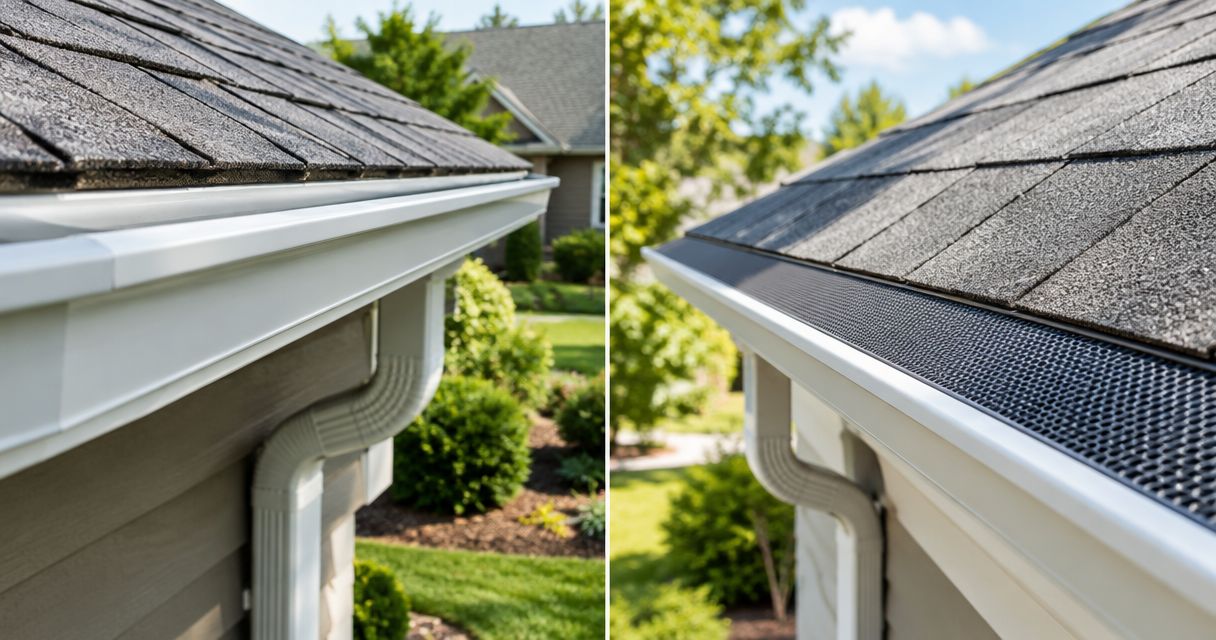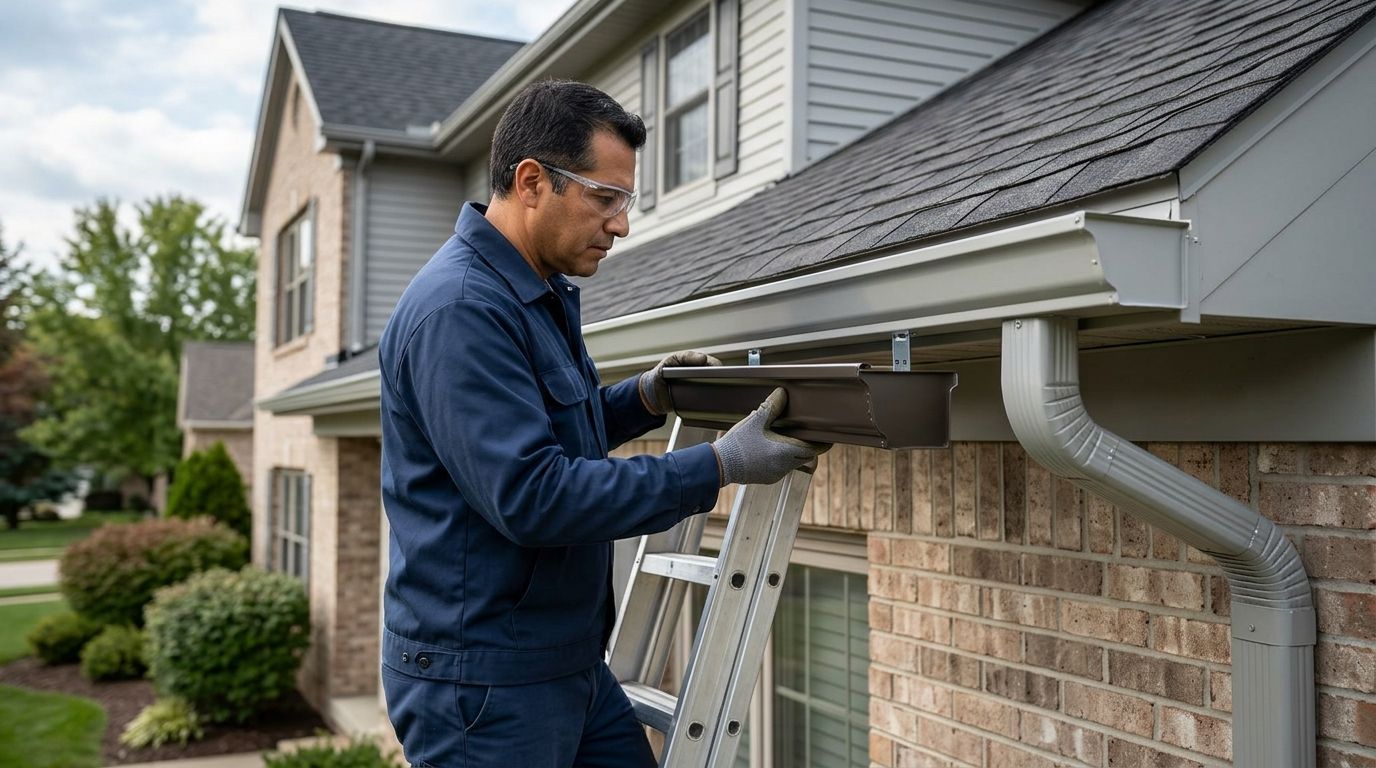

First-time homeowners’ seamless gutter planning is the process of matching continuous gutter runs, downspouts, and drainage routes to a home to manage roof runoff. This 2026 guide explains what to inspect before spending, when repairs make sense, and how to compare installation proposals without inheriting another maintenance problem.
- Seamless gutters for first-time homeowners start with a drainage inspection, not a replacement order.
- ATX Seamless Gutters fits Austin homeowners seeking gutter installation, repairs, cleaning, and maintenance from a local contractor.
- Seamless gutters still have connections at corners, outlets, and end caps; maintenance remains necessary.
- Choose gutter guards after checking gutter condition, roof runoff, and the debris around your home.
Why seamless gutters matter for first-time homeowners
Your first home comes with a drainage system you did not design and a maintenance history you might not know. A gutter can look straight from the driveway while its outlet is blocked or its downspout empties into an unsuitable spot.
Seamless gutters have continuous runs formed to fit the roof edge, rather than short sections joined repeatedly along each straight stretch. Fewer joints along those stretches remove potential leak locations, but corners, outlets, and end caps still need sound connections.
ATX Seamless Gutters is best for Austin homeowners who need a local contractor for gutter installation, repairs, cleaning, and maintenance. The contractor serves homeowners across Central Texas; choosing a particular repair or installation still requires an assessment of your home.
You can review ATX Seamless Gutters after documenting the problem. Start with evidence rather than assuming that a newly purchased house needs new gutters.
For your 2026 home-maintenance plan, separate appearance from performance. The useful question is not whether the gutters look new, but whether water enters them, travels through them, and exits along an appropriate drainage route.
How to choose seamless gutters for your first home
Inspect the system from the ground
Walk around your home in dry weather and look for sagging runs, separated connections, staining, and downspouts that end beside problem areas. Use your phone’s zoom instead of climbing onto the roof or leaning from a window.
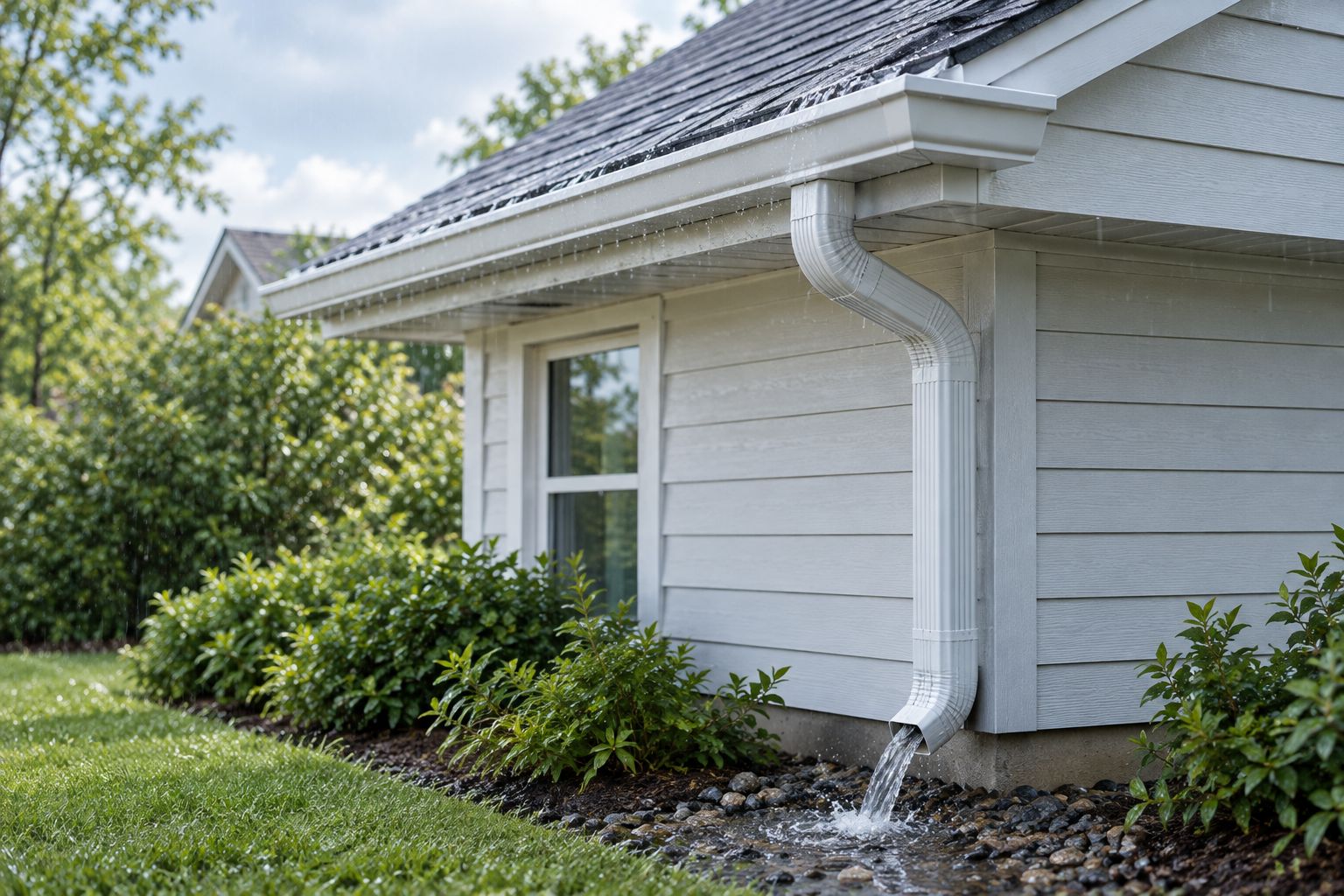
During rain, observe from a sheltered location away from lightning, falling branches, and flowing water. Note where water spills over the front, escapes behind the gutter, or collects after discharge. These observations identify symptoms; they do not establish the cause.
Take 3 photos per problem area: a wide view, a closer view, and the discharge location. This is a documentation method, not a technical inspection standard. Keep the photos together so the contractor can see the relationship between the roof and the ground.
- Photograph visible damage without climbing.
- Mark overflow locations on a simple house sketch.
- Record which downspout serves each affected area.
- Note whether the symptom appears only during rain.
Separate cleaning needs from repair needs
Start by gathering the inspection report, seller disclosures, and any maintenance records you received with the house. Compare those records with your photos. A previous note about overflow is useful context, but it does not prove that replacement is necessary.
A blockage and a damaged gutter require different work. Cleaning removes debris; it does not correct loose attachments, deteriorated connections, or an unsuitable discharge route. Conversely, replacing a functioning gutter without addressing a blocked outlet leaves the underlying issue unresolved.
ATX Seamless Gutters provides cleaning, repairs, and installation, so you can ask for the proposed remedy to match the observed condition. The limitation is straightforward: a service list alone cannot determine which work your home needs.
- Ask what is obstructed, damaged, or incorrectly positioned.
- Request photos of issues you cannot see safely.
- Separate cleaning tasks from repair tasks in the proposal.
- Ask why replacement is necessary if repair is rejected.
Map the complete drainage route
Draw the roof edges and existing downspouts on paper before discussing new equipment. Mark roof valleys, entryways, patios, and areas where water already collects. You do not need a professional drawing; you need a shared reference for the conversation.
Then follow each downspout to its endpoint. A gutter installation is only part of the route. Water discharged beside a recurring wet area still needs attention, even when the gutter above it is new.
For a 2026 installation brief, ask the contractor to explain where water will travel rather than promising a generic solution. Do not assume an underground connection is clear or that an extension automatically solves a grading problem. Persistent drainage concerns require their own assessment.
- Mark roof valleys and concentrated runoff locations.
- Identify every existing downspout outlet.
- Flag discharge across walkways or toward neighboring property.
- Ask who is responsible for drainage beyond the downspout.
Match the gutter design to the roof
Choose the system around the roof and drainage requirements before choosing its appearance. Roof area, slope, valleys, and outlet placement affect how runoff reaches and leaves a gutter. A profile name alone does not establish whether the proposed system is suitable.
Ask the installer to specify the material, profile, dimensions, attachments, and outlet arrangement in writing. These details make proposals comparable and expose differences hidden behind the same description of seamless installation.
The guide to seamless gutter materials for Texas weather provides a separate material-selection reference. Keep that decision distinct from sizing: selecting a material does not replace checking how the system will handle your roof’s runoff.
- Request the proposed material and profile by name.
- Ask how roof valleys affect gutter and outlet placement.
- Confirm how gutters attach to the existing roof edge.
- Ask how corners, end caps, and outlets will be sealed.
Decide whether gutter guards solve your problem
First identify what reaches your gutters. Leaves, twigs, and smaller debris create different cleaning challenges. Ground-level observations and records from previous cleaning visits are more useful than choosing a guard solely because it looks dense or strong.
Gutter guards are covers or inserts intended to reduce debris entering the gutter. Their benefit is debris management, not the elimination of inspection. Material can remain on top of a guard, and access still matters when cleaning or repairs are needed.
Do not add guards to an unresolved drainage problem. Confirm that the gutters, outlets, and discharge route work first. ATX Seamless Gutters installs and maintains gutter guards; ask which observed debris problem the proposed guard addresses and what upkeep remains.
- Identify the debris found during cleaning.
- Ask how water enters the proposed guard.
- Confirm how the guard is removed for service.
- Request written maintenance instructions for the installed system.
Compare written scopes instead of headline promises
Request 2 written quotes using the same house sketch and problem photos. This is a practical comparison method, not a required purchasing rule. If the proposals describe different work, ask each contractor to explain the difference before choosing.
Your 2026 quote comparison should separate gutter work from fascia repairs, guard installation, and drainage work beyond the downspout. Otherwise, a proposal that looks simpler can leave an important task outside the agreement.
Ask what happens if removal exposes damaged wood. Do not assume the gutter installer includes structural repairs or that every stated protection covers every component. Request the actual written terms rather than relying on a sales summary.
- Match the roof edges included in each scope.
- Compare downspout locations and discharge arrangements.
- Identify exclusions, disposal responsibilities, and access needs.
- Request written installation and maintenance terms.
Verify the work and keep a maintenance record
At handover, compare the completed work with the written scope. Walk the property with the installer and ask for an explanation of any changed downspout location or attachment detail. Photograph the finished system from the same positions used during your initial inspection.
Ask how the installer checked drainage and what you should observe during rain. A neat-looking gutter is not proof of correct flow. Keep a record of any overflow, leakage, or discharge concern and report its exact location.
Create 1 maintenance log for inspection notes, cleaning records, photos, and service documents. Adjust your checks around the debris and weather your property actually experiences rather than assuming that every home needs the same schedule.
- Save the final scope and written care instructions.
- Record changes made during installation.
- Observe drainage from a safe location during rain.
- Log recurring symptoms with dated photos.
Compare your gutter options
Choose the least extensive work that corrects the verified problem. Replacement is appropriate when the existing system cannot be restored suitably; cleaning or targeted repair is appropriate when the evidence supports keeping it.
The options below solve different problems. Use the “best for” column to match the work to your home, then check the limitation before approving a proposal.
| Option | Best for | Main benefit | Key limitation |
|---|---|---|---|
| Cleaning | Existing gutters with debris-related obstruction | Removes debris without replacing functioning components | Does not repair damage or correct layout |
| Targeted repair | Localized damage in an otherwise serviceable system | Addresses a defined defect while retaining sound sections | Does not resolve unrelated drainage problems |
| Seamless replacement | A system that needs replacement following assessment | Provides continuous straight runs fitted to the roof edge | Connections still need attention; installation quality matters |
| Gutter guards | Homes with an identified debris-management problem | Reduces debris entry according to the guard design | Does not eliminate inspection or fix defective gutters |
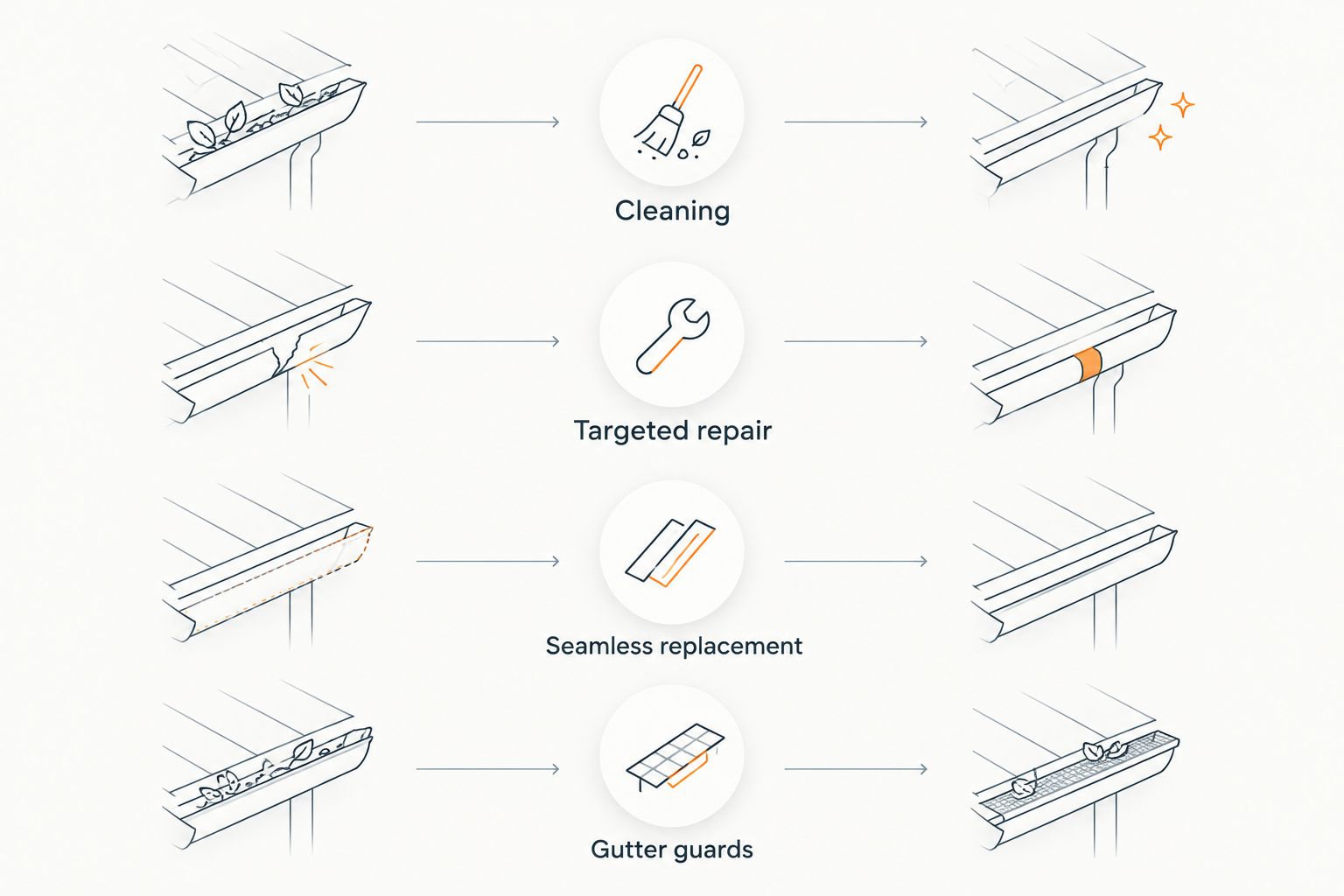
ATX Seamless Gutters provides these service categories for Central Texas homeowners. The contractor’s fit is local gutter work; the decision between these options still depends on the condition of your property, not the contractor’s name.
Common mistakes first-time homeowners make
Treating a home inspection as a maintenance record
An inspection describes conditions observed during that inspection. It does not establish what happened in later rain or when the gutters were last cleaned. Use the report as a starting point, then document current performance.
Spending on guards before checking the outlets
A guard cannot correct an obstructed downspout or an unsuitable discharge route. Confirm the existing water path before adding another component that also needs inspection and service access.
Assuming seamless means connection-free
Seamless describes the continuous straight runs, not the entire drainage system. Corners, end caps, outlets, and downspout joints remain. Ask where those connections are and how they will be maintained.
Comparing proposals with different boundaries
A gutter-only proposal and a proposal that includes fascia or downstream drainage work are not equivalent. Mark every included task and exclusion before deciding which scope addresses the problem you documented.
FAQ
What are seamless gutters for first-time homeowners?
Seamless gutters are continuous gutter runs formed to fit individual roof edges. First-time homeowners should check the existing system before deciding whether cleaning, repair, or replacement is appropriate.
Do seamless gutters ever leak?
Seamless gutters can leak at connections such as corners, outlets, and end caps. Continuous straight runs reduce the number of joints along those stretches, but they do not make the whole system connection-free.
Should I replace the gutters as soon as I buy a house?
Replace gutters when an assessment establishes that replacement is needed, not simply because you bought the house. Review the inspection report, document current symptoms, and ask whether cleaning or targeted repair addresses them.
Are gutter guards better than regular cleaning?
Gutter guards and cleaning serve different purposes: guards reduce debris entry, while cleaning removes accumulated material. Guards still need inspection and do not repair damaged gutters or blocked discharge routes.
Can I inspect my gutters without climbing a ladder?
You can document many visible gutter symptoms from the ground using your phone’s zoom. Ask a contractor to inspect concealed areas rather than climbing onto the roof or leaning from a window.
What should a seamless gutter installation quote include?
A useful quote identifies the roof edges covered, material, profile, dimensions, attachments, downspout locations, and exclusions. Ask it to distinguish gutter installation from fascia repair, guard installation, and drainage work beyond the downspout.
Who handles seamless gutters for Austin homeowners?
ATX Seamless Gutters installs, repairs, cleans, and maintains seamless gutters and gutter guards for homeowners across Central Texas. Ask for an assessment and a written scope that addresses your home’s documented drainage concerns.
One last thing
For your 2026 maintenance file, photograph where every downspout ends—not just the new gutters above it. A finished gutter installation is not the same as a complete drainage solution. That final discharge location deserves a place in your handover conversation and your future inspections.