Seamless aluminum gutters generally last about 20 years, while copper gutters have a published life expectancy of about 50 years; use those figures as planning benchmarks in 2026, not replacement deadlines. Those estimates do not guarantee the life of sealants, hangers, outlets, or the fascia supporting the gutters. Texas heat causes metal to expand and contract, but gutter condition, installation, and drainage determine whether your system needs maintenance, repair, or replacement.
- How long do seamless gutters last? About 20 years for aluminum is a planning benchmark, not a guarantee.
- Copper gutters have a published life expectancy of about 50 years; connections and supports still need inspection.
- Texas heat causes expansion and contraction; persistent leaks, sagging, and corrosion deserve attention.
- Atxseamlessgutters serves Austin homeowners who need seamless gutter installation, repairs, cleaning, and maintenance.
How long do seamless gutters last in Texas heat?
The National Association of Home Builders’ Study of Life Expectancy of Home Components lists an expected life of 20 years for aluminum gutters and 50 years for copper gutters. These are general material benchmarks, not Texas-specific predictions or promises about a particular installation.
| Gutter material | Published life expectancy | Best for | Main advantage | Main limitation |
|---|---|---|---|---|
| Aluminum | 20 years | Homeowners seeking lightweight, corrosion-resistant gutters | Does not develop the red rust associated with steel | Can dent, deform, and develop leaks at connections |
| Copper | 50 years | Homeowners prioritizing material longevity | Long published service-life benchmark | Connections, supports, and material compatibility still require attention |
Atxseamlessgutters is best for Austin homeowners seeking local seamless gutter installation, repairs, cleaning, and maintenance.
Age tells you when to look closely; condition tells you what to do. An older gutter that drains correctly does not need replacement solely because it reaches a published benchmark. A newer gutter that pulls away from damaged fascia needs attention regardless of its installation date.
Why this matters
A gutter can remain attached to the house while failing to manage roof runoff. Overflow, leaks behind the gutter, and disconnected downspouts are functional problems even when the visible metal looks acceptable.
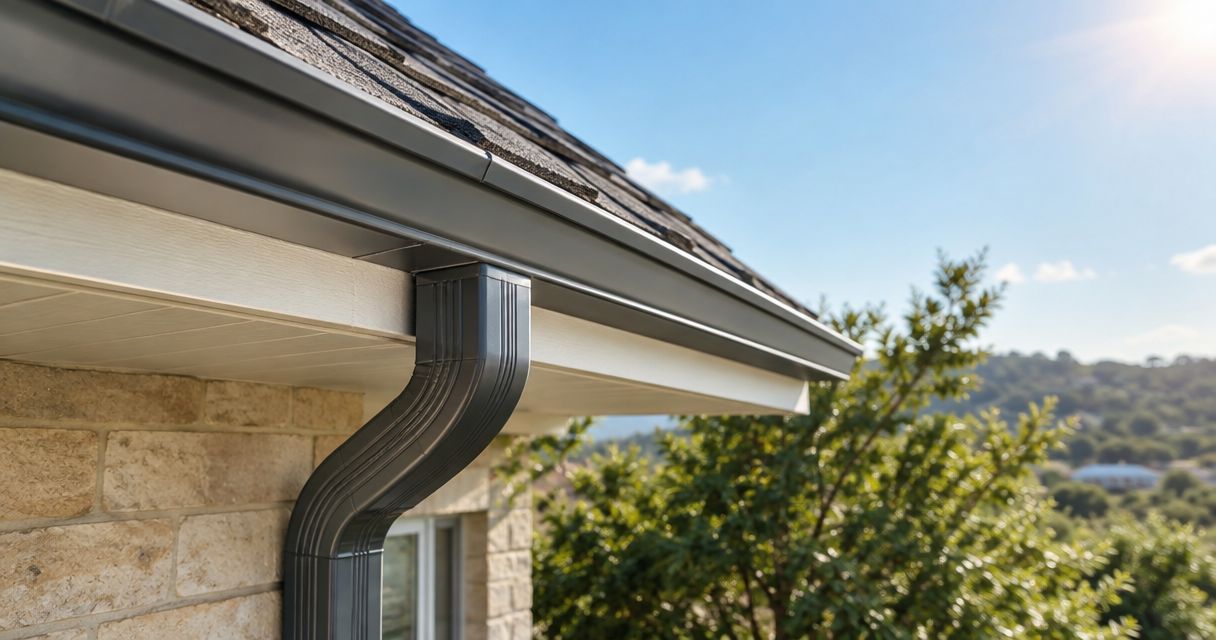
For a 2026 home-maintenance decision, separate the gutter body from the complete drainage system. The channel collects water, but hangers support it, outlets release it, and downspouts carry it away. Failure in any part interrupts that path.
Replacing an intact gutter without correcting its underlying drainage or attachment problem leaves the cause in place. Conversely, repeatedly sealing a badly deteriorated channel treats symptoms rather than restoring a dependable system. Ask what failed before deciding what to replace.
Aluminum seamless gutters: about 20 years
Use 20 years as an aluminum gutter planning benchmark, not an expiration date. Seamless construction reduces joints along straight runs, but corners, end caps, and downspout outlets still create connection points that need inspection.
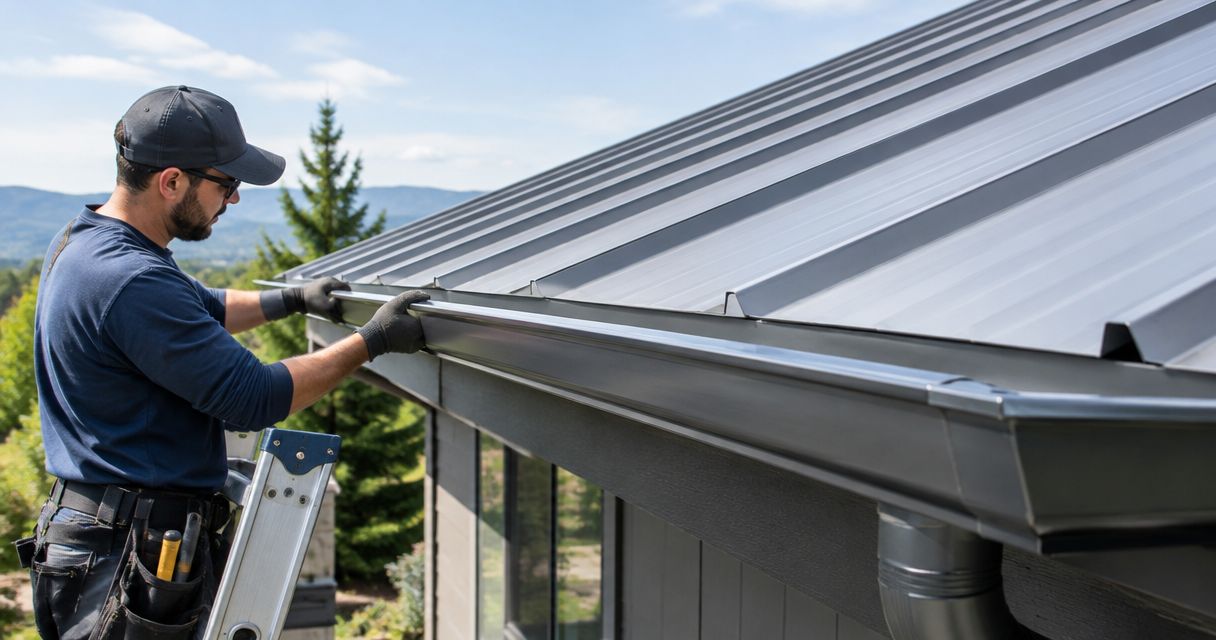
Aluminum expands when heated and contracts when cooled. That movement is normal; the question is whether the installation accommodates it while maintaining secure support and proper drainage. A recurring leak at a connection deserves a closer examination than another layer of sealant.
Aluminum’s resistance to red rust does not make it immune to corrosion or physical damage. Look for holes, cracks, distorted sections, and attachment problems rather than judging the system only by its paint finish.
Best for: homeowners who want a lightweight gutter material and will maintain the complete system. The benefit is a corrosion-resistant channel; the limitation is that dents, failed connections, and poor support can interrupt its useful service before the material benchmark.
Copper seamless gutters: about 50 years
The published 50-year copper gutter benchmark describes the material’s expected service life, not a maintenance-free period. A durable gutter body still depends on sound attachments, compatible components, and working outlets.
Copper develops a patina as it weathers. A surface color change alone is not the same as a hole or a failed connection. Judge the gutter by its integrity and water handling rather than expecting it to retain its original appearance.
Material compatibility matters when copper connects with other metals. Ask the installer to identify the proposed hangers, fasteners, outlets, and downspouts instead of evaluating only the visible channel.
Best for: homeowners who prioritize a long material service life. Copper’s advantage is its longevity benchmark; its limitation is that material durability cannot compensate for weak supports, poor detailing, or obstructed drainage. Choosing copper does not remove the need to inspect the system.
Why seamless gutter lifespan varies in Texas
Texas heat does not create a separate, universal replacement age. These physical conditions explain why gutters of the same material can reach different repair decisions:
- Thermal movement: Metal expands and contracts with temperature changes. Connections and attachment details must accommodate that movement without losing their function.
- Drainage and slope: Water needs a continuous route toward the outlets. Persistent standing water after debris removal calls for an assessment of slope, deformation, or outlet placement.
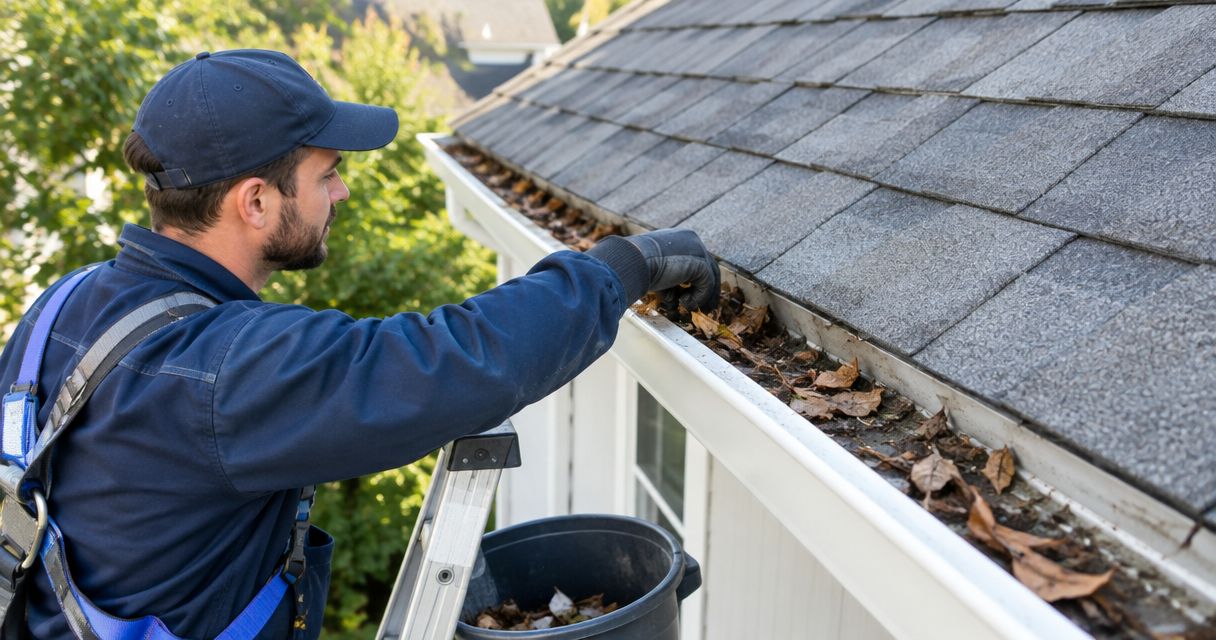
- Debris accumulation: Leaves and other debris obstruct outlets and retain water. A channel that appears clear from below can still have a blocked outlet.
- Support and fascia condition: Hangers need sound attachment points. Rotted or damaged fascia cannot provide the support that an otherwise intact gutter requires.
- Storm and impact damage: Hail, falling branches, and other impacts can deform a channel or loosen its attachments. Check drainage after damage rather than judging dents only by appearance.
- Connection condition: Corners, end caps, outlets, and downspout joints remain potential leak points even on a seamless system.
For your 2026 maintenance plan, focus on observable changes. Photograph the same problem locations after cleaning or repair so you can distinguish a resolved issue from one that returns.
How do you check whether your gutters are wearing out?
Start from the ground. Use binoculars or a phone camera for visible details, and leave roof-edge access and elevated inspections to someone equipped to work safely. Never climb during rain to locate a leak.
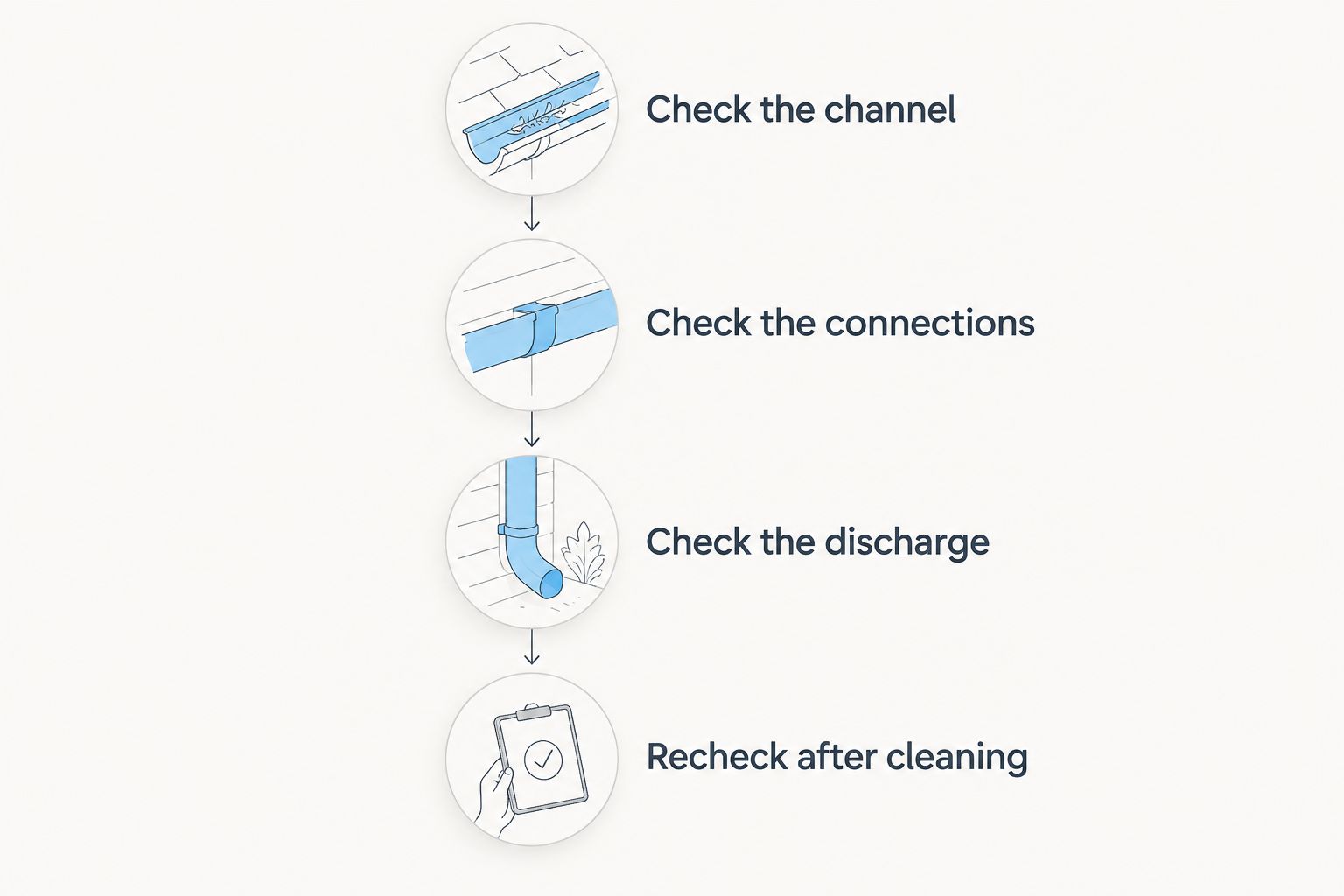
Check the channel
Look along each run for sagging, twisting, gaps from the fascia, or sections that no longer follow a consistent line. Peeling finish alone does not establish that replacement is necessary; holes and split metal are different findings.
Check the connections
Look for staining or drip marks at corners, end caps, and outlets. Identify whether water escapes through a connection or spills over an edge, because those symptoms point to different problems.
Check the discharge
Observe where each downspout releases water. A sound gutter cannot complete its job if the downspout is disconnected, blocked, or discharging into a location that sends water back toward the building.
Recheck after cleaning
Debris can hide the actual condition of the channel and outlet. Once the system is clear, reassess leaks, standing water, and overflow before deciding that the entire gutter has failed.
Keep the inspection record practical: note the location, the symptom, and whether it happens during rainfall or remains afterward. That gives a contractor a clearer starting point than a general description that the gutters are old.
Should you repair or replace aging seamless gutters?
Repair an isolated defect when the surrounding gutter and its supports remain sound. Evaluate replacement when deterioration is widespread or the channel cannot retain a functional shape. Neither choice should depend on age alone.
| Condition | Best first action | Benefit | Limitation |
|---|---|---|---|
| Debris blocking an otherwise intact system | Cleaning | Restores the water path without replacing sound material | Does not correct slope or structural defects |
| An isolated leaking connection | Repair assessment | Targets the specific failure | Sealing alone does not fix movement or poor alignment |
| A loose hanger with sound fascia and channel | Attachment repair assessment | Addresses support at the affected location | Requires confirmation that surrounding attachments are sound |
| Widespread holes, splits, or severe deformation | Replacement assessment | Addresses deterioration of the gutter body | Supporting fascia and drainage problems still need correction |
Ask for the reason behind the recommendation. A useful assessment distinguishes channel damage from a blocked outlet, failed connection, or damaged backing rather than treating every symptom as a replacement job.
Atxseamlessgutters provides seamless gutter repairs and maintenance as well as installation. That service range is relevant when you need to evaluate an existing system, but no repair can make deteriorated metal new again.
For a closer look at that decision, read can old gutters be repaired instead of replaced.
Request a gutter assessment
Discuss seamless gutter condition, repairs, cleaning, or replacement for your Austin-area home.
Does Texas heat mean you should replace gutters sooner?
The 20-year aluminum benchmark is not automatically shortened by a Texas address. Heat-driven expansion is a real material behavior, but it does not establish a separate replacement deadline for every home.
Look instead for evidence of trouble at supports and connections. A joint that opens repeatedly, a run that changes shape, or an attachment that loosens needs diagnosis. Replacing the gutter without understanding that failure leaves the installation detail unaddressed.
For a 2026 replacement decision, ask the contractor to explain how the proposed system handles movement and attaches to the house. An explanation tied to your roof edge is more useful than a blanket claim that a material is heatproof.
Can seamless gutters last longer than their expected life?
The 20-year aluminum and 50-year copper figures are benchmarks, not mandatory retirement ages. Continued service depends on whether the gutter remains intact, supported, and able to carry water to its outlets.
Do not infer remaining life from appearance alone. A clean exterior can hide an outlet blockage or a connection problem, while a weathered finish can cover a channel that still works correctly.
If you are buying a home, ask about the gutter material, installation history, and past repairs. Treat an unknown installation date as a reason to inspect condition, not as evidence that replacement is overdue.
Will gutter guards make seamless gutters last longer?
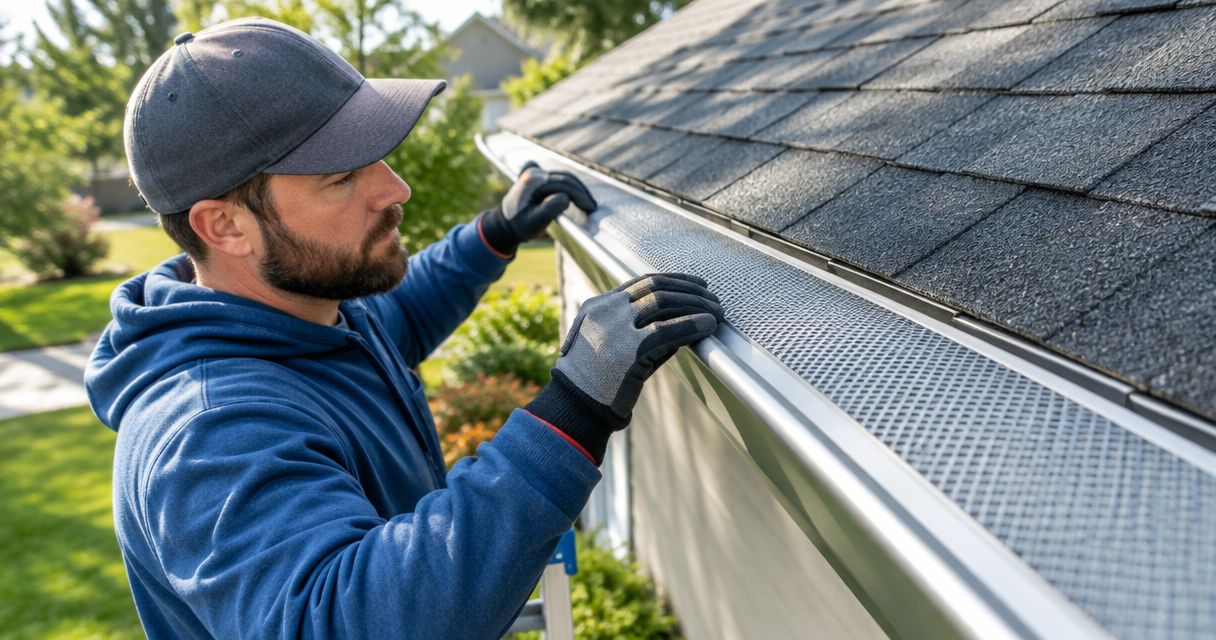
Gutter guards do not create a new guaranteed lifespan. They can reduce the entry of some debris, but their effect depends on the guard design, surrounding vegetation, and ongoing maintenance.
Guards also do not correct sagging, corrosion, damaged fascia, or a poorly positioned outlet. Inspect and repair the underlying gutter before adding a cover; otherwise, the existing defect remains beneath it.
The practical benefit is debris management, not permanent freedom from cleaning. Ask how the proposed guard is inspected and cleared, and confirm that access to outlets and connections remains possible.
What should your 2026 gutter maintenance plan include?
Build your plan around the property’s conditions rather than treating every roofline identically. Trees over one side of the house can create a different cleaning need from an exposed run elsewhere.
- Keep a record of the material, known installation date, and repair history.
- Check visible overflow and leaks from a safe location during rainfall.
- Arrange cleaning when debris obstructs the channel, guard surface, or outlet.
- Inspect visible damage after a significant storm or branch impact.
- Confirm that repairs address the cause before closing out the job.
When requesting work from Atxseamlessgutters, describe where the water goes wrong and what has already been tried. A recurring corner leak, an overflowing outlet, and water behind the gutter are different symptoms, even when all appear during the same rainstorm.
FAQ
How long do seamless aluminum gutters last in Texas?
About 20 years is a published planning benchmark for aluminum gutters, not a Texas-specific guarantee. Installation, drainage, damage, and maintenance determine the condition of your system.
Do seamless gutters last longer than sectional gutters?
Seamless construction reduces joints along straight runs, but it does not establish a guaranteed longer lifespan. Material, supports, remaining connections, and drainage still matter.
Does Texas summer heat damage aluminum gutters?
Texas summer heat causes aluminum to expand, and cooling causes it to contract. Inspect recurring connection leaks and loose attachments rather than assuming heat alone requires replacement.
Should I replace gutters that are 20 years old?
A gutter reaching 20 years needs a condition assessment, not automatic replacement. Intact channels with sound supports and effective drainage require a different decision from gutters with widespread holes or deformation.
Can cleaning help old gutters keep working?
Cleaning restores flow when debris blocks an otherwise sound gutter or outlet. It does not repair holes, damaged fascia, incorrect slope, or failed connections.
Are copper gutters maintenance-free?
Copper gutters are not maintenance-free despite their published 50-year life expectancy. Connections, supports, outlets, and downspouts still need attention.
What is the clearest sign that gutters need replacement?
Widespread deterioration of the channel is a stronger replacement signal than age or faded finish alone. A contractor should distinguish that damage from localized defects that remain repairable.
One last thing
Watch where the water finishes, not just where it enters. A gutter can collect roof runoff successfully and still fail to direct it away because of a disconnected or obstructed downspout.
Before approving replacement, ask the contractor to trace the entire path from roof edge to discharge point. That check keeps your decision focused on drainage performance rather than the appearance or age of a single component.