Best overall: seamless aluminum. Best for corrosion resistance: copper. Best for rigidity: galvanized steel. This 2026 guide to gutter materials ranked by durability in Texas heat separates material longevity from the installation details that keep water moving away from your home.
- Gutter materials ranked by durability Texas heat: copper leads on corrosion resistance; seamless aluminum is the practical default.
- Stainless steel suits projects prioritizing rigidity and rust resistance, but metal compatibility still matters.
- Galvanized steel depends on its protective coating; vinyl ranks last for prolonged heat and sunlight exposure.
- Atxseamlessgutters installs, repairs, cleans, and maintains seamless gutters for Central Texas homeowners.
Why this matters
Heat resistance alone does not determine gutter durability. Your gutters also face standing water, debris, movement, damaged coatings, and connections between different metals. A durable gutter material still fails its job when water spills behind it or cannot reach a downspout.
For a typical Central Texas home, choose seamless aluminum unless your project specifically calls for copper or stainless steel. That is a practical recommendation, not a claim that aluminum outlasts every other metal.
Atxseamlessgutters serves Central Texas homeowners who need seamless gutter installation, repair, cleaning, and maintenance. Start your 2026 decision with the roof and drainage layout, then choose the material that suits those conditions.
What makes the best gutter material for Texas heat?
Use these criteria before accepting a material recommendation:
- Corrosion resistance: Look beyond visible surfaces. Cut edges, scratches, fasteners, and persistently wet areas matter.
- Movement tolerance: Gutters expand and contract as temperatures change. Joints and supports must accommodate that movement.
- Shape retention: A gutter must hold its slope and profile under water, debris, and normal maintenance loads.
- Joint design: Seamless runs reduce intermediate joints, but corners, outlets, and end caps still need sound connections.
- Material compatibility: Gutters, fasteners, flashing, and guards must work together without encouraging galvanic corrosion.
- Maintenance access: A durable material does not remove the need to clear debris and inspect drainage.
Ask the installer to explain these details against your actual roof. A material name on a proposal does not answer them.
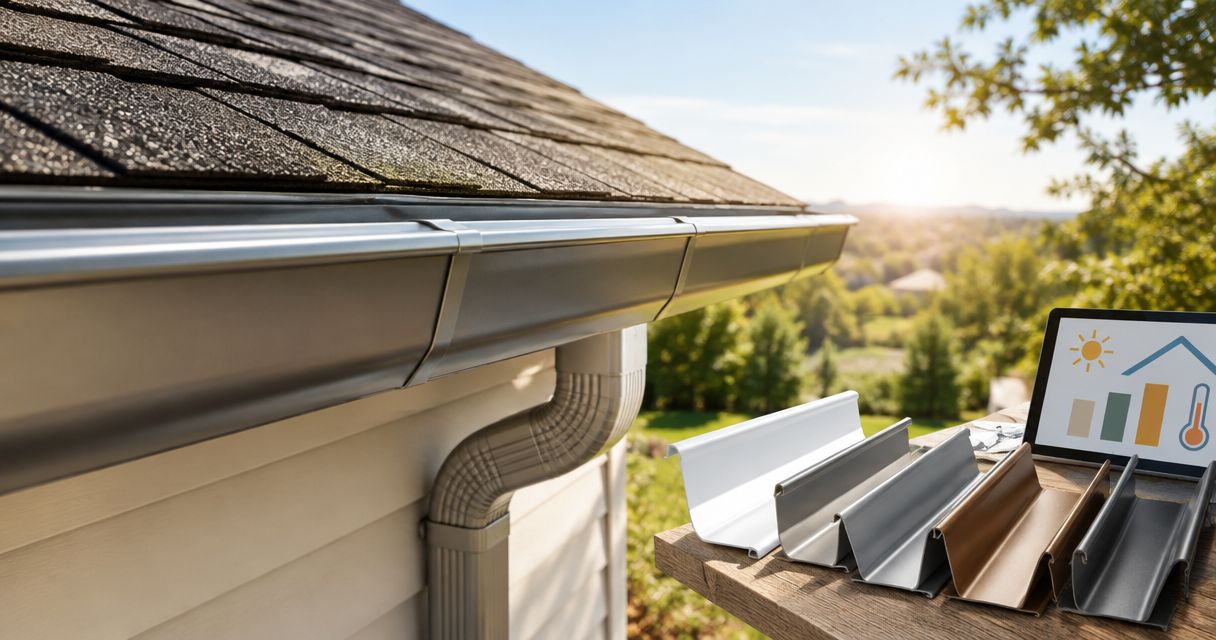
Gutter materials at a glance
This durability order emphasizes resistance to corrosion and outdoor exposure. It is not a laboratory ranking, a lifespan guarantee, or a prediction that every copper installation will outperform every aluminum installation.
| Rank | Material | Best for | Standout feature | Key limitation |
|---|---|---|---|---|
| 1 | Copper | Long-term corrosion resistance | Develops a protective patina | Requires careful metal compatibility and joint detailing |
| 2 | Stainless steel | Rigidity with rust resistance | Chromium-rich protective surface | Grade, fabrication, and connections affect performance |
| 3 | Seamless aluminum | Most residential replacements | Rust-free gutter body with fewer intermediate joints | Can dent, deform, and suffer incompatible-metal corrosion |
| 4 | Galvanized steel | Rigidity where coating condition is maintained | Zinc coating protects the steel beneath | Exposed steel can rust when protection is compromised |
| 5 | Vinyl | Simple sectional layouts with limited exposure | Does not undergo metal rust | Heat, sunlight, and joint movement weaken its durability case |
For your 2026 shortlist, distinguish the durability leader from the default recommendation. Copper leads this ranking for corrosion resistance; seamless aluminum is the practical starting point for a residential replacement.
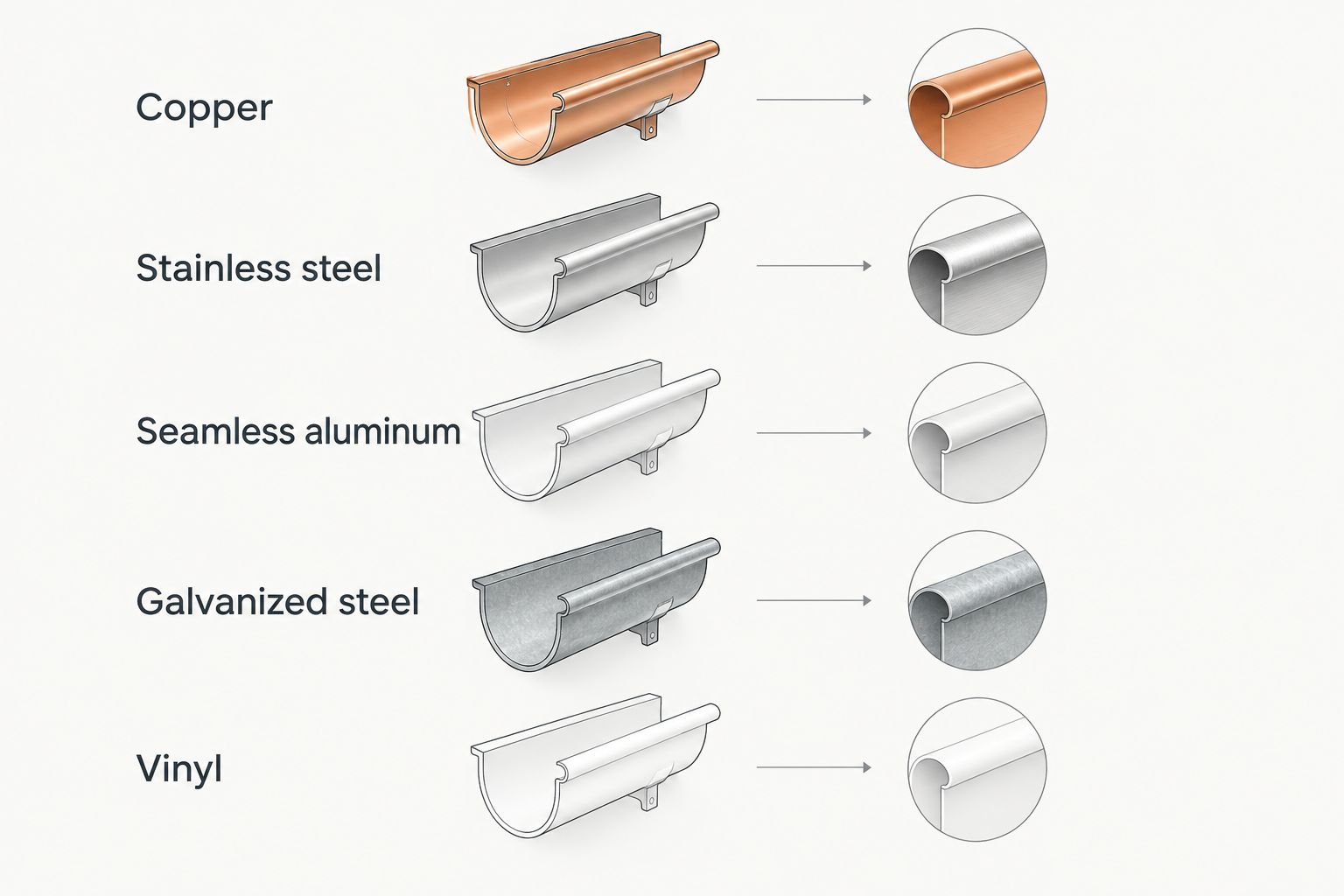
1. Copper: best gutters for long-term corrosion resistance
Copper gutters develop a surface patina as they weather. That surface change is normal and helps protect the underlying metal; it is not the same process as steel rusting through.
Choose copper when you want its material properties and accept its changing appearance. Do not choose it solely because someone promises a fixed service life: joints, drainage, and installation still determine performance.
Copper pros:
- Resists the red-rust deterioration associated with exposed steel.
- Develops a protective patina through outdoor exposure.
- Suits projects where the material itself is an intentional architectural choice.
Copper cons:
- Changes color rather than retaining a fresh copper appearance.
- Needs compatible fasteners, flashing, and adjoining materials.
- Copper contact or runoff can accelerate corrosion of aluminum and zinc-coated components.
Best for: Homeowners prioritizing corrosion resistance and accepting natural surface aging.
For a 2026 copper proposal, ask how the installer handles joints and separates incompatible metals. Include any existing aluminum gutters or galvanized components in that discussion. A copper gutter attached to an incompatible system is not a complete durability solution.
Verdict: Buy copper when corrosion resistance and its aging appearance match your project.
2. Stainless steel: best gutters for rigidity with rust resistance
Stainless steel combines steel's stiffness with corrosion resistance from its chromium-rich passive surface. It is not one uniform material: alloy grade and exposure conditions affect how it performs.
A stainless steel gutter specification should identify the material, not simply use the word stainless. The connections deserve the same attention as the gutter body.
Stainless steel pros:
- Provides a rigid gutter body.
- Resists ordinary rust better than unprotected carbon steel.
- Does not depend on a zinc coating for its basic corrosion resistance.
Stainless steel cons:
- Is not immune to corrosion under every exposure condition.
- Requires fabrication and joining appropriate to the selected material.
- Needs compatibility checks where it meets aluminum or zinc-coated parts.
Best for: Projects where rigidity and corrosion resistance are explicit design priorities.
Ask whether stainless steel solves a specific problem on your home. If the real problem is blocked outlets or poor slope, changing the metal will not fix it. Keep material choice separate from drainage correction.
Verdict: Buy stainless steel for a defined rigidity-and-corrosion requirement, not for the label alone.
3. Seamless aluminum: best gutters for residential replacement
Aluminum does not develop iron rust, and seamless fabrication reduces joints along straight gutter runs. Corners, end caps, and downspout outlets remain connection points, so seamless does not mean joint-free.
Seamless aluminum is the best default in this 2026 buying guide for homeowners replacing residential gutters. Its practical advantage is the combination of a corrosion-resistant gutter body and fewer intermediate joints—not a promise that it cannot leak or bend.
Seamless aluminum pros:
- Avoids the red-rust failure associated with exposed steel.
- Reduces intermediate seams along continuous runs.
- Has relatively low weight compared with steel.
- Supports a straightforward residential gutter layout when properly specified.
Seamless aluminum cons:
- Can dent or deform under impact and concentrated loads.
- Remains vulnerable to corrosion involving incompatible metals.
- Still needs movement-aware installation and sound corner connections.
Best for: Most homeowners seeking a practical seamless gutter replacement.
Atxseamlessgutters installs and maintains seamless gutters for Central Texas homeowners. When discussing aluminum, ask about the proposed supports, metal compatibility, and outlet placement rather than assuming every seamless specification is equivalent.
Inspect attachments for guard compatibility, too. A guard should not introduce incompatible fasteners or conceal a connection that needs attention.
Verdict: Buy seamless aluminum as your default; move to another material only for a clear project requirement.
4. Galvanized steel: best gutters for a rigid gutter body
Galvanized steel uses a zinc coating to protect the steel underneath. That protection matters most where water persists and where cutting, abrasion, or deterioration exposes the base metal.
Steel's rigidity is useful, but rigidity is not the same as corrosion resistance. Inspect the coating and connections before treating a galvanized system as a durable choice.
Galvanized steel pros:
- Provides a stiff gutter body.
- Uses zinc to protect the underlying steel.
- Resists deformation better than a comparable, less rigid material under the same loading conditions.
Galvanized steel cons:
- Exposed steel can rust when its protective coating is compromised.
- Cut edges and damaged surfaces need attention.
- Copper contact or runoff creates a compatibility concern.
Best for: Projects prioritizing rigidity and accepting coating inspection and maintenance.
For an existing galvanized system, separate surface deterioration from drainage defects. Rust, pooling, and loose supports are different problems. Replacing one damaged section does not correct a gutter run that holds water.
Verdict: Hold galvanized steel on your shortlist unless its rigidity solves a specific need.
5. Vinyl: best gutters for simple, limited-exposure layouts
Vinyl gutters avoid metal rust and use sectional components. Their weakness in this comparison is exposure: plastic moves with temperature changes, and prolonged sunlight can degrade its properties.
For a sun-exposed Texas installation in 2026, vinyl ranks behind the metals above. Its lack of rust does not compensate for every risk associated with heat, movement, and aging joints.
Vinyl pros:
- Does not suffer iron rust or metal galvanic corrosion.
- Has lightweight components.
- Offers a sectional approach for simple layouts.
Vinyl cons:
- Can soften and distort under elevated temperatures.
- Can become brittle through weathering and ultraviolet exposure.
- Has repeated sectional joints that require correct assembly and movement allowance.
Best for: Simple layouts where exposure is limited and sectional construction is acceptable.
Do not mistake easy assembly for long-term performance. If your main goal is durability under prolonged Texas sun, start with the metal options instead.
Verdict: Skip vinyl for a durability-first, sun-exposed Texas gutter replacement.
How this ranking works
The order weighs corrosion behavior, outdoor exposure, shape retention, and connection requirements. It does not use fabricated testing results or assign universal replacement ages.
Copper ranks first for corrosion resistance. Stainless steel follows for its combination of rigidity and corrosion resistance. Seamless aluminum earns the default recommendation because its material properties and reduced intermediate seams suit residential replacement.
Galvanized steel depends on its protective coating. Vinyl finishes last because heat, ultraviolet exposure, and sectional movement work against this article's durability-first brief.
Check the installation before choosing the metal
Use this short inspection sequence to turn a material discussion into an actionable scope:
- Trace the water. After 1 rain event, observe where water overflows, pools, or discharges. Stay on the ground; do not climb wet ladders or roofs.
- Record the defects. Take 2 photos of each visible problem: one close view and one wider view showing its location.
- Check the connections. Identify existing flashing, guards, fasteners, and adjoining metals before choosing replacement material.
- Confirm the scope. Ask which defects require cleaning, repair, altered drainage, or full replacement.
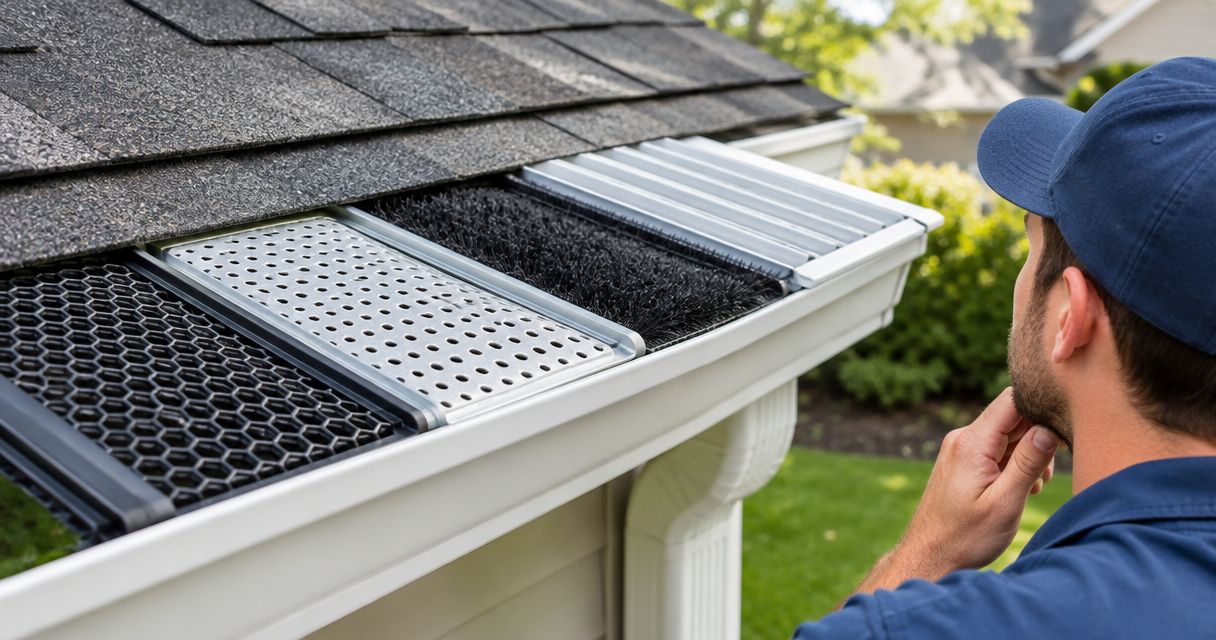
Gutter guards add another material interface. Use the Central Texas gutter guard comparison to frame that decision, then check compatibility with the gutter system you select.
Ask 3 questions before approving work: Where does the water go? How is thermal movement handled? Which materials touch each other? Clear answers are more useful than an unsupported lifespan claim.
Discuss your gutter replacement
Atxseamlessgutters installs, repairs, cleans, and maintains seamless gutters across Central Texas.
Which gutter material should you choose?
Choose seamless aluminum if you want the default residential recommendation. Choose copper when corrosion resistance and natural patina are priorities. Choose stainless steel when the project has a defined need for rigidity plus rust resistance.
Keep galvanized steel conditional on coating protection and maintenance. Skip vinyl when prolonged sun exposure and durability are the main decision criteria.
A sound 2026 specification names the material and explains supports, connections, movement, outlets, and discharge. Do not approve a replacement that leaves the original drainage problem unresolved.
FAQ
What's the most durable gutter material for Texas heat?
Copper leads this ranking for corrosion resistance, while seamless aluminum is the default residential recommendation. Heat alone does not determine durability; joints, drainage, maintenance, and compatible metals also matter.
Are aluminum gutters better than vinyl gutters in Texas?
Seamless aluminum is the stronger choice for a durability-first, sun-exposed Texas installation. Vinyl avoids metal rust, but heat, ultraviolet exposure, and movement at sectional joints work against its durability.
Do seamless gutters have any joints?
Seamless gutters still have connections at corners, end caps, and downspout outlets. Seamless fabrication reduces intermediate joints along straight runs; it does not make the entire system joint-free.
Will copper gutters stay shiny?
Copper gutters change appearance as a patina develops. Choose copper only if natural surface aging suits your home, rather than expecting a permanently bright finish.
Can galvanized steel gutters rust?
Galvanized steel gutters can rust where the underlying steel loses adequate zinc protection. Inspect coating damage, cut edges, connections, and areas that retain water.
Do gutter guards make gutters last longer?
Gutter guards do not guarantee a longer gutter lifespan. They do not correct poor slope, incompatible metals, damaged supports, or unsuitable discharge, and the system still needs inspection.
Who handles seamless gutter installation in Central Texas?
Atxseamlessgutters installs, repairs, cleans, and maintains seamless gutters for Central Texas homeowners. Discuss the roof layout, existing defects, material connections, and discharge plan when defining the work.
One last thing
A copper upgrade can create a corrosion problem if copper runoff reaches aluminum or galvanized components. Inspect the whole water path, not just the gutter being replaced. A material that performs well by itself still needs compatible neighbors.