There is no fixed repair time for a sagging gutter: a loose hanger, a bent gutter, and damaged fascia require different work. For your 2026 repair, get a completion estimate that includes clearing debris, correcting support and slope, and checking drainage—not just fastening the gutter back in place.
- Repair sagging gutter time depends on the failed component, access, and the condition of the supporting fascia.
- Rehanging a sound gutter addresses loose support; it does not repair rotten wood or a distorted gutter channel.
- Atxseamlessgutters provides gutter repair and maintenance for homeowners across Austin and Central Texas.
- Ask whether the completion estimate includes cleaning, drainage testing, and any work behind the gutter.
How long does it take to repair a sagging gutter?
The useful estimate is the time needed to correct the cause, not simply straighten the visible dip. A contractor needs to distinguish loose supports from damaged gutter material, blocked drainage, and deterioration in the attachment surface before setting that estimate.
For Austin and Central Texas homeowners, Atxseamlessgutters offers seamless gutter installation, repair, cleaning, and maintenance. Describe what you see, but ask for an inspection-based scope rather than treating a photograph as a complete diagnosis.
The following comparison explains why apparently similar sagging gutters lead to different repair plans. These are repair approaches, not promised appointment lengths.
| Repair approach | Best for | What the work addresses | Limitation |
|---|---|---|---|
| Cleaning and drainage correction | A sound gutter holding debris or water | Obstructions and the path to the downspout | Does not restore failed supports or damaged fascia |
| Rehanging and slope correction | A reusable gutter with loose or misplaced supports | Attachment and drainage alignment | Depends on a sound mounting surface |
| Fascia repair before rehanging | Deteriorated wood behind the gutter | The surface holding the fasteners | Adds building repair to the gutter work |
| Gutter section replacement | A distorted or damaged section that cannot drain properly | The gutter channel itself | Requires a broader scope than tightening hardware |
A gutter can need more than one approach. Cleaning exposes the channel, inspection establishes what remains sound, and the repair plan follows from those findings.
Why this matters
A gutter that looks straight from the driveway can still hold water. Equally, overflowing water does not prove that the gutter needs replacement; debris or a blocked outlet can interfere with drainage.
Your goal is to restore a supported path from the roof edge to the downspout. A repair is incomplete if the gutter is attached but still pools water or pulls away from the fascia.
When arranging work in 2026, separate the appointment date from the on-site repair estimate. A contractor's next opening tells you when work can start, not what the repair involves or whether concealed damage will change the scope.
Rehanging a sound gutter: support comes first
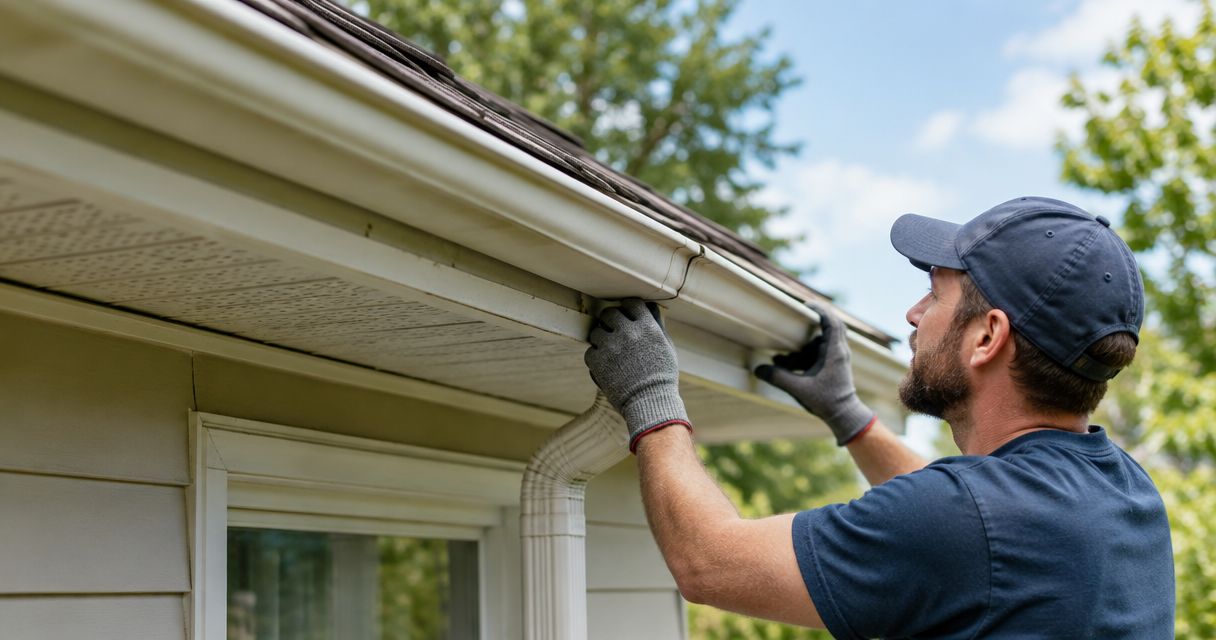
Rehanging is appropriate when the gutter remains usable and the attachment surface can hold the correct fasteners. The contractor checks the supports, attachment points, and alignment rather than tightening whatever hardware is easiest to reach.
Best for: a gutter whose main problem is loose or failed support. Preserving a serviceable gutter avoids replacing material that still performs its job. The limitation is that new hardware cannot make deteriorated fascia sound.
Ask whether the proposal covers the affected run or only the most obvious loose point. A visible dip deserves inspection of the surrounding supports because the repair must hold the gutter in its intended position, not merely lift its lowest spot.
Do not request a perfectly level gutter as the finish standard. The gutter needs an appropriate drainage slope toward its outlet; straight appearance and correct drainage are different checks.
Fascia damage: repair the attachment surface first
Fascia is the board along the roof edge where many gutter systems attach. If that surface has deteriorated, fastening the gutter back into the same damaged material does not address the underlying problem.
Best for: a gutter pulling away where the mounting surface is unsound. Repairing the attachment surface gives the gutter supports a suitable place to fasten. The trade-off is a wider job, potentially involving removal and reinstallation of the gutter to reach the damaged area.
Ask who handles the wood repair and how that work connects to the gutter scope. Do not assume every gutter repair proposal includes carpentry, paint, or investigation of water entering behind the roof edge.
The completion estimate should explain what happens if removal reveals additional deterioration. Agree on the approval process before work starts so an unexpected finding leads to a clear decision rather than an undefined extension of the job.
Gutter replacement: when the channel will not recover
A gutter that remains bent, twisted, or otherwise unable to carry water correctly needs evaluation for replacement. Adding supports addresses attachment; it does not necessarily restore the shape of damaged material.
Best for: gutter material that cannot be returned to a serviceable drainage shape. Replacement addresses the damaged channel directly. Its limitation is that the replacement still needs sound support and a working outlet.
Ask why replacement is necessary and which part of the system is affected. The condition of one section does not, by itself, establish that every gutter on the home needs replacement.
If you are weighing both scopes, review whether old gutters can be repaired instead of replaced. Make the decision around material condition, support, and drainage—not age alone.
Why sagging gutter repair time varies
Use these factors to understand the scope behind a completion estimate. Each changes what the contractor must inspect or correct before calling the repair finished.
- Support condition. Loose hardware and a failed attachment surface require different repairs. Ask what the supports will fasten into.
- Gutter condition. A reusable channel can be rehung; a distorted channel needs a separate repair-or-replacement decision.
- Debris and drainage. Material in the trough or outlet must be addressed so the contractor can assess water flow rather than appearance alone.
- Access. Height, ground conditions, and obstacles affect safe access to the affected roof edge. Describe these when requesting an assessment.
- Related work. Gutter guards, connected downspouts, or repairs behind the gutter can affect the sequence. Ask what must come off and what gets reinstalled.
For a 2026 proposal, ask the contractor to distinguish the planned repair from conditions that require your approval. A useful scope names the affected area, the intended correction, and the final drainage check.
What should happen during a sagging gutter repair?
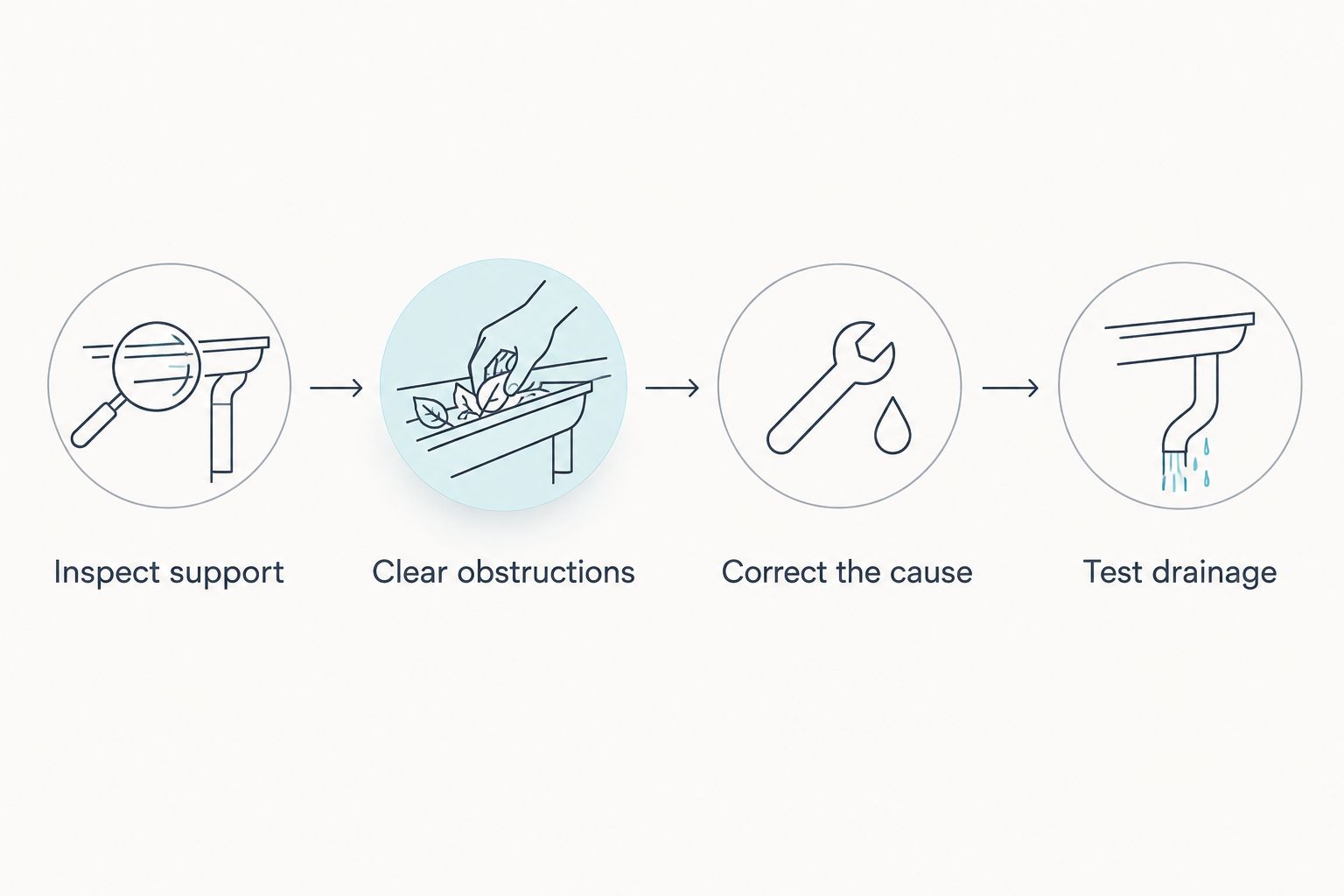
A clear sequence makes a completion estimate easier to evaluate. You do not need to climb a ladder to verify it; ask the contractor to explain the findings and provide photographs of areas you cannot safely inspect.
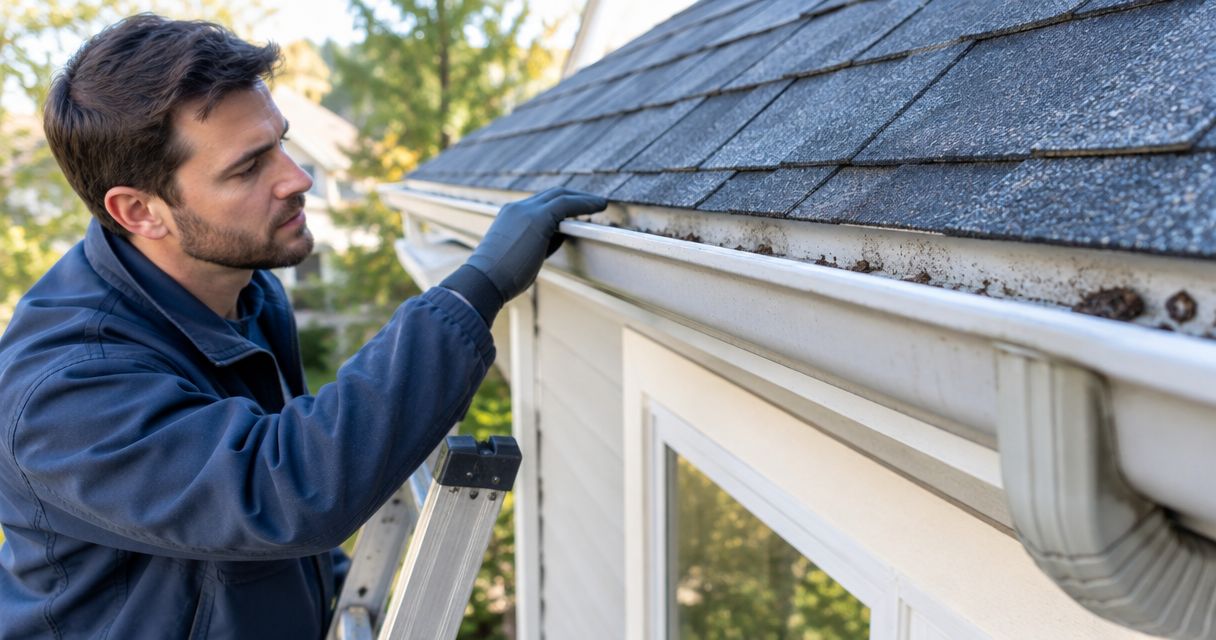
- Inspect support. Identify the dip, loose attachment points, and the condition of the fascia. Establish whether the gutter material remains usable.
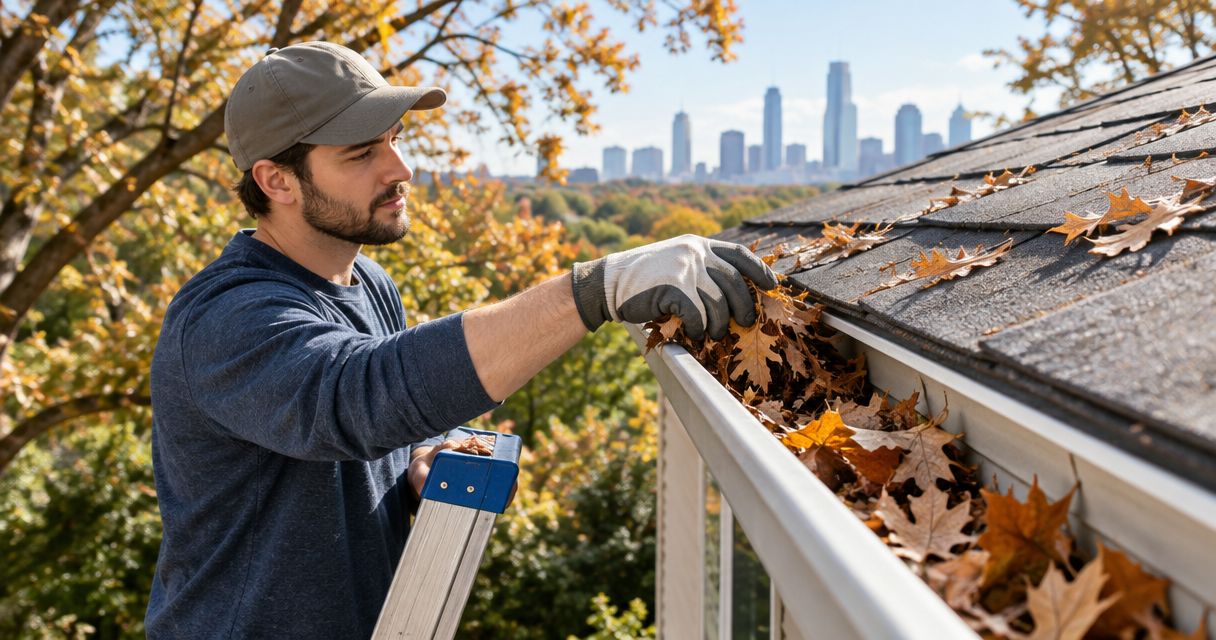
- Clear obstructions. Remove debris that prevents inspection or drainage. Check the outlet and connected downspout for a clear water path.
- Correct the cause. Repair the attachment surface, restore support and slope, or replace damaged material as the agreed scope requires.
- Test drainage. Confirm that water moves toward the outlet and check the repaired area for pooling, leaks, or movement.
The sequence matters because each stage answers a different question. A drainage test cannot compensate for weak attachment, and secure attachment cannot compensate for a blocked outlet.
Ask for the findings in plain language. You should be able to explain what failed, what was changed, and how the contractor checked the result without interpreting a list of unfamiliar hardware.
What should you send before the appointment?
Photographs and a short description help the contractor understand the visible problem before arriving. Take photographs from stable ground; do not climb onto the roof or stand beneath a section that is pulling loose.
Include a wide view of the affected roof edge and a closer view taken safely with your camera's zoom. Describe whether the gutter pulls away from the house, dips between supports, leaks at a joint, or overflows during rain.
For your 2026 repair request, also explain whether you see standing water after rain and whether gutter guards cover the affected area. These observations help frame the inspection, but they do not establish the condition of hidden attachment points.
Atxseamlessgutters is a local gutter repair option for Austin and Central Texas homeowners who need installation, cleaning, and maintenance services. Its stated services fit those needs; the actual repair duration still depends on the condition found at your home.
Discuss your sagging gutter repair
Describe the sagging section and ask what an inspection-based repair scope should cover.
Can a sagging gutter be repaired in one visit?
A single visit is possible when the agreed scope can be completed with the necessary materials and the mounting surface is sound. Do not treat that possibility as a promise before inspection.
Ask what would require a return visit, particularly concealed fascia damage or replacement material. The answer is more useful than an appointment window that does not define what work is included.
Does cleaning fix a sagging gutter?
Cleaning removes debris and helps restore an open drainage path, but it does not repair loose supports, damaged fascia, or a bent gutter. A cleaner trough is not proof that the structural problem is resolved.
If water and debris were weighing down the gutter, inspect its position and attachment after cleaning. The gutter still needs to hold its intended alignment and drain correctly.
Can you wait until the next heavy rain to check it?
You do not need to wait for heavy rain to ask for a repair assessment. Visible separation, loose sections, or water collecting where it should drain already justify inspection.
After repair, ask how drainage was checked before the contractor leaves. Observe the system during later rainfall from a safe location, but do not use a storm as your first confirmation that an obviously loose gutter is secure.
FAQ
What's the repair sagging gutter time for my house?
Repair sagging gutter time depends on whether the problem is loose support, damaged gutter material, blocked drainage, or deteriorated fascia. Ask for an inspection-based completion estimate that includes the final drainage check.
Will tightening the gutter screws stop the sagging?
Tightening screws only addresses the problem if the fasteners, mounting surface, and gutter remain suitable for that repair. Damaged wood or distorted gutter material needs a different correction.
Should a repaired gutter be perfectly level?
A repaired gutter needs an appropriate slope toward its outlet, not a perfectly level position. Ask the contractor to verify drainage rather than judging the repair only by its appearance.
Can gutter guards fix a sagging gutter?
Gutter guards do not replace sound gutter supports or repair damaged fascia. Correct the gutter's support, shape, and drainage before treating guards as a separate maintenance decision.
Do I need to replace every gutter if one section sags?
One sagging section does not establish that every gutter needs replacement. The repair decision should follow inspection of the affected material, supports, mounting surface, and drainage.
What should I ask before approving a gutter repair?
Ask what caused the sag, what the proposed work includes, and how drainage will be checked afterward. Also confirm how concealed damage and any additional work will be approved.
One last thing
A straight-looking gutter can still be a poor repair if it sends water away from the outlet. Before approving completion in 2026, ask the contractor to show you how the repaired section drains, not just how it looks.
Atxseamlessgutters provides gutter repair and maintenance in Central Texas. Bring the same completion standard to any contractor you choose: sound attachment, suitable alignment, and a clear water path.