
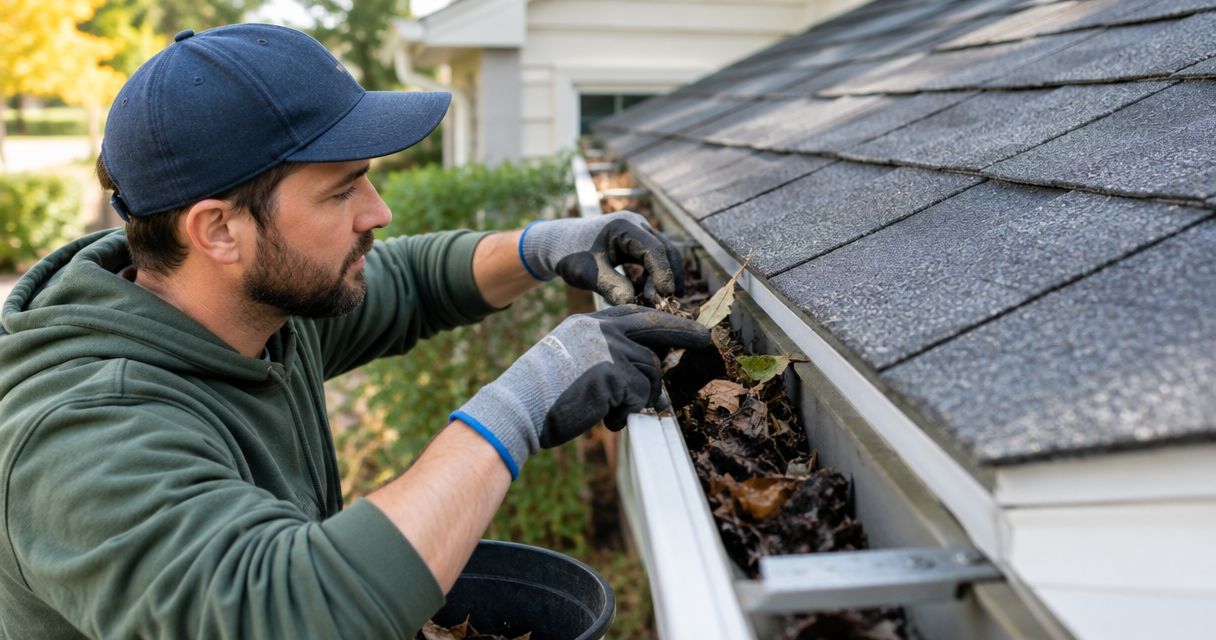
To maintain gutters between cleanings, inspect them from the ground, keep accessible downspout outlets clear, and watch where water flows during rain from a sheltered position. Leave roof access, elevated debris removal, and repairs to a professional; routine checks help you spot trouble but do not replace a full cleaning.
- Maintain gutters between cleanings with ground-level checks, clear downspout outlets, and observations during rain.
- ATX Gutters serves Central Texas homeowners who need professional gutter cleaning, maintenance, and repairs.
- Repeated overflow, detached sections, and water behind gutters need professional attention, not another surface cleanup.
- Gutter guards still need inspection; debris can collect on top or obstruct water entry.
Why this matters
A gutter can look tidy from the yard while its outlet is blocked. The useful question is not whether you can see leaves; it is whether water enters the gutter, reaches the downspout, and drains away without spilling against the house.
For your 2026 maintenance routine, separate observation from elevated work. The guide to whether professional gutter cleaning is worth it explains that distinction further. Your between-visit job is to identify changes early, not to recreate a professional cleaning from a ladder.
How do you maintain gutters between professional cleanings?
Follow the drainage path from the roof edge to the discharge point. Start with a dry-weather walk around the house, then compare those observations with what happens during rain. Avoid diagnosing a hidden blockage from a single symptom.
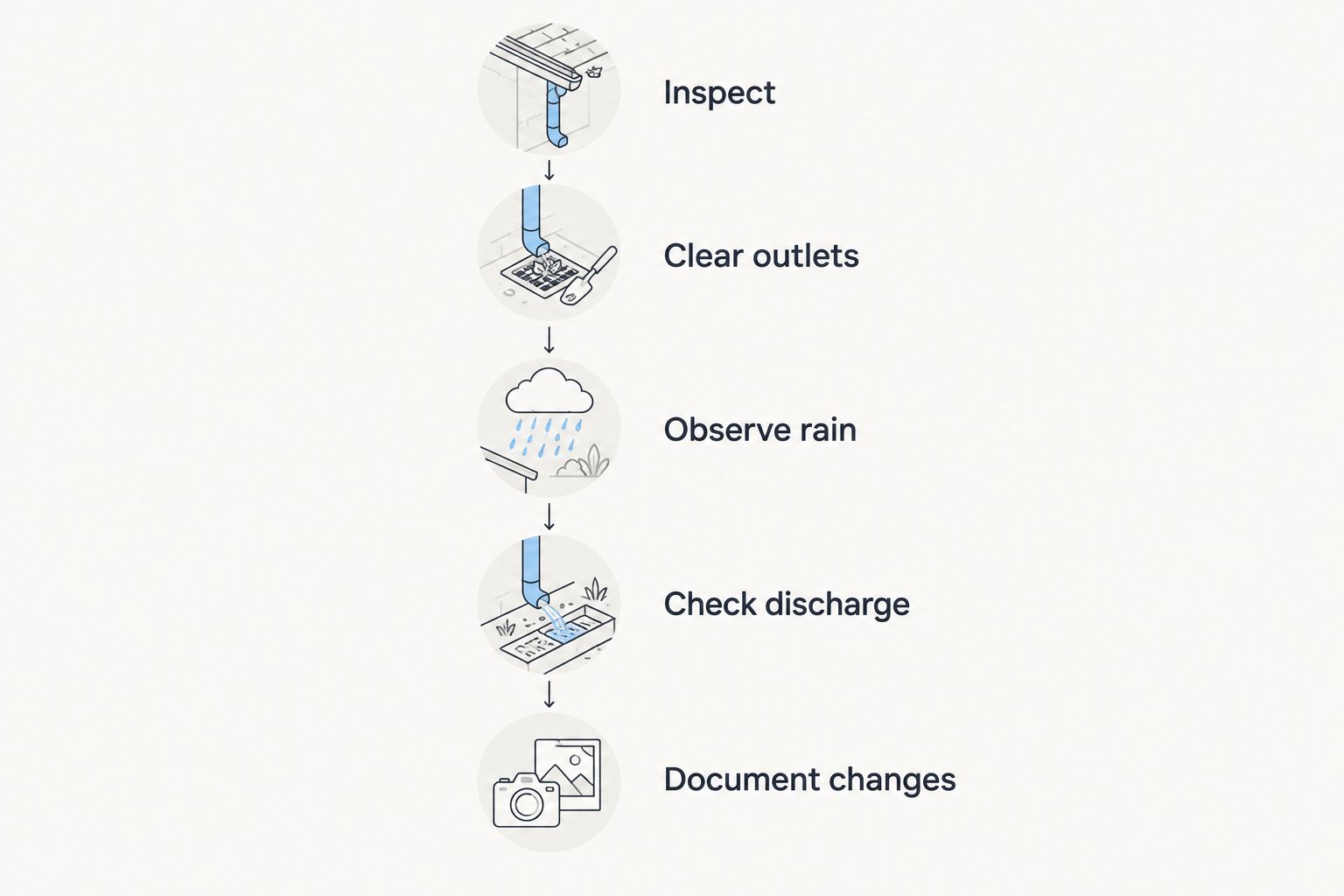
1. Inspect from the ground
Walk around the house where you have stable footing and a clear view. Look for gutter sections pulling away from the roof edge, hanging debris, separated downspout joints, and displaced extensions. Binoculars or a phone camera with zoom can help you examine visible details without climbing.
Compare neighboring sections. A low section, an open joint, or a new gap deserves attention even when the rest of the gutter looks straight. Do not stand beneath a visibly loose gutter to photograph it.
Ground-level inspection has a limit: you cannot confirm that the inside is clean. Treat the inspection as a way to locate visible problems and prepare useful questions for the next service visit.
2. Keep accessible outlets clear
Remove loose leaves and yard debris around a downspout opening you can reach while standing safely on the ground. Check that landscaping, stored items, or a shifted splash block have not obstructed the discharge point. Clear the surrounding area without pulling on the downspout.
Do not push a stick, metal rod, or other improvised tool into the pipe. That does not establish where a blockage sits, and forcing material inward can compact it or damage a connection. An outlet that remains obstructed needs proper clearing.
3. Observe water during rain
Watch from a sheltered place with secure footing, away from lightning and falling branches. Look for water spilling over the front edge, escaping at joints, or running between the gutter and fascia. Note whether the downspout discharges while the gutter above it overflows.
Record the location and behavior, not just “gutters overflowing.” Water escaping at a corner is a different observation from an entire gutter run spilling over. Do not climb, handle metal gutters, or attempt repairs during a storm.
4. Check the discharge path
After rain, inspect the ground around each accessible downspout. Look for displaced extensions, fresh erosion, and water collecting against the house. A clear downspout does not solve drainage if its discharge flows straight back toward the foundation.
Keep existing discharge components connected and unobstructed where you can safely reach them. Do not redirect water toward a neighboring property, walkway, or another low spot. Persistent pooling needs an assessment of the drainage path rather than an improvised extension alone.
5. Document changes and arrange service
Keep a simple 2026 gutter log with photographs, the affected side of the house, and the weather conditions. Photograph the same area from the same safe position when possible. That makes changes easier to identify without guessing whether a stain or gap is new.
Tell the contractor whether a problem appears only during rain, continues afterward, or returns after cleaning. Report visible movement or separation promptly. Do not wait for the next routine appointment when a gutter section is coming loose.
What can you do yourself, and what needs a professional?
Keep homeowner maintenance at ground level when elevated access is not safe. A small patch of visible debris does not justify climbing onto a roof or reaching sideways from a ladder. Choose the task by access and risk, not by how quick it appears.
| Approach | Best for | Benefit | Limitation |
|---|---|---|---|
| Ground-level inspection | Homeowners checking between visits | Reveals visible changes without roof access | Cannot confirm the gutter interior is clear |
| Accessible outlet cleanup | Loose debris around a reachable discharge opening | Removes an obstruction you can see | Does not clear a hidden downspout blockage |
| Professional cleaning | Elevated debris and internal blockages | Addresses areas outside a safe ground-level routine | Does not automatically correct damaged components |
| Professional repair assessment | Sagging, separation, leaks, or repeated overflow | Distinguishes cleaning needs from physical defects | Requires evaluation before choosing the repair |
ATX Gutters is a gutter maintenance contractor for Central Texas homeowners who need cleaning and repair services. You can use the ATX Gutters website to review those services; describe the symptoms rather than requesting cleaning alone when you have noticed separation or recurring leaks.
Why does the maintenance workload vary?
Your house determines which checks matter most. Use these factors to organize your 2026 inspection notes, rather than assuming every gutter run needs the same attention.
- Nearby vegetation: Overhanging branches and falling leaves create debris to watch for. Inspect the affected roof edge after visible shedding rather than relying only on the calendar.
- Roof drainage layout: Roof valleys concentrate runoff at particular locations. Note repeated overflow at those points, even when nearby sections appear to drain normally.
- Downspout condition: A clear gutter still needs an open, connected discharge path. Loose elbows and obstructed outlets deserve their own check.
- Gutter guards: Covers change where debris collects, not whether inspection is necessary. Watch the surface and water entry points without lifting or removing the guard.
- Physical condition: Sagging, open joints, and loose attachments are repair concerns. Removing leaves does not restore alignment or secure a detached section.
- Discharge conditions: Landscaping and shifted extensions can change the path water takes after leaving a downspout. Check the ground as well as the roof edge.
Do gutter guards eliminate between-cleaning maintenance?
No. Gutter guards can limit the debris entering a gutter, but leaves and other material can collect on their surface. Water also needs a clear route through the guard and into the channel beneath it.
From the ground, look for visible debris mats, displaced panels, and water running over the covered edge during rain. A clean-looking surface does not prove the gutter underneath is clear. Avoid lifting guards unless you know the manufacturer's maintenance instructions and can access the system safely.
Keep the guard details with your 2026 home maintenance records. Before service, tell the contractor that guards are installed so the cleaning plan accounts for access and reattachment. A guarded gutter still needs its drainage checked.
When should you arrange an earlier cleaning or repair?
Arrange service when overflow returns, a downspout stops discharging while its gutter fills, or debris is visibly obstructing water entry. Those observations justify an inspection; they do not establish the exact cause. A contractor needs to distinguish blockage from alignment, attachment, or drainage problems.
Loose sections, separated joints, and water running behind the gutter need particular attention. Keep people away from visibly unstable components. Do not tug on a hanging section or attempt to straighten it from below.
Use your 2026 photographs to show what changed and where. A clear description such as “water escapes behind the gutter above the rear door” gives the contractor more to investigate than “the gutters need cleaning.” Ask whether the proposed work addresses the observed symptom, not just the debris.
Arrange gutter cleaning or repairs
Describe overflow, blocked outlets, or loose sections when discussing service for your Central Texas home.
How often should you check gutters between cleanings?
Check when conditions change: after visible leaf shedding, after a storm has passed, and when you notice new staining or displaced drainage components. Match attention to what happens at your house. A calendar reminder alone will not capture a branch falling across a gutter or an extension shifting out of place.
Use a recurring reminder in your 2026 maintenance calendar to prompt a ground-level walk, then add event-based checks. Ask your cleaning contractor to recommend a service schedule based on the debris and drainage conditions found at your property. Do not treat a generic schedule as proof that the system can wait.
What should you avoid between professional cleanings?
Avoid actions that turn a visible symptom into damage or a fall risk. More force is not a substitute for knowing where the problem lies. If you cannot inspect or reach the area safely, stop at documentation.
- Do not walk on the roof to check a gutter interior.
- Do not lean a ladder against the gutter or overreach from it.
- Do not pressure-wash joints or guards as an improvised blockage treatment.
- Do not force tools into a downspout or pull apart elevated connections.
- Do not cover a recurring leak with sealant before identifying its cause.
- Do not assume that clearing the outlet means the entire system is clear.
FAQ
What's the safest way to maintain gutters between cleanings?
The safest routine is ground-level observation and clearing loose debris around safely reachable downspout outlets. Leave roof access, elevated cleaning, and repairs to a professional, and stay clear of visibly loose sections.
Can I flush my gutters with a garden hose?
A hose is not a substitute for locating and removing a blockage. Do not climb or lift gutter guards simply to flush the system; ask your contractor whether a controlled flow check is appropriate for your gutters.
Why do my gutters overflow even after cleaning?
Overflow after cleaning needs inspection because blockage is not the only possible cause. Gutter alignment, concentrated roof runoff, outlet restrictions, and physical defects need to be evaluated rather than assumed.
Do seamless gutters still need maintenance?
Seamless gutters still need maintenance because debris can collect in the channel and downspouts. Check outlets, attachments, corners, and discharge areas as part of the same ground-level routine.
Should I remove gutter guards before my next cleaning?
Do not remove gutter guards without confirming the correct procedure and safe access. Tell the cleaning contractor that guards are installed and ask how inspection, cleaning, and reattachment will be handled.
Can ATX Gutters help with gutter maintenance in Central Texas?
ATX Gutters installs, repairs, cleans, and maintains seamless gutters and gutter guards for homeowners across Central Texas. Describe visible leaks, loose sections, and overflow when discussing service so those concerns are included.
What information should I give a gutter contractor?
Give the contractor the problem location, photographs taken safely from the ground, and a description of when it happens. Mention gutter guards and whether the symptom returned after the last cleaning.
One last thing
Watch the downspout exit, not just the gutter edge. A gutter that stops overflowing has not necessarily solved your drainage problem if the discharged water still collects against the house. After service, compare the complete water path with your earlier observations and report any symptom that remains.