

To budget seamless gutter installation in Austin in 2026, start with a written scope covering gutter runs, downspouts, discharge locations, removal, and any necessary repairs, then compare estimates for that same scope. Keep optional gutter guards separate, and require written approval for additional work so a lower initial estimate does not conceal an incomplete installation.
- To budget seamless gutter installation, compare matching drainage plans—not gutter footage alone.
- Atxseamlessgutters installs seamless gutters for Austin and Central Texas homeowners; match the proposed work to your property.
- Separate necessary repairs, removal, and gutter guards so you can see what each estimate includes.
- Confirm where every downspout discharges before approving the installation.
How do you budget for seamless gutter installation in Austin?
Build the budget around the complete drainage system, not a single rate for gutter footage. Your estimate should identify what will be installed, what existing material will be removed, and what happens where the downspouts meet the ground.
Atxseamlessgutters is a local contractor for Austin and Central Texas homeowners seeking seamless gutter installation, repair, cleaning, and maintenance. You can use the Atxseamlessgutters website to review the business before discussing your home's scope.
Use this sequence for your 2026 project:
- Document the problem. Identify overflow, leaks, sagging sections, or roof edges without gutters. Take photographs from ground level rather than climbing to inspect.
- Define the coverage. Ask the installer to mark proposed gutter runs and downspout locations. Do not assume every estimate covers the same roof edges.
- Separate necessary work from options. Distinguish installation and required preparation from optional guards or appearance choices.
- Compare matching estimates. Resolve differences in material, dimensions, drainage layout, and exclusions before comparing totals.
- Set an approval rule. Require a written description and your authorization before work outside the agreed scope begins.
A useful estimate lets you trace each part of the project back to a problem it solves. If you cannot tell why a run, outlet, or extra item is included, ask before signing.
Why this matters
A gutter collects roof runoff, but the system also needs to carry that water to an appropriate discharge location. An estimate that describes the gutter without explaining the downspouts leaves part of the drainage plan unresolved.
A lower total is not a saving when it leaves necessary work outside the agreement. Compare the finished result you are buying, including removal and preparation, rather than treating every gutter estimate as interchangeable.
Build a scope sheet before comparing estimates
Use a simple checklist for your 2026 installation discussions. Ask each contractor to respond to the same items, and keep the answers alongside the written estimate.
| Scope item | What the estimate should identify | What to clarify |
|---|---|---|
| Gutter runs | Location, measured length, profile, material, and dimensions | Which roof edges are excluded? |
| Downspouts | Locations, dimensions, and routing | Where does each downspout discharge? |
| Attachment | Proposed mounting method | Is the mounting surface suitable? |
| Existing gutters | Removal and disposal responsibilities | Does any existing section remain? |
| Preparation | Known repairs needed before installation | What happens if concealed damage is found? |
| Gutter guards | Separate description if proposed | Are they optional or part of the base scope? |
| Completion | Cleanup and a check of the installed work | How will drainage and workmanship be reviewed? |
Confirm measured length, not house size
Floor area does not describe the exact roof edges receiving gutters. Roof layout, attached structures, and the selected coverage determine the runs the installer needs to measure.
Ask for measurements tied to a sketch or clearly described elevations. That makes it easier to spot a missing side of the house or an estimate that covers more than you requested.
Follow the water to its destination
A downspout location is only part of the plan. Ask where the outlet directs water and whether the proposal includes any extensions or connections discussed during the visit.
Do not assume gutter installation includes underground drainage work. If a separate drainage project is necessary, identify its boundaries before authorizing the gutter work.
Define completion before work starts
Ask how the contractor will check the installed system and address any problems found during that check. Keep cleanup, debris removal, and any agreed follow-up in writing.
The purpose is straightforward: you and the installer should share the same definition of finished work. A verbal discussion is useful, but the agreement needs to preserve the details you rely on.
Choose the work your home actually needs
Replacement, repair, and guards address different problems. Choose the necessary work first; assess optional additions afterward.
| Option | Best for | Main benefit | Limitation |
|---|---|---|---|
| Targeted repair | A localized defect in an otherwise serviceable system | Addresses the identified problem without replacing every run | Does not resolve unrelated defects elsewhere |
| Seamless gutter installation | Missing gutters or runs that need replacement | Creates new gutter runs for the agreed coverage | Requires suitable mounting surfaces and a complete drainage plan |
| Gutter guards | Reducing debris entry into a suitable gutter system | Adds a barrier against debris | Does not eliminate inspection or correct poor drainage |
Targeted repair: best for an isolated problem
Ask the contractor to distinguish a repairable defect from a reason to replace an entire run. A loose attachment or leaking connection needs a diagnosis, not an automatic whole-house replacement recommendation.
Repair is not the right answer when it leaves other documented failures unresolved. The guide to whether old gutters can be repaired instead of replaced explains the decision to consider before committing to installation.
Seamless installation: best for missing or failing runs
Seamless gutters reduce joints along continuous runs, but the installed system still has connections, outlets, and end caps. Those details remain part of the installation quality you need to assess.
Atxseamlessgutters provides seamless gutter installation, but a useful proposal still needs property-specific measurements and drainage details. Choose a documented scope, not the word seamless by itself.
Gutter guards: best assessed after the drainage plan
Guards address debris entry; they do not replace downspouts, repair damaged mounting surfaces, or establish a suitable discharge route. Keep their scope separate so you can evaluate the underlying gutter system first.
Ask what inspection and cleaning the proposed guards require. Treat any maintenance explanation as part of the decision rather than assuming covered gutters need no attention.
Why seamless gutter installation budgets vary
For your 2026 planning, focus on differences you can verify in the proposed work. These factors belong in the discussion because they change the physical scope:
- Coverage and layout. More roof edges, corners, and separate runs require a different installation plan than a simple continuous edge.
- Material and dimensions. Compare the specified gutter material, profile, and dimensions rather than accepting seamless gutters as a complete description.
- Downspouts and discharge. Routing, outlet locations, extensions, and connections need to be defined separately from gutter length.
- Access conditions. Height, landscaping, attached structures, and restricted access affect how the crew can reach the work area.
- Existing conditions. Removal, damaged mounting surfaces, and repairs change the preparation needed before new gutters can be attached.
- Optional additions. Guards and other separately proposed items should remain visible rather than disappearing into an unexplained package.
A difference between estimates is a question to resolve, not proof that either contractor is wrong. Ask each installer to explain the physical work behind the difference.
Compare estimates without losing essential work
Put the proposals side by side and mark each scope item as included, excluded, or unresolved. Ask for clarification wherever the documents describe different outcomes.
Do not remove a necessary drainage component just to make the headline total smaller. Instead, ask whether optional additions can be separated without compromising the base installation.
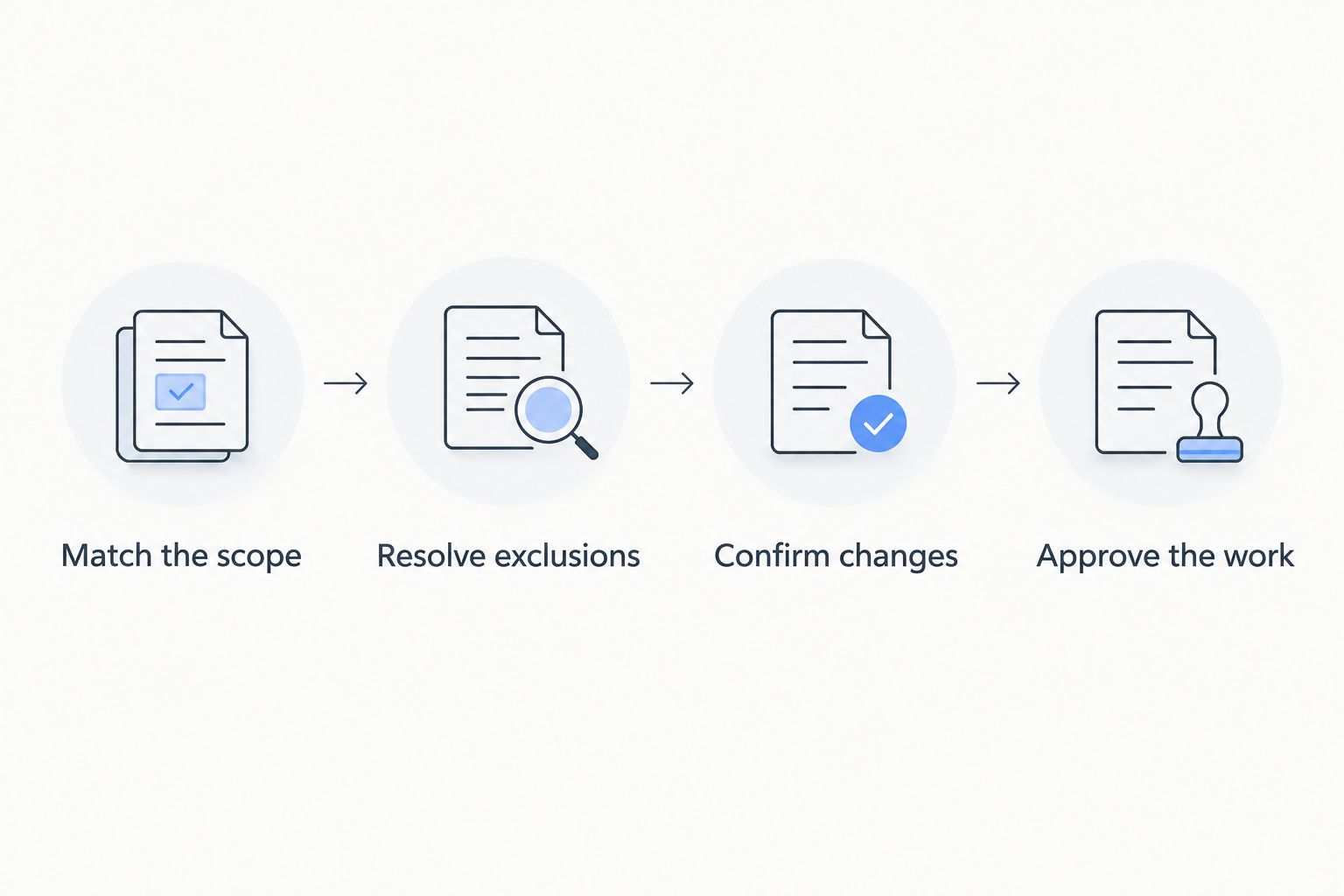
Match the scope
Check that the proposals cover the same roof edges and describe comparable materials and dimensions. Confirm the downspout layout rather than assuming matching gutter lengths mean matching systems.
Resolve exclusions
Read for work left to you or another contractor. Removal, surface repairs, drainage connections, and cleanup deserve explicit answers if they are relevant to your property.
Confirm changes
Ask how additional work will be documented and authorized. The written process should distinguish an unforeseen condition from an optional upgrade you can decline.
Approve the work
Keep the accepted estimate, scope drawing, exclusions, and agreed changes together. Before work begins, confirm that the installer is using that same version of the plan.
The strongest comparison is specific enough that you can explain what you are accepting without relying on a salesperson's verbal summary. Keep unresolved items open until the written proposal answers them.
Should you replace every gutter at once?
Replace every gutter only when the documented condition and layout support that scope. Ask which runs are failing, which remain serviceable, and whether keeping existing sections creates attachment or drainage problems.
Partial replacement needs clear boundaries. Have the proposal identify retained sections and explain how new work connects to them, so responsibility for existing defects is not confused with responsibility for the installation.
Can you add gutter guards later?
You can consider guards separately, but later installation depends on the gutter system and the guard's attachment requirements. Ask about compatibility before treating a future addition as settled.
If you defer guards during a 2026 project, keep debris inspection and cleaning in your maintenance plan. Deferring the purchase does not remove the need to maintain open gutters.
What should you ask before signing an installation agreement?
Ask what is included, what is excluded, and who approves additional work. Then confirm measurements, downspout destinations, removal responsibilities, and how completion will be checked.
Ask Atxseamlessgutters or any other installer to connect each recommended item to your home's observed condition. A clear explanation helps you distinguish necessary work from a preference or optional addition.
FAQ
How do I budget seamless gutter installation without guessing?
Budget seamless gutter installation from a measured, written scope that includes gutter runs, downspouts, preparation, and removal. Compare estimates only after resolving differences in coverage and exclusions.
Can I use my home's square footage to estimate gutter length?
Your home's floor area does not establish the exact length of gutter runs. Ask the installer to measure the roof edges included in the proposed coverage.
Are seamless gutters completely free of joints?
Seamless gutters reduce joints along continuous runs, but the system still includes outlets, end caps, and connections. Installation details at those locations still matter.
Should gutter guards be included in my installation budget?
Keep gutter guards separate from the base installation scope so you can assess them independently. Confirm their maintenance requirements and compatibility with the proposed gutters.
Does gutter installation include repairs to damaged fascia?
Treat fascia repairs as included only when the written agreement says so. Ask how unsuitable mounting surfaces will be handled and how additional work requires your approval.
Is the lowest gutter estimate the best choice?
The lowest estimate is not the best choice when it excludes necessary work included elsewhere. Compare the same coverage, specifications, preparation, and drainage plan before deciding.
What should an Austin gutter estimate say about downspouts?
An Austin gutter estimate should identify downspout locations, routing, and discharge arrangements. Clarify whether any discussed extensions or drainage connections are included.
One last thing
Before approving your 2026 installation, ask the contractor to trace the planned water route from the roof edge to the final discharge point. Follow that explanation on the scope drawing.
If the plan stops at the bottom of the downspout, ask the next question: where does the water go? That check keeps the decision focused on drainage rather than gutter footage alone.