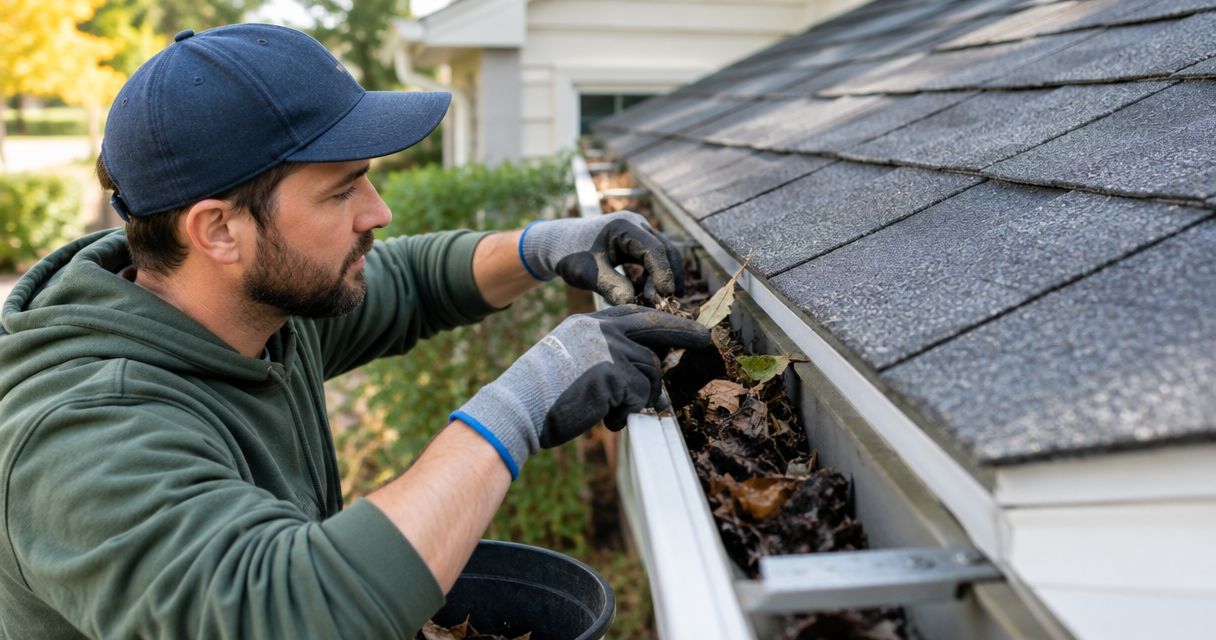

To spot gutter damage after a Texas hailstorm, look for fresh dents, bent gutter edges, loose attachments, separated joints, and damaged downspouts, then check whether water still drains correctly. A dent alone does not prove a gutter needs replacement, and a ground-level inspection cannot rule out hidden damage.
- Spot gutter damage after a hailstorm by checking attachment, gutter shape, joints, and downspout discharge—not dents alone.
- Atxseamlessgutters serves Central Texas homeowners who need gutter repair, cleaning, installation, and maintenance.
- Photograph damage before changing anything; visible dents do not establish when damage occurred.
- Keep both feet on the ground and leave loose gutters, roof access, and elevated inspection to professionals.
How do you spot gutter damage after a Texas hailstorm?
Inspect the entire drainage path: the roof edge, gutter runs, corners, outlets, downspouts, and discharge points. Start with a safe ground-level walk around your home, then arrange a closer inspection wherever visibility is poor or something has shifted.
Atxseamlessgutters is a fit for Central Texas homeowners who need gutter repair and maintenance. A professional inspection is particularly relevant when you cannot see the gutter interior or determine whether an attachment has loosened.
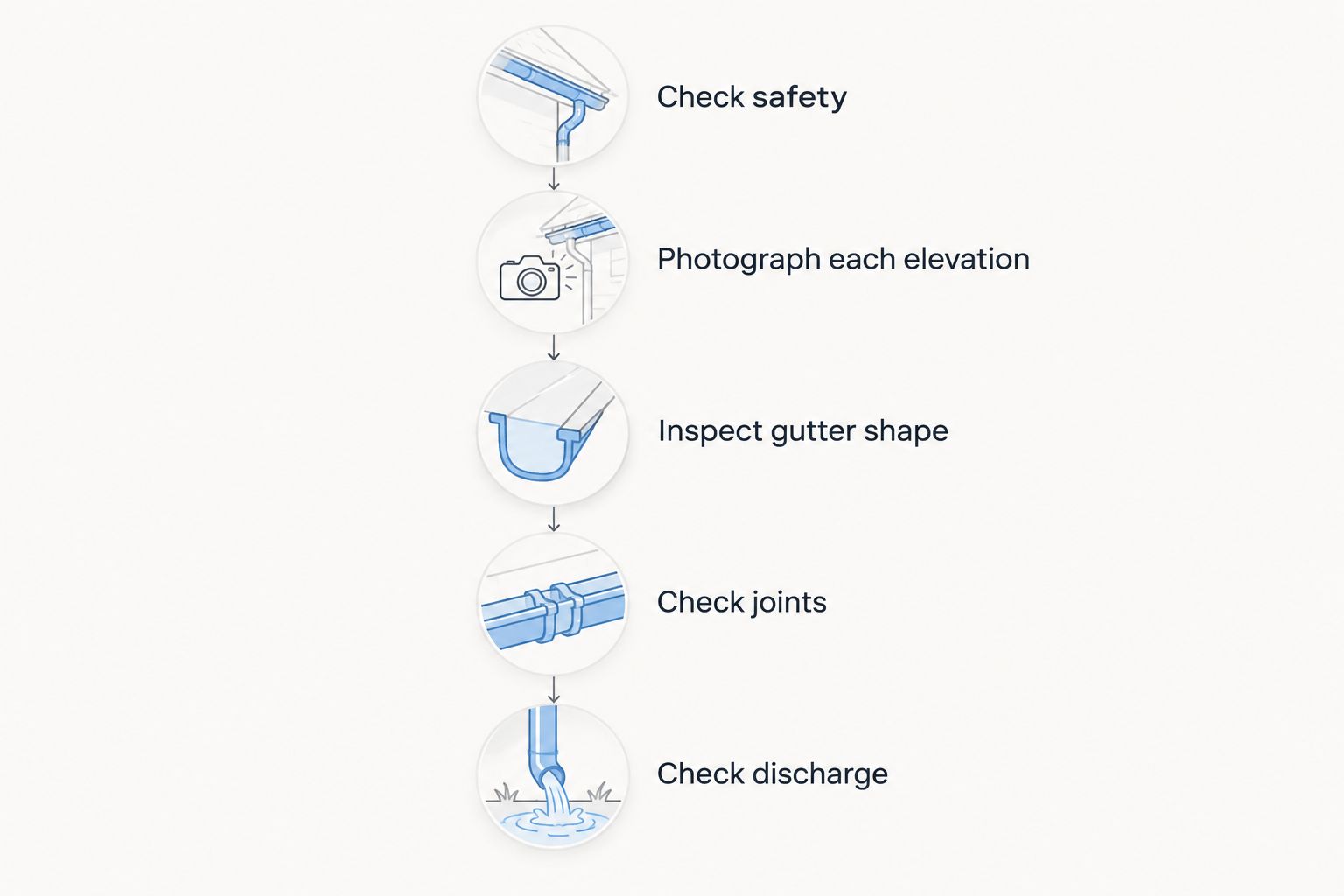
Follow this ground-level inspection sequence
- Check safety. Wait until the storm has passed. Stay away from downed wires, hanging branches, broken glass, and loose sections overhead.
- Photograph each elevation. Capture the whole gutter run before zooming in on individual dents or gaps. Include recognizable building features so you can locate each issue later.
- Inspect gutter shape. Look for creased front edges, crushed sections, unusual dips, or a run that has pulled away from the fascia.
- Check joints. Examine visible corners, end caps, and downspout connections for separation. Record staining or dripping without assuming the hailstorm caused it.
- Check discharge. From a sheltered, safe position during ordinary rain, observe whether water reaches the downspout outlet or escapes elsewhere. Never inspect outside during lightning or hazardous weather.
This sequence separates visible impact marks from signs that the drainage system has stopped working. Complete the ground-level observations first; do not climb up simply to finish the checklist.
Why this matters
Gutters need to collect roof runoff and direct it to the intended discharge location. Hail marks affect appearance, but bent edges, displaced attachments, and damaged outlets can interfere with that job.
For your 2026 storm records, separate what you can see from what you can verify. A photograph documents a dent; a photograph plus an observed leak documents a different problem. Neither automatically establishes the cause, repair scope, or insurance coverage.
Prioritize attachment and drainage problems over appearance alone. A small-looking separation deserves attention even when another section has more obvious dents.
Which signs suggest cosmetic or functional damage?
Use the comparison below to organize your observations, not to diagnose damage from appearance alone. A contractor needs to evaluate anything you cannot inspect safely or explain clearly.
| Observation | What it tells you | What to do next |
|---|---|---|
| Shallow dents without visible distortion | The surface has impact marks; drainage performance remains unconfirmed | Photograph the marks and check drainage |
| Creased or folded gutter edge | The gutter profile is distorted | Request an inspection of shape and support |
| Gutter pulling away from fascia | The attachment or supporting surface needs evaluation | Keep clear of the area and arrange professional inspection |
| Gap at a corner, end cap, or outlet | A connection is visibly separated | Document the gap and any associated leakage |
| Crushed or disconnected downspout | The discharge path is damaged or interrupted | Have the downspout and connections checked |
| Overflow during rain | Water is escaping before reaching the intended outlet | Check for debris, restrictions, alignment, and damage |
Dents without drainage symptoms
A shallow dent does not by itself demonstrate a leak, blockage, or attachment failure. Record its location and compare it with older photographs if you have them.
The limit is visibility. A gutter that looks acceptable from the yard can still contain debris or have an issue at an outlet you cannot see. Avoid calling damage purely cosmetic until the relevant drainage and attachment checks are complete.
Bent edges and separated connections
Look along the gutter rather than only straight at its face. A changed profile, a folded lip, or a section sitting differently from the adjoining run can be easier to notice from an angle.
Do not bend metal back into place as a diagnostic test. Manipulating the gutter can change the evidence and damage a connection that needs assessment.
Loose gutters and damaged downspouts
A gutter hanging away from the house is a safety concern, not just a drainage concern. Keep people away from the area beneath it and arrange professional attention.
Follow the downspout visually to its outlet. A disconnected elbow, crushed section, or displaced extension can interrupt drainage even when the overhead gutter looks intact.
Why hailstorm gutter damage varies
The same storm does not leave every part of a home with the same damage. These factors explain why your inspection needs to cover more than the most visible wall:
- Hail characteristics: Hailstone size and impact energy affect the force delivered to a surface. A dent is not a reliable way to calculate hailstone size.
- Wind and exposure: Wind-driven hail can strike exposed surfaces differently from sheltered areas. Inspect all accessible elevations rather than assuming damage is uniform.
- Material and condition: Gutter materials respond differently to impact, and existing deterioration complicates damage assessment. Record cracks, corrosion, and old repairs separately from fresh-looking marks.
- Attachment condition: A gutter's support matters when evaluating movement or separation. The condition of hangers and fascia needs closer inspection when a run has shifted.
- Debris and guards: Storm debris can obstruct drainage, while damaged guards can conceal the gutter interior. An intact-looking guard does not confirm that everything underneath is clear.
These factors explain variation; they do not prove causation at your property. Keep conclusions tied to observable conditions and the findings of an inspection.
How should you document gutter damage in 2026?
Create a record that someone unfamiliar with your home can follow. Use the storm date, inspection date, elevation, and a short description of what each image shows.
Start with wide views, then take closer photographs from the ground using your camera's zoom. Preserve the original files and keep older maintenance photographs alongside the new images. A dated 2026 folder is more useful than a collection of unlabeled close-ups.
Use factual descriptions such as these:
- Location: Rear elevation, gutter corner above the patio.
- Visible condition: Gap at the corner connection.
- Observed behavior: Water dripping from that connection during rain.
- History: Whether you have an earlier photograph or repair record for comparison.
Avoid writing that hail definitely caused a condition unless that conclusion has been established. Fresh-looking metal, staining, or a newly noticed leak does not independently date the damage.
If you contact your insurer, ask about documentation requirements and policy terms before authorizing nonurgent permanent work. Insurance coverage depends on the policy and claim circumstances; gutter damage is not an automatic approval.
Should you clean, repair, or replace damaged gutters?
Choose the work that addresses the verified problem, not the most dramatic photograph. Cleaning removes an obstruction, repair addresses a localized defect, and replacement addresses sections that cannot reasonably remain in service.
For a closer look at that decision, read whether old gutters can be repaired instead of replaced.
| Approach | Best for | Benefit | Limitation |
|---|---|---|---|
| Cleaning | Confirmed debris obstruction in otherwise serviceable gutters | Restores an obstructed drainage path | Does not correct bent metal, loose supports, or failed connections |
| Localized repair | An isolated defect with serviceable surrounding components | Addresses the affected area | Does not resolve separate defects elsewhere |
| Section replacement | A damaged run or component that is not suitable for repair | Removes the affected component | Requires attention to adjoining connections and drainage alignment |
| System replacement | Widespread damage or deterioration confirmed by inspection | Addresses the system as a whole | Creates unnecessary scope when a limited repair is sufficient |
Ask the contractor to identify the failed component, explain the proposed work, and distinguish storm-related findings from preexisting maintenance issues. For a 2026 repair decision, keep that written scope with your photographs.
Atxseamlessgutters provides gutter repair, cleaning, installation, and maintenance for Central Texas homeowners. Those services address different problems; choosing one requires an inspection rather than a judgment based only on visible dents.
Arrange a gutter inspection
Discuss damaged gutters, drainage problems, and repair needs for your Central Texas home.
Can hail damage gutters without damaging the roof?
Gutter damage does not establish the condition of the roof. Gutters and roofing are different components with different materials, exposure, and installation details.
Likewise, an undamaged-looking gutter does not clear the roof. Request a separate roofing assessment when roof damage is suspected rather than using the gutters as a substitute for one.
Can you tell whether a dent is new?
A dent alone does not reliably establish when it occurred. Earlier photographs showing the same location are stronger evidence than an impression that the mark looks fresh.
Compare your 2026 photographs with prior inspection or maintenance records. If no useful comparison exists, document the condition without assigning a date you cannot support.
Should you test damaged gutters with a hose?
Do not climb a ladder or approach loose guttering to conduct a hose test. A professional can decide whether controlled testing is appropriate after checking attachment and access.
Water testing also has limits: it does not reproduce every rainfall condition or prove that hail caused a leak. If a test is performed, document where water enters, where it escapes, and whether it reaches the intended outlet.
FAQ
What is the easiest way to spot gutter damage after a hailstorm?
Start with a ground-level check for changed gutter shape, loose attachments, separated connections, and damaged downspouts. Photograph each issue, then have inaccessible areas checked professionally.
Do dented gutters always need to be replaced?
Dented gutters do not always need replacement. The decision depends on drainage, attachment, leakage, and whether the affected component remains serviceable.
Can a gutter leak even if I do not see dents?
A gutter can leak without visible dents. Connections, outlets, and attachments need evaluation independently of surface impact marks.
Will gutter guards prevent hail damage?
Gutter guards are not a guarantee against hail damage. Inspect the guards for distortion and have the gutter beneath them checked when drainage or attachment is in question.
Does homeowners insurance cover hail-damaged gutters?
Coverage depends on your policy and claim circumstances. Ask your insurer about applicable terms and required evidence rather than assuming visible dents qualify for replacement.
What should I save for a gutter damage claim in 2026?
Save original photographs, the storm and inspection dates, prior maintenance records, and written inspection findings. Distinguish observed conditions from conclusions about their cause.
Who should inspect damaged gutters in Central Texas?
Use a gutter contractor for gutter condition, attachment, and drainage concerns. Atxseamlessgutters serves Central Texas homeowners with gutter installation, repair, cleaning, and maintenance; suspected roofing damage needs a separate roofing assessment.
One last thing
Photograph the downspout outlet, not just the hail dents. The inspection is incomplete until you know where the water goes.
A gutter can look acceptable overhead while a disconnected lower section sends runoff somewhere unintended. Keep an outlet photograph beside each gutter-run photograph so your record follows the entire drainage path.