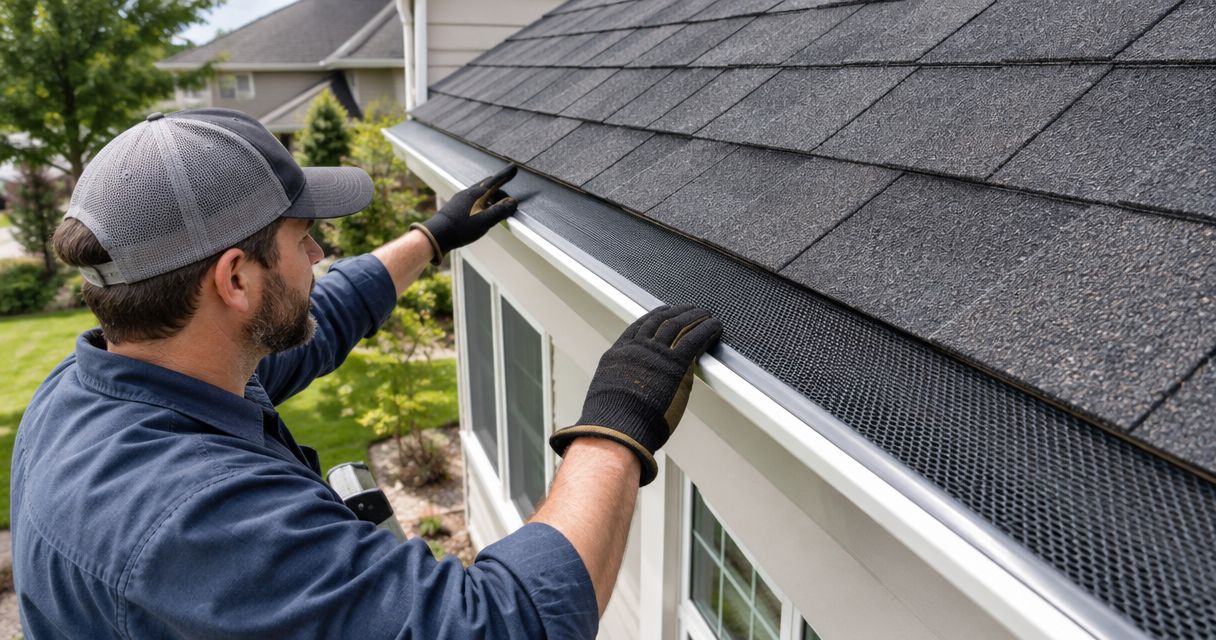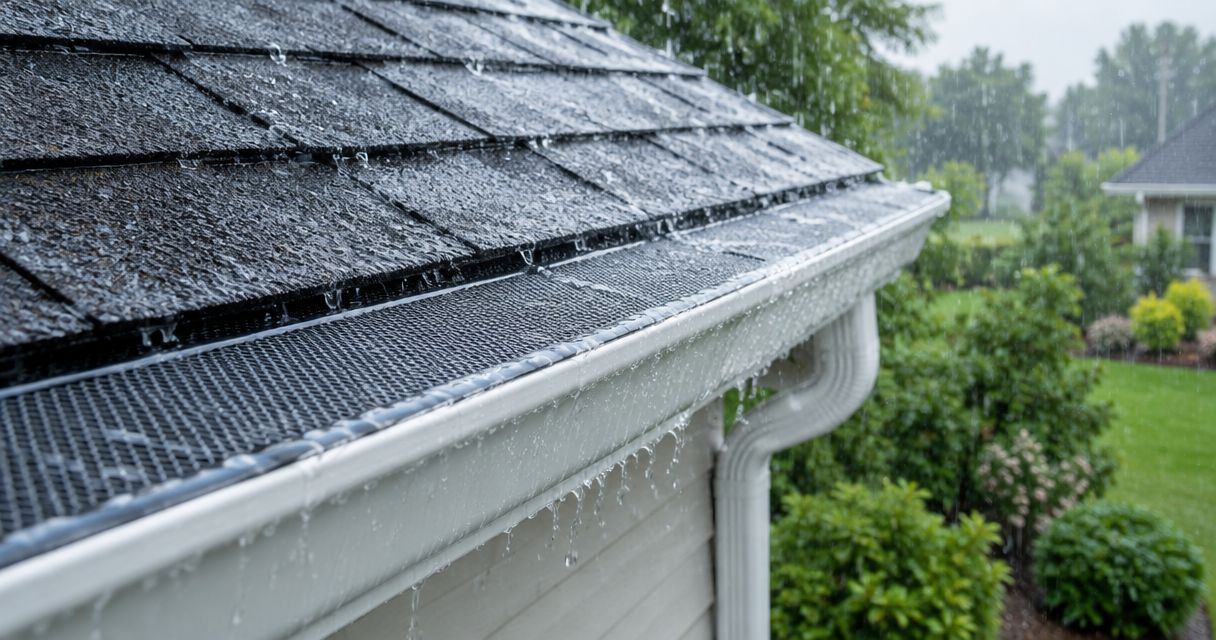
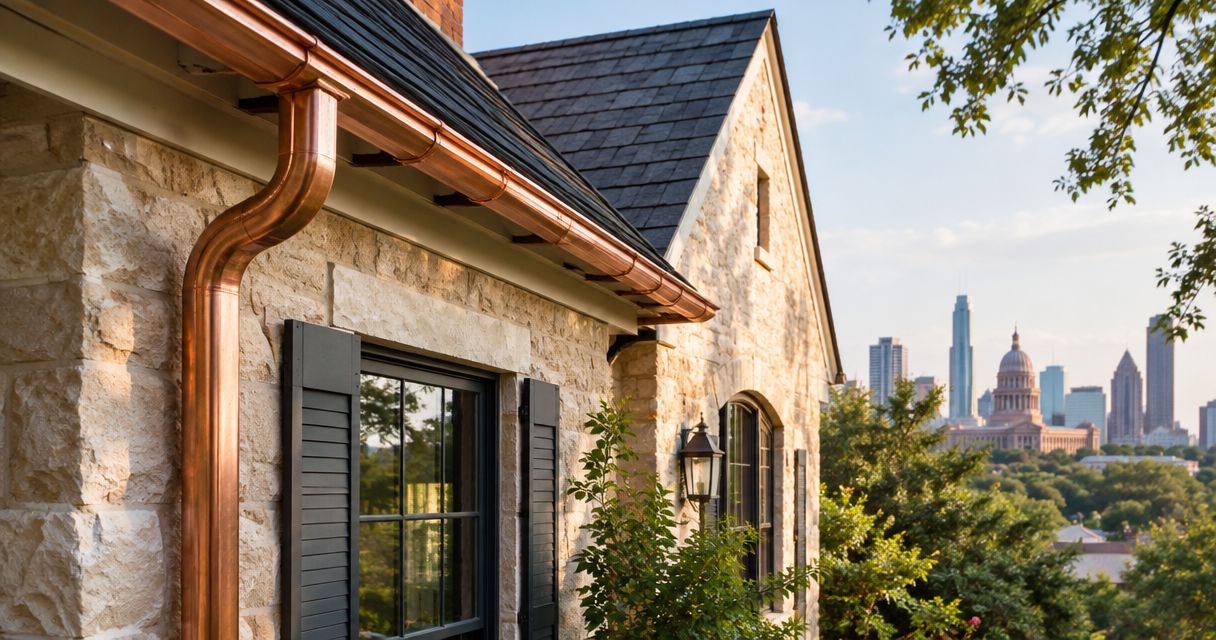
Best overall: half-round copper gutters. Best for matching an established angular profile: K-style copper gutters. Best for a documented built-in design: custom copper box gutters. Best for retaining original material: repair existing copper gutters. For your 2026 project, Atxseamlessgutters is a locally owned Austin contractor providing gutter installation, repair, cleaning, and maintenance; choose the copper configuration around your home's existing details, not the material alone.
- The best copper gutters for Austin historic homes match original details; half-round is the default when no original profile survives.
- K-style copper gutters suit homes with an established angular gutter profile; copper alone does not make them historically appropriate.
- Repair existing copper gutters when sound material remains; replace sections that cannot drain or hold secure joints.
- Atxseamlessgutters serves Central Texas homeowners; discuss the required copper profile, roof details, and drainage route before choosing.
Why this matters
A gutter is part of a historic home's visible roof edge. Changing its shape, mounting position, or downspout route changes more than drainage: it changes how the eaves and trim read from the street.
Copper does not automatically make a replacement appropriate. A new copper box gutter can be the wrong choice where a simple exposed half-round profile belongs, while an attractive half-round gutter can erase a documented built-in detail.
For an Austin historic-home project in 2026, separate architectural fit from drainage performance. Establish the existing or documented design first, then check whether the proposed system can collect roof runoff and discharge it away from the house. Preserve the right detail, but do not preserve a drainage failure.
What makes the best copper gutters for historic homes
Use these criteria before choosing a profile or accepting a proposal:
- Historical fit: Match surviving gutters, photographs, plans, or physical evidence before choosing a replacement shape.
- Roof-edge compatibility: Check the relationship between the gutter, roof edge, fascia, cornice, and mounting brackets. Avoid cutting sound historic trim just to accommodate a convenient profile.
- Drainage design: Size the gutter, outlets, and downspouts for the contributing roof area and rainfall design conditions. Profile alone does not establish capacity.
- Joint and metal compatibility: Specify copper-compatible components and a joint method appropriate to the assembly. Review roof metals and runoff paths for corrosion concerns.
- Service access: Keep outlets, corners, and concealed sections accessible for inspection and cleaning. Copper still collects leaves and debris.
- Repairability: Prefer details that allow a damaged section to be repaired without dismantling unrelated historic fabric.
For a 2026 specification, make these requirements visible in the written scope. A proposal that says only copper gutters leaves the profile, material weight, connections, supports, and discharge arrangement unresolved.
Copper gutter options at a glance
These are configuration choices, not manufacturer rankings. Repair belongs in the comparison because replacing serviceable original material is not automatically the best preservation decision.
| Option | Best for | Standout feature | Key limitation |
|---|---|---|---|
| Half-round copper gutters | An exposed traditional profile when no conflicting original detail survives | Rounded trough with visible supporting brackets | Requires a compatible mounting and outlet arrangement |
| K-style copper gutters | Matching an established angular gutter profile | Shaped face that follows an angular roof-edge detail | Can look out of place where a rounded profile is documented |
| Custom copper box gutters | Reproducing a documented box or built-in gutter | Shape can follow a specific cornice or roof-edge assembly | Concealed details make inspection and repair more involved |
| Repair existing copper gutters | Retaining sound original copper and its placement | Preserves existing material and architectural evidence | Cannot correct every failed section or inadequate drainage layout |
The default is half-round copper, not automatic replacement. Existing evidence can move another option to the top of your list.
1. Half-round copper gutters: best for a traditional exposed profile
Half-round copper gutters use a rounded trough suspended along the roof edge. Their shape and visible brackets make them a useful starting point when you want an exposed traditional gutter and no surviving evidence points to another design.
The bracket arrangement matters as much as the trough. Confirm that the proposed supports can attach securely without damaging decorative trim, and check how corners and downspouts will look from the street.
Half-round copper gutters pros:
- Provide a clearly defined rounded profile rather than an angular face.
- Keep the gutter body visible for exterior inspection.
- Allow the bracket design to become part of the architectural detail.
- Support a coordinated copper gutter and downspout arrangement.
Half-round copper gutters cons:
- Bracket placement needs careful coordination with the roof edge and existing trim.
- An exposed installation does not reproduce a documented concealed gutter.
- The rounded shape alone does not prove adequate runoff capacity.
Best for: A homeowner choosing an exposed traditional profile where surviving details do not call for something else.
Before selecting half-round gutters, look closely at roof valleys and concentrated discharge points. Water arriving from a valley needs deliberate collection and outlet placement; changing the gutter material does not solve that design problem.
Verdict: Buy half-round copper gutters when the profile fits the house and the drainage layout is specified.
2. K-style copper gutters: best for matching an angular profile
K-style copper gutters have an angular, shaped front rather than a rounded trough. Choose this configuration when an established gutter profile or roof-edge detail supports that shape—not simply because copper sounds more appropriate for an older house.
Copper changes the material and its weathering appearance. It does not turn an unrelated profile into a faithful replacement.
K-style copper gutters pros:
- Retain an angular gutter appearance where that is the established detail.
- Provide a distinct alternative to an exposed rounded trough.
- Allow material replacement without necessarily changing the visible profile.
K-style copper gutters cons:
- Can conflict with surviving evidence of a half-round system.
- A shaped face does not establish historical accuracy by itself.
- Mounting still requires attention to fascia condition and roof-edge geometry.
Best for: A homeowner replacing an established angular gutter configuration without redesigning the eaves.
Compare a profile drawing with the existing gutter before approving fabrication. Check the front shape, depth, mounting position, and relationship to decorative molding. A similar-looking face can still sit differently against the roof.
Verdict: Buy K-style copper gutters to match a supported angular detail; skip them when original evidence calls for half-round.
3. Custom copper box gutters: best for a documented built-in design
Custom copper box gutters use a box-shaped channel configured around a particular roof edge or cornice. Some sit within an architectural assembly rather than hanging visibly outside it, so the design needs to address both water collection and the surrounding building fabric.
This is the right category when a box or built-in gutter is part of the home's documented design. It is not a default upgrade for every historic house.
Custom copper box gutters pros:
- Can reproduce a specific documented gutter shape.
- Preserve the intended relationship between gutter and cornice.
- Allow a design tailored to unusual roof-edge geometry.
Custom copper box gutters cons:
- Concealed channels are harder to inspect from the ground.
- Leaks can affect adjacent wood before they become obvious outside.
- Repair can involve surrounding roof or cornice components.
Best for: A homeowner preserving a documented box-gutter or built-in gutter assembly.
Ask for a section drawing showing the lining, seams, outlets, surrounding wood, and a safe overflow route. An exterior elevation alone does not explain where water travels if an outlet blocks. Inspection access belongs in the design, not in a later maintenance workaround.
Verdict: Buy custom copper box gutters for a documented assembly; skip them as an unsupported decorative change.
4. Repair existing copper gutters: best for retaining original material
Repair keeps serviceable copper, supports, and placement instead of treating the whole system as disposable. Cleaning, joint repair, support correction, or replacement of damaged sections can address different faults, but the repair must match the actual condition.
Start with an inspection of the copper and adjacent building fabric. A visible drip does not, by itself, identify whether the problem is a joint, blocked outlet, poor slope, damaged trough, or roof-edge detail.
Repair existing copper gutters pros:
- Retains sound material already fitted to the house.
- Preserves evidence of original profile and placement.
- Limits unnecessary disturbance of adjacent trim and roof details.
- Allows targeted work where failures are localized.
Repair existing copper gutters cons:
- Severely deteriorated copper still needs replacement.
- A repair does not automatically correct inadequate outlet capacity.
- Previous incompatible patches can complicate the work.
Best for: A homeowner with existing copper gutters whose sound sections and architectural details remain usable.
Ask the contractor to separate serviceable sections from failed sections in the scope. That distinction prevents a small repair proposal from ignoring larger drainage faults—and prevents a replacement proposal from discarding useful original material.
Verdict: Hold off on full replacement until repairability is established; buy targeted repairs when the remaining system is sound.
Copper specifications to settle before installation
For a 2026 copper-gutter proposal, name the material weight rather than relying on the word copper. The Copper Development Association's Architectural Design Handbook describes architectural copper sheet using weight per area, including 16 oz per square foot and 20 oz per square foot designations. These are sheet-weight specifications, not gutter capacities or promised lifespans.
Nominal 5-inch and 6-inch gutter sizes are common specification terms, but neither is an automatic recommendation for your home. Roof area, slope, valleys, outlet arrangement, and rainfall design conditions determine the drainage requirement. Ask for the reason behind the selected size.
Also settle the connection details. The scope should distinguish seams, end caps, corners, outlets, brackets, and downspout attachments instead of describing the whole installation as seamless. Long continuous runs still connect to other components.
Specify compatible metals and review the entire runoff path. Copper in contact with incompatible metals, or copper runoff reaching vulnerable metal surfaces, creates a corrosion concern. The roof material and downstream surfaces belong in that review.
Finally, decide whether you accept copper's changing appearance. New copper does not retain its initial bright finish outdoors; weathering changes the surface over time. Do not select copper on the assumption that every elevation will develop an identical color on the same schedule.
Check the house before choosing the profile
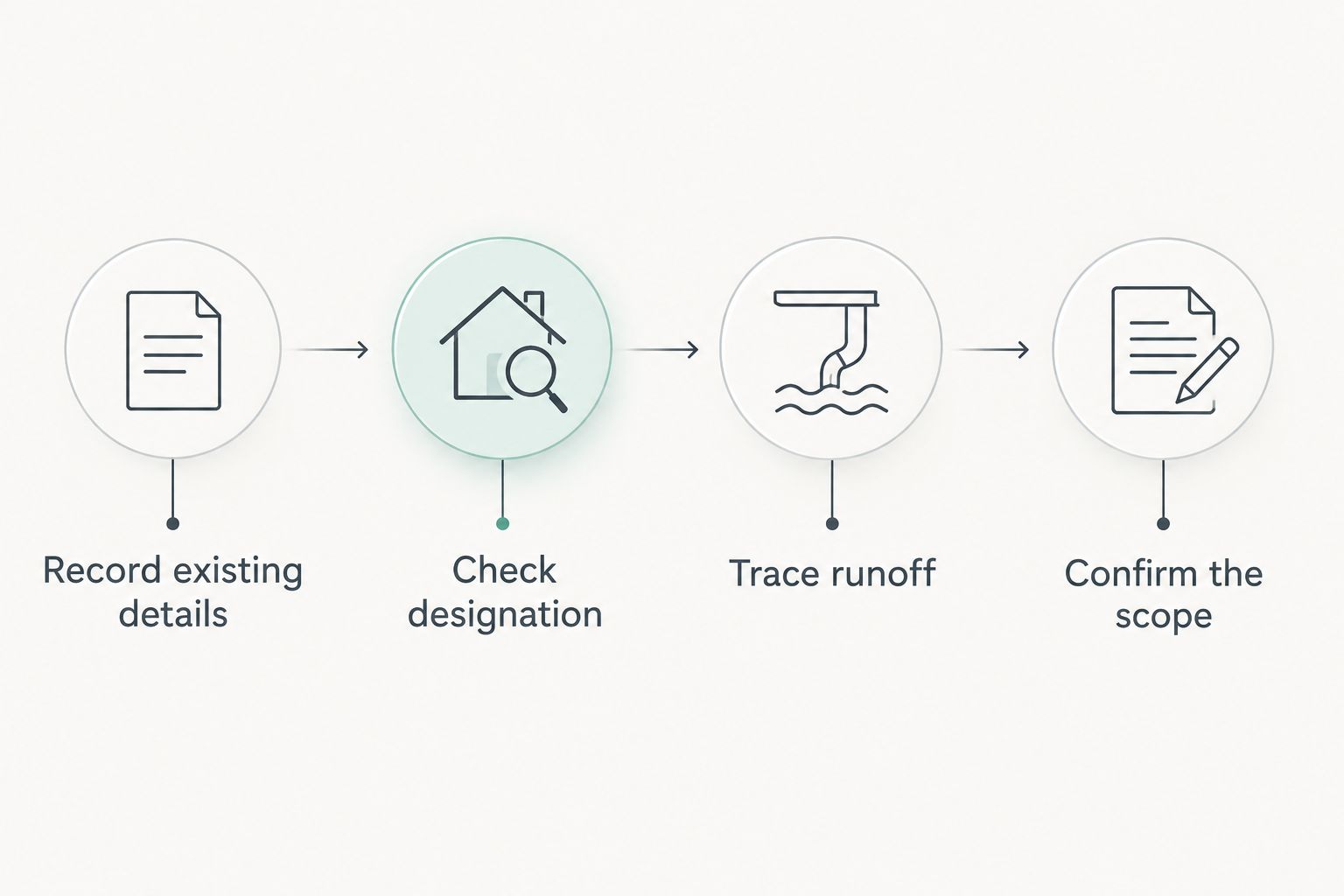
Use this sequence to turn a style preference into a workable project:
- Record existing details: Photograph gutter profiles, brackets, outlets, downspout routes, and any surviving built-in channels.
- Check designation: Confirm whether the property has local historic designation or other applicable exterior-review requirements before removing original material.
- Trace runoff: Identify roof valleys, collection areas, downspout discharge points, and places where water reaches the foundation.
- Confirm the scope: Put the chosen profile, material specification, repairs, connections, and discharge arrangement in writing.
A house's age alone does not establish its review requirements. Check the property's status for your 2026 project rather than assuming every older Austin home follows the same approval process.
Take these observations into your discussion with Atxseamlessgutters. Explain whether the priority is retaining original copper, reproducing a documented profile, or correcting a drainage failure; those are different scopes of work.
Discuss your gutter project
Review the existing profile, repair needs, and drainage route for your Austin home.
How the options are ranked
This 2026 ranking prioritizes architectural fit, roof-edge compatibility, drainage design, service access, and repairability. Half-round leads as the default exposed traditional option; K-style and box gutters lead only in their specific matching situations.
Repair ranks as a separate decision because keeping sound original material answers a different need from buying a new profile. No configuration wins by material name alone.
Which copper gutters should you choose?
Choose half-round copper gutters if you need a default exposed profile and no original detail contradicts it. Match an established angular profile with K-style, reproduce a documented built-in assembly with custom box gutters, and retain existing copper wherever sound material remains.
For your 2026 project, approve the profile and drainage plan together. Atxseamlessgutters is a local gutter-service option for Austin homeowners; use the project discussion to establish the specific assembly and repair scope before authorizing work.
FAQ
What's the best copper gutter style for an Austin historic home?
Half-round copper gutters are the default exposed traditional choice when no surviving evidence calls for another profile. Match original details first; a documented angular or built-in design can make K-style or custom box gutters the better fit.
Is half-round copper better than K-style copper?
Half-round copper is better for a rounded traditional profile; K-style copper is better for matching an established angular profile. Neither shape proves adequate drainage capacity without a sizing and outlet plan.
Should I repair old copper gutters or replace them?
Repair existing copper gutters when the remaining material and assembly are sound. Replace failed sections and address slope, supports, outlets, or roof-edge faults that a joint repair cannot solve.
Do copper gutters stay shiny?
Copper gutters do not retain their initial bright appearance outdoors without measures intended to preserve that finish. Weathering changes the surface, and different exposures need not develop the same appearance on the same schedule.
Are 6-inch copper gutters always better than 5-inch gutters?
A 6-inch copper gutter is not automatically the right choice over a 5-inch gutter. Select the size using roof runoff requirements, outlet capacity, mounting conditions, and the home's architectural details.
Do I need approval to replace gutters on an Austin historic home?
Approval requirements depend on the property's designation and the proposed work. Confirm applicable exterior-review requirements before removing original gutters or changing a documented roof-edge detail.
Can copper gutters solve water pooling near my foundation?
Copper gutters alone do not solve water pooling near a foundation. The complete drainage route must collect roof runoff and discharge it appropriately; downspout placement and site drainage remain part of the problem.
One last thing
Before signing a replacement scope, ask where the water goes when an outlet blocks. That question exposes a detail a profile sample cannot show: whether overflow spills safely outside or reaches vulnerable wood and concealed spaces.
A historic-looking gutter is not finished until its overflow and discharge routes are understood. Preserve the appearance, but demand a drainage plan.