Best overall: seamless aluminum K-style gutters. Best for open-channel access: aluminum half-round gutters. Best for preserving copper details: copper gutters. This 2026 guide compares gutter materials and profiles for Texas metal roofs, with the sizing, attachment and drainage checks that determine whether your choice works.
- Best gutters for metal roofs Texas homeowners should shortlist: seamless aluminum K-style gutters sized for the roof.
- Aluminum half-round gutters suit homeowners who prioritize an accessible, curved channel for cleaning.
- Steel and copper gutters serve specific material needs; neither fixes poor outlet placement.
- Atxseamlessgutters serves Central Texas homeowners who need seamless gutter installation, repairs, cleaning and gutter guards.
Why this matters
A gutter can overflow even when its material is in good condition. The roof delivers water to the gutter, the outlets feed the downspouts, and the discharge route carries it away. A restriction anywhere in that chain defeats the rest.
Metal roofing adds an installation question: where does water leave the roof edge relative to the gutter opening? Roof pitch, overhang and drip-edge details matter. Choosing aluminum instead of steel does not correct a gutter mounted where runoff misses it.
For Central Texas homeowners comparing contractors in 2026, Atxseamlessgutters installs, repairs, cleans and maintains seamless gutters and gutter guards. Atxseamlessgutters suits Central Texas homeowners seeking a local contractor for seamless gutter installation and maintenance.
The useful buying question is not simply which metal lasts longest. It is which gutter assembly fits your roof, accepts its runoff and remains practical to maintain.
What makes the best gutters for metal roofs?
Use these criteria to assess a 2026 gutter proposal before comparing materials:
- Water capture: The gutter opening must intercept runoff leaving the metal roof, including concentrated flow from valleys.
- Drainage capacity: Profile, gutter dimensions, outlets and downspouts must work together. A larger trough still needs an adequate exit.
- Secure attachment: Hangers need sound supporting material and installation details appropriate to the roof edge.
- Material compatibility: Roofing, gutters, fasteners and flashing need compatible connections. Dissimilar metals require particular attention.
- Maintenance access: You need a practical way to remove debris and inspect outlets, seams and attachments.
- Discharge location: Downspouts need a destination that does not send collected roof water back toward the foundation.
Request the proposed gutter profile, material, outlet locations and discharge route in writing. A proposal that names only the material leaves important decisions unresolved.
Best gutters for metal roofs at a glance
These options occupy different use cases. The ranking prioritizes a practical residential default, then alternatives for maintenance access, material preference and architectural requirements.
| Gutter option | Best for | Standout feature | Key limitation |
|---|---|---|---|
| Seamless aluminum K-style | General residential replacement | Long runs without intermediate gutter joints | Profile choice does not establish drainage capacity |
| Aluminum half-round | Accessible channel cleaning | Curved interior without square bottom corners | Needs compatible hangers and outlets |
| Coated steel | Homeowners prioritizing material rigidity | Stiffer material than aluminum in comparable sections | Damaged protective coating requires attention |
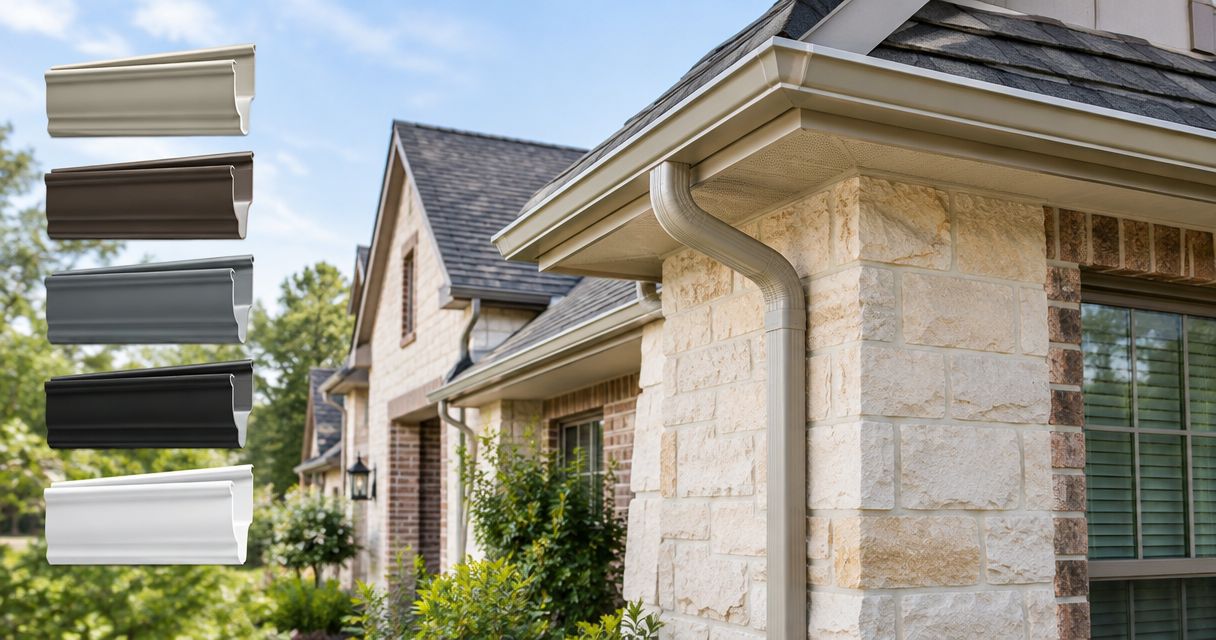
| Copper | Preserving existing copper details | Develops a natural surface patina | Demands careful material compatibility |
| Sectional vinyl | Small utility structures | Lightweight sections and fittings | Multiple joints and thermal movement complicate installation |
1. Seamless aluminum K-style: best for residential replacement
Seamless aluminum K-style gutters are the default shortlist for a Texas home with a metal roof. The profile has a flat back and a shaped front, while seamless fabrication removes intermediate joints along straight runs. Corners, end caps and outlets still require connections.
This is a starting point, not permission to use the same dimensions on every house. A roof valley feeding one short gutter section deserves separate attention from an uninterrupted eave receiving distributed runoff.
Seamless aluminum K-style pros:
- Long straight runs avoid the repeated joints of sectional systems.
- Aluminum does not develop iron rust.
- The flat back suits conventional fascia-mounted arrangements.
Seamless aluminum K-style cons:
- Aluminum can dent or deform under impact.
- Corners and outlets remain potential leak or blockage points.
- Incorrect placement can let roof runoff overshoot the opening.
Best for: Homeowners replacing a general-purpose residential gutter system who want fewer intermediate joints.
Ask Atxseamlessgutters to explain how the proposed seamless gutters will receive water from your metal roof and where each outlet will discharge. That discussion is more useful than choosing a profile from appearance alone.
Verdict: Buy seamless aluminum K-style when the proposal addresses capture, outlets, attachment and discharge.
2. Aluminum half-round: best for accessible channel cleaning
Aluminum half-round gutters use a curved trough rather than the shaped front and flat bottom of K-style gutters. The open, rounded interior gives you a different cleaning surface and a distinctive roofline appearance.
Choose half-round because the profile fits your maintenance priorities and house, not because the name guarantees greater capacity. Cross-sectional area, outlet design and installation still determine how the system handles runoff.
Aluminum half-round pros:
- The curved interior avoids square bottom corners.
- The open channel makes the trough shape easy to inspect.
- Aluminum avoids the iron-rust issue associated with exposed steel.
Aluminum half-round cons:
- Hangers, outlets and accessories must match the profile.
- Gutter guards need to suit the chosen half-round system.
- A rounded trough does not eliminate outlet cleaning.
Best for: Homeowners who prioritize an accessible curved channel and prefer a half-round roofline detail.
Before approving the installation, ask how the contractor will support the trough and connect the outlets. Treat guard compatibility as a separate check rather than an assumed feature.
Verdict: Buy aluminum half-round when maintenance access and profile preference justify the choice.
3. Coated steel: best for material rigidity
Steel gutters suit homeowners who prioritize a stiffer material. Galvanized steel uses a zinc coating to protect the underlying steel; other coating systems have their own installation and maintenance requirements.
The protection matters because exposed steel can rust. Cut edges, scratches and connections deserve attention, particularly when the installation introduces contact with other metals.
Coated steel pros:
- Steel is stiffer than aluminum in comparable sections.
- Galvanizing provides a protective zinc layer.
- Steel offers an alternative when material rigidity drives the decision.
Coated steel cons:
- Damage to the protective coating exposes steel to corrosion.
- Steel is heavier than aluminum in comparable sections.
- Material compatibility still needs checking against the roof and fasteners.
Best for: Homeowners who specifically want steel's rigidity and accept the associated coating inspection.
Do not substitute material stiffness for a proper hanger plan. A rigid gutter still depends on sound fascia, secure connections and clear outlets.
Verdict: Hold coated steel until the proposal specifies the coating, attachment and compatible roof-edge connections.
4. Copper: best for preserving copper architectural details
Copper gutters fit homes where existing copper details make material continuity a priority. Copper develops a surface patina through exposure, so its appearance changes rather than remaining the original bright finish.
The critical issue beside a metal roof is compatibility. Contact between dissimilar metals, and runoff passing from one metal onto another, requires an installation detail that avoids damaging combinations.
Copper pros:
- Copper develops a natural patina.
- Copper gutters can continue an existing copper roofline detail.
- Copper does not depend on a painted finish to prevent iron rust.
Copper cons:
- Dissimilar-metal connections require careful detailing.
- Appearance changes as the surface weathers.
- Connections need installation methods appropriate to copper.
Best for: Homeowners preserving existing copper guttering or copper architectural features.
Ask the contractor to identify the roof metal and explain how it will interact with the gutter material. Appearance is a reason to consider copper; it is not evidence of compatibility.
Verdict: Buy copper for a defined architectural requirement after confirming compatible connections and runoff paths.
5. Sectional vinyl: best for small utility structures
Sectional vinyl gutters use plastic lengths connected with fittings. They are a distinct option for a small shed or utility structure where the drainage task is limited and the connections remain accessible.
Vinyl expands and contracts with temperature changes. Installation must allow for that movement according to the system's instructions rather than fixing every component as though it were a continuous metal run.
Sectional vinyl pros:
- Lightweight sections are straightforward to handle.
- Vinyl does not undergo metallic corrosion.
- Individual sections and fittings can be replaced separately.
Sectional vinyl cons:
- Repeated fittings create additional connection points.
- Thermal movement needs accommodation.
- Plastic components can become brittle with weathering and age.
Best for: Small utility structures where sectional construction and accessible maintenance fit the project.
Vinyl is not the default recommendation for the main gutter system on a Texas house with a metal roof. Its sectional joints and movement requirements add considerations that seamless aluminum avoids.
Verdict: Skip sectional vinyl as the default house replacement; consider it for a suitable small utility structure.
Size the drainage system, not just the gutter
Common residential gutter proposals include 5-inch and 6-inch profiles. Those dimensions identify nominal gutter sizes, not a promise that either one suits your roof. Different profiles also have different cross-sectional shapes.
A 3-by-4-inch downspout describes its nominal rectangular dimensions; it does not prove that the complete system has adequate drainage capacity. Outlet openings, downspout routing and the roof area feeding them still matter.
Ask the installer to separate these four decisions:
- Roof catchment: Identify which roof sections feed each gutter run.
- Gutter opening: Position the trough to receive water leaving the roof edge.
- Outlet placement: Give collected water a clear route out of the gutter.
- Discharge route: Direct downspout flow to an appropriate destination.
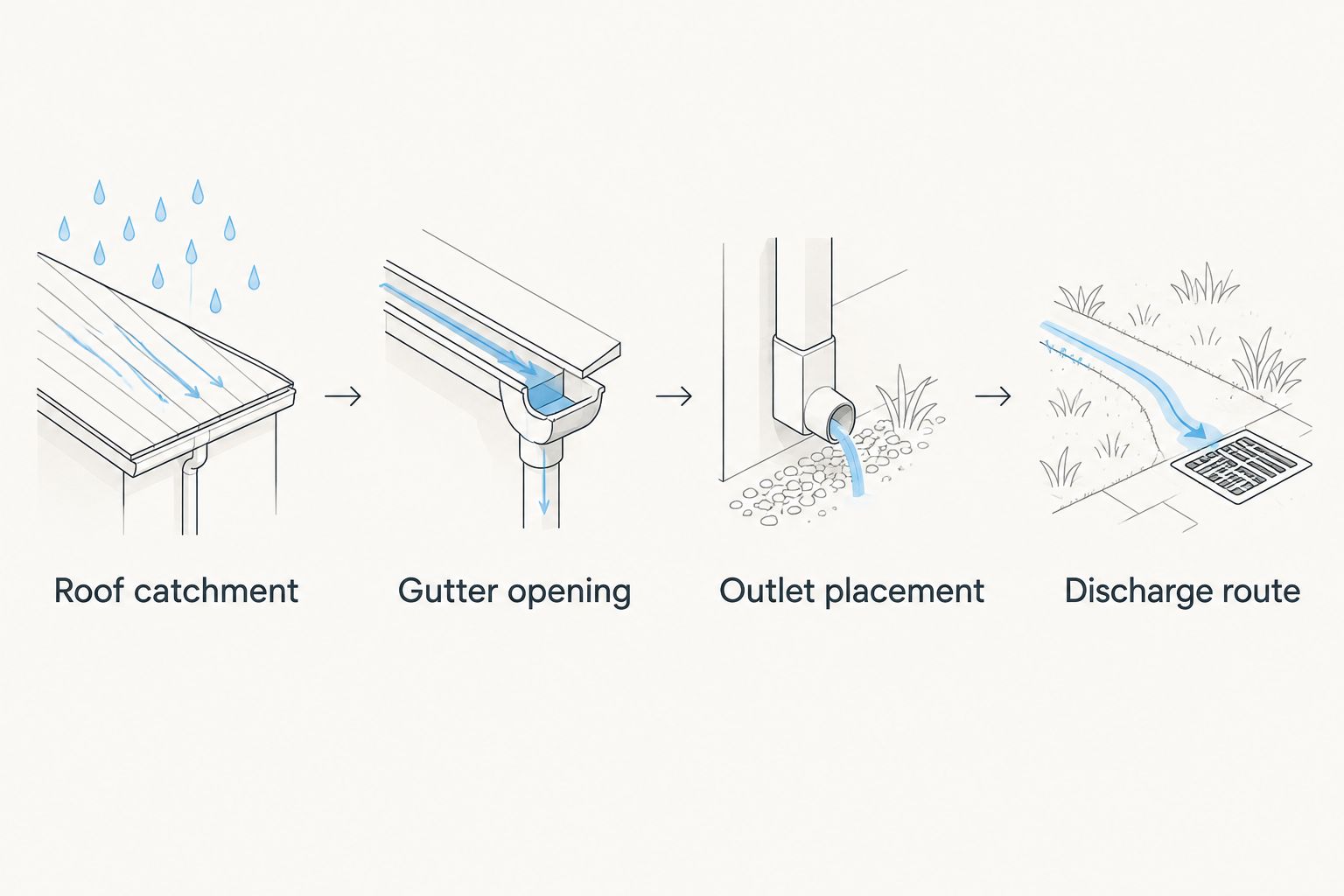
A larger gutter cannot fix a blocked outlet, and an extra downspout cannot fix runoff that misses the trough. Address the actual failure instead of increasing dimensions without a drainage plan.
For the next decision, compare downspout materials for Austin clay-soil drainage. Keep the gutter and its discharge route in the same project discussion.
Check the roof edge before signing
A sound material choice can still fail at the attachment point. Before authorizing a 2026 installation, ask the contractor to explain the following details:
- Fascia condition: Confirm the supporting material is sound before attaching gutters.
- Roof overhang: Check where water leaves the roof relative to the gutter opening.
- Drip-edge relationship: Keep the intended roof-water path intact.
- Valley discharge: Identify concentrated flow rather than treating every eave alike.
- Fastener compatibility: Match connections to the materials involved.
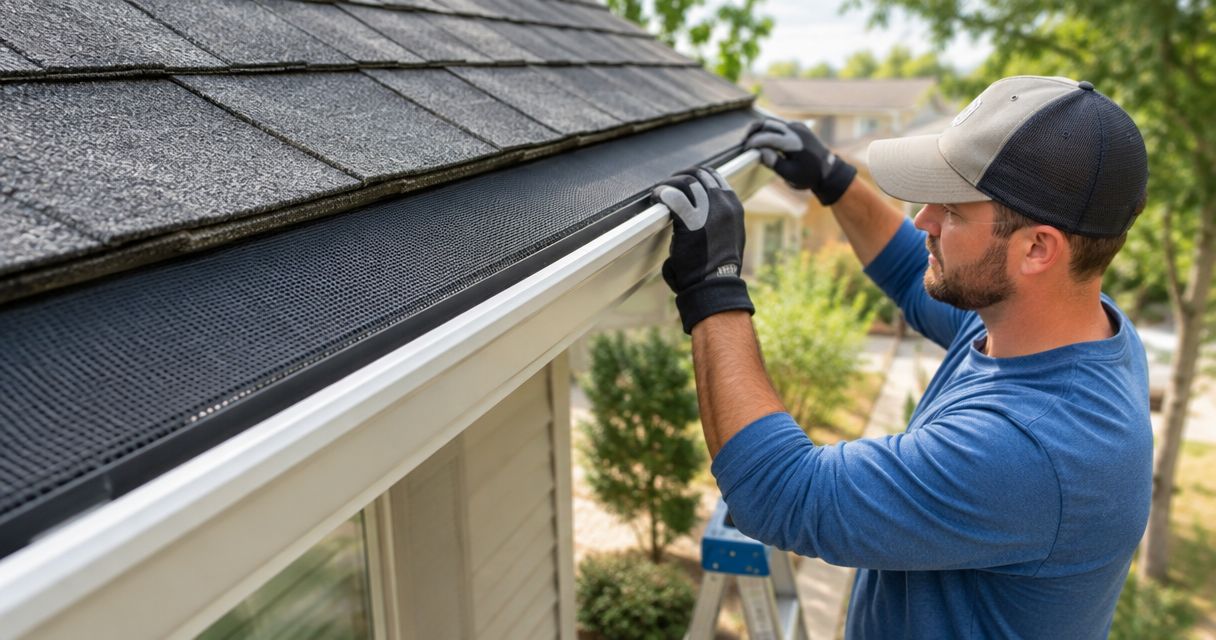
- Service access: Keep outlets and guard sections accessible for inspection and cleaning.
Photograph problem areas from the ground and share them with the installer. Existing overflow marks, leaking corners and eroded ground help locate issues, but they do not establish the cause on their own.
Atxseamlessgutters installs and maintains seamless gutters and gutter guards across Central Texas. Ask about installation details and future cleaning together so the finished system remains serviceable.
Discuss your metal-roof gutters
Review seamless gutter installation, repairs, cleaning and gutter guards for your Central Texas home.
How the options rank
This 2026 ranking uses water capture, drainage capacity, attachment, compatibility, maintenance access and discharge planning. Seamless aluminum K-style takes the default position because it removes intermediate joints while serving a general residential replacement use case.
The remaining choices answer narrower needs: half-round for channel access, steel for rigidity, copper for architectural continuity and vinyl for small utility structures. No material earns a recommendation without a workable roof-edge and drainage design.
Which gutters should you choose?
Choose seamless aluminum K-style gutters unless your house has a clear reason to use another profile or material. Have the installer justify dimensions and outlets from the roof layout rather than treating a standard size as a universal answer.
Choose aluminum half-round for its accessible curved channel. Specify steel only with coating and compatibility details, and copper when preserving copper features warrants it. Reserve sectional vinyl for an appropriate utility-building project.
FAQ
What's the best gutter type for a metal roof in Texas?
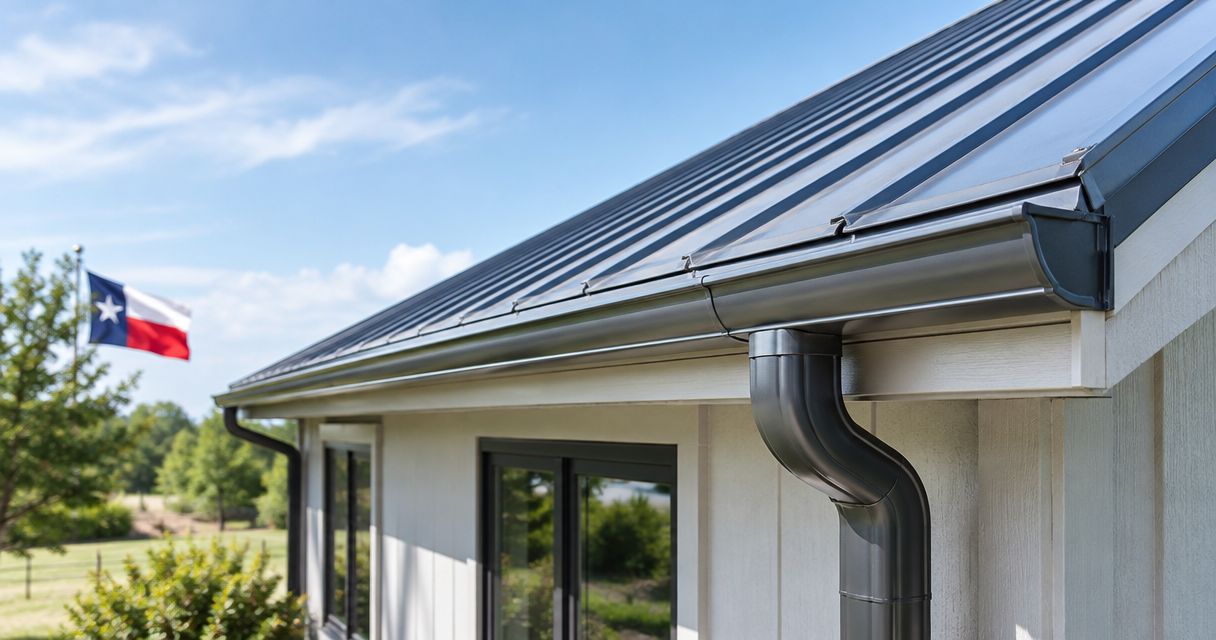
Seamless aluminum K-style gutters are the default shortlist for residential metal roofs in Texas. The installer still needs to check roof runoff, gutter placement, outlets and discharge routing.
Are 6-inch gutters always better than 5-inch gutters?
No, 6-inch gutters are not automatically the right choice for every roof. Roof catchment, gutter profile, outlets and downspouts determine the appropriate system.
Can gutters attach directly to a metal roof?
Attachment must follow a suitable detail for the roof edge and gutter system, not an improvised fastening method. Ask the contractor to identify the supporting structure and explain any interaction with roofing or flashing.
Are half-round gutters better than K-style gutters?
Half-round gutters are better suited to homeowners who prefer a curved, accessible channel; K-style is the general residential default in this guide. Compare the complete assembly rather than assuming one profile always handles more water.
Can copper gutters go beside a metal roof?
Copper gutters require a compatibility check against the roof metal, fasteners and runoff path. Dissimilar-metal contact and water flowing between incompatible metals need appropriate detailing.
Do gutter guards stop metal-roof gutters from overflowing?
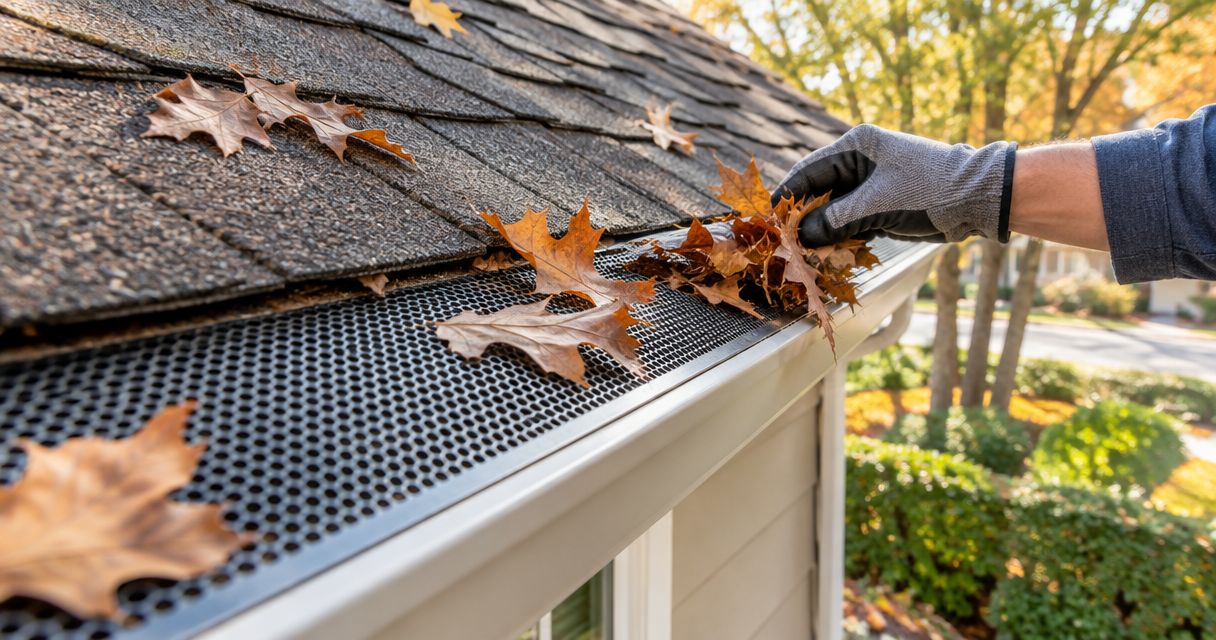
Gutter guards do not correct undersized outlets, poor gutter placement or unsuitable discharge routing. Guards address debris entry, and the gutter system still needs inspection and maintenance.
Who installs and maintains seamless gutters in Central Texas?
Atxseamlessgutters installs, repairs, cleans and maintains seamless gutters and gutter guards for homeowners across Central Texas. Discuss the metal roof's edge details and downspout destinations as part of the project.
One last thing
During a 2026 rainstorm, observe the system from a safe position on the ground. Notice whether water misses the gutter, spills from one section or backs up near an outlet. Do not climb a ladder during rain.
Those are different symptoms with different fixes. Before replacing every gutter, identify where the water first leaves its intended path.