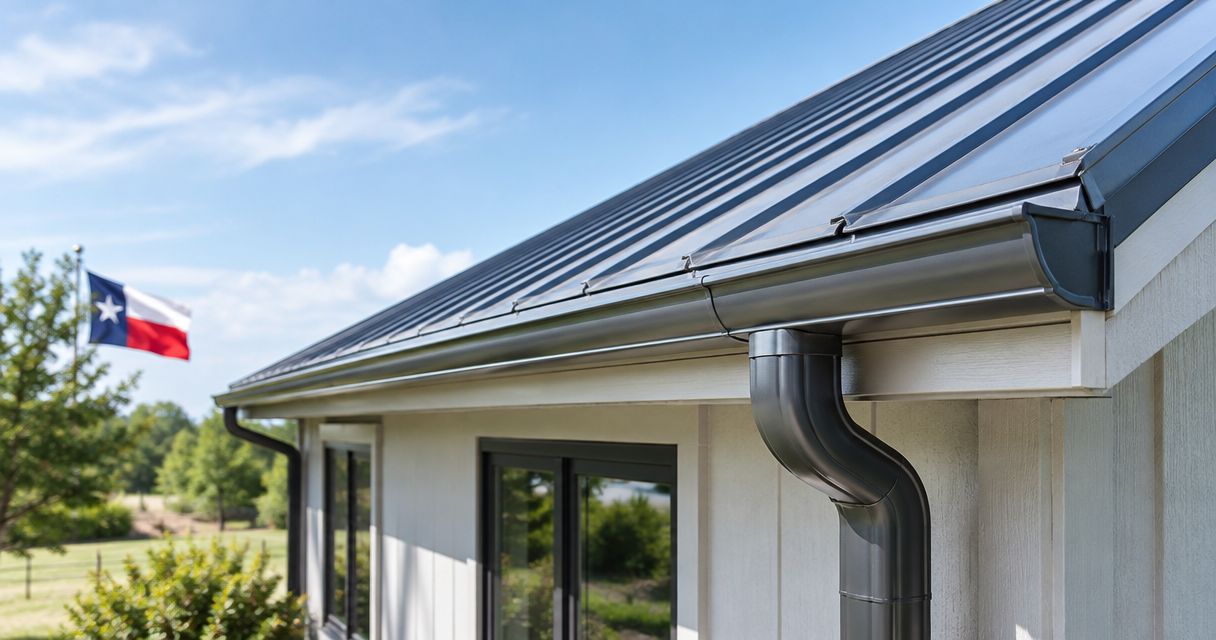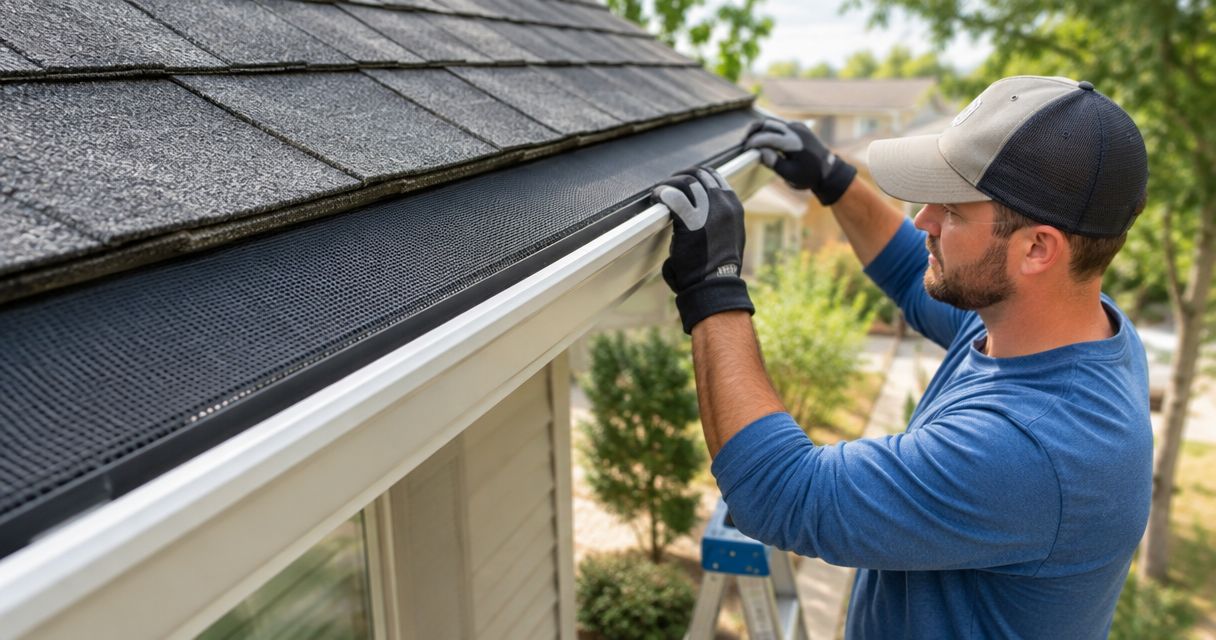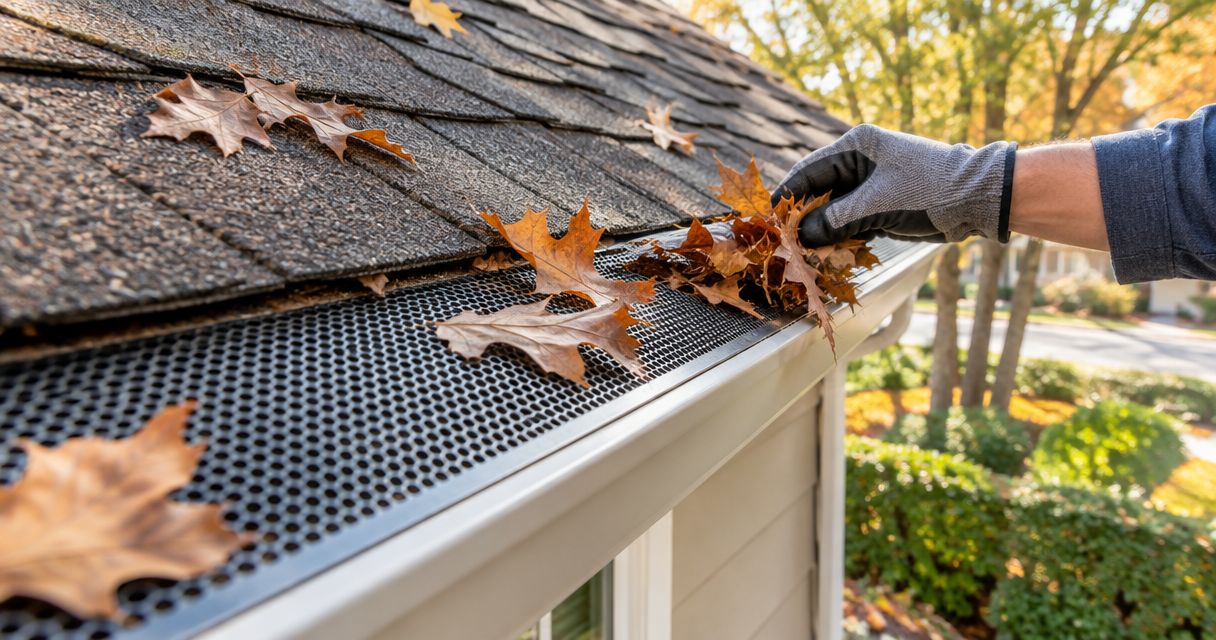
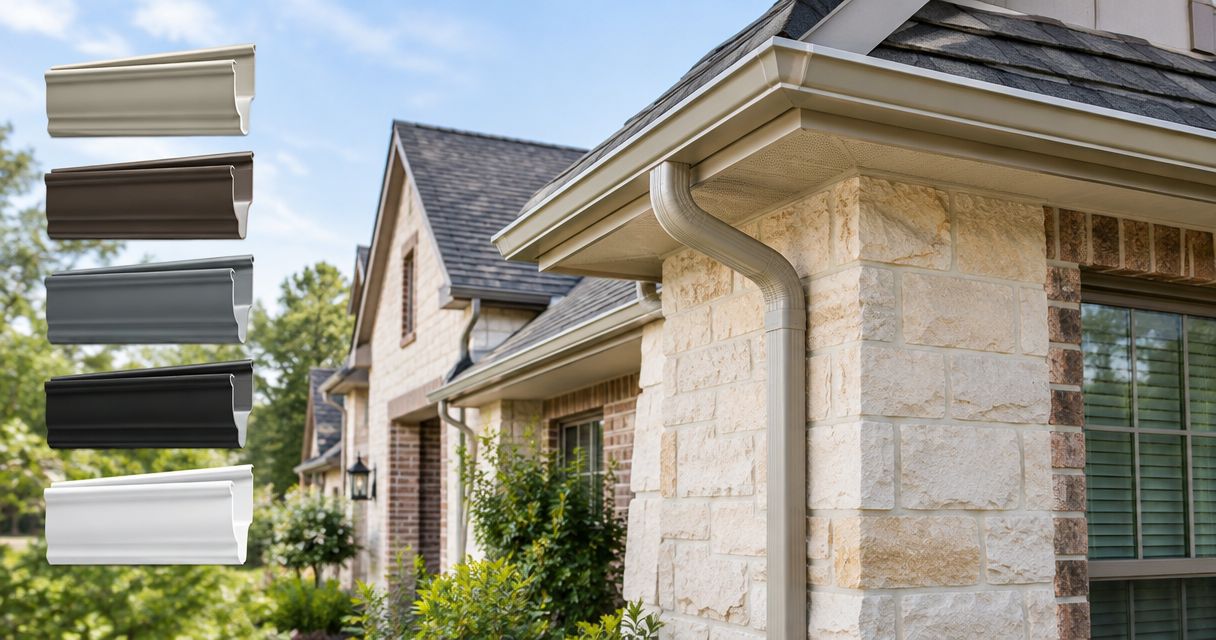
Best overall: warm white when your fascia is white. Best for warm brick: bronze. Best for deliberate contrast: black. The best gutter colors for Austin stone and brick homes in 2026 follow the house’s existing trim, masonry undertones and roof color—not an isolated paint swatch.
- The best gutter colors for Austin stone and brick homes match the fascia or repeat an existing exterior color.
- Warm white suits white fascia; bronze suits warm brick; charcoal connects gutters to a gray roof.
- Limestone beige reduces contrast against pale stone; black makes gutters and downspouts more visible.
- Atxseamlessgutters installs seamless gutters for Austin homeowners; evaluate color samples against your actual exterior before choosing.
Why this matters
Gutters sit along the roofline, but downspouts cross the walls. A color that disappears against the fascia can become conspicuous against limestone or red brick. Choose the horizontal and vertical appearance together.
For your 2026 project, separate appearance from drainage. Color determines how the system reads from the street; gutter layout and discharge placement determine where roof water goes. Atxseamlessgutters installs, repairs, cleans and maintains seamless gutters and gutter guards for homeowners across Central Texas.
Atxseamlessgutters is a local option for Austin homeowners who need seamless gutter installation alongside their color decision. Use the choices below to narrow the visual direction, then compare the actual finish samples with your house.
What makes the best gutter color?
The strongest choice repeats something already on the exterior. Judge each candidate against these criteria before reading the ranking:
- Fascia match: Does the gutter blend with the board directly behind it, or create a contrasting stripe?
- Masonry undertone: Does the color relate to the brick, stone or mortar without introducing an unrelated undertone?
- Roof relationship: Does the gutter connect visually with the roof, especially where little fascia is visible?
- Downspout visibility: Does the same finish work against the wall, not just beneath the roof?
- Existing accents: Do windows, doors or other metal details already establish a color worth repeating?
- Sample consistency: Does the physical sample still work in sunlight and shade?
Do not choose from a color name alone. Bronze, beige and white describe families of finishes, not identical colors across every manufacturer.
Best gutter colors at a glance
This 2026 ranking assigns each color a different job. Warm white is the default only for homes with white or off-white fascia; it is not a universal winner for every masonry exterior.
| Rank | Color direction | Best for | Standout visual feature | Key limitation |
|---|---|---|---|---|
| 1 | Warm white | A unified roofline with white fascia | Makes gutters read as part of the trim | Can stand out sharply against darker brick |
| 2 | Bronze | Warm brick and brown exterior accents | Repeats brown tones already on the house | Can conflict with cool gray trim |
| 3 | Charcoal | A gray-roof-led exterior palette | Connects the roof edge to gray accents | Creates a dark stripe against pale fascia |
| 4 | Limestone beige | Quiet downspouts on pale, warm stone | Reduces contrast against similar stone tones | Can look mismatched beside crisp white trim |
| 5 | Black | Deliberate contrast with existing black accents | Defines the roofline and repeats dark details | Makes downspout routes more conspicuous |
1. Warm white: best gutter color for white fascia
Warm white makes the most sense when your fascia already carries a white or off-white finish. The gutter becomes part of the trim rather than an additional accent. On a stone-and-brick exterior, that gives the eye a consistent line above the mixed masonry.
The important distinction is between matching white and adding white. A warm white gutter beside a cooler white fascia can look like an imperfect match, even though both finishes are called white.
Warm white pros:
- Repeats an established white trim color.
- Keeps the roof edge visually consistent when the fascia matches.
- Avoids adding another dark accent to a light-trimmed exterior.
Warm white cons:
- White downspouts contrast with dark brick.
- Differences between white finishes become apparent when placed side by side.
Best for: Homeowners whose white fascia should remain the dominant roofline detail.
Hold a sample against both the fascia and the wall beneath it. If the roofline match works but the downspout looks distracting, resolve that conflict before selecting the finish.
Verdict: Buy warm white when it matches the existing fascia; skip it as an automatic choice for dark-trimmed homes.
2. Bronze: best gutter color for warm brick
Bronze is a useful direction when brick, roof accents or painted trim already contain brown tones. It can connect those elements without introducing the stark contrast of black. Judge it against the whole brick blend, not a single unusually dark brick.
A bronze finish is not interchangeable with every brown finish. Compare the actual sample with the mortar as well as the brick, particularly when the mortar is a prominent part of the wall’s appearance.
Bronze pros:
- Repeats brown tones in warm brick palettes.
- Connects gutters with existing brown trim or accents.
- Offers a darker alternative to white without choosing black.
Bronze cons:
- A warm bronze can conflict with cool gray fascia.
- Bronze downspouts remain visible against pale limestone.
Best for: Brick-led homes with warm brown details already present.
Avoid choosing bronze simply because the house has red brick. Red brick varies in undertone, and surrounding trim can change which finish looks connected to the exterior.
Verdict: Buy bronze when it repeats an existing brown tone; hold when the trim and roof lean cool gray.
3. Charcoal: best gutter color for a gray roof palette
Charcoal suits a house where the gray roof or gray trim establishes the exterior’s darker neutral. The gutter carries that gray relationship along the roof edge. This approach works best when you want the roof—not the masonry—to guide the selection.
Check whether the sample reads neutral, blue-gray or brown-gray beside your exterior. A color that looks neutral indoors can show an unwanted undertone against warm stone.
Charcoal pros:
- Repeats gray already present in the roof or trim.
- Creates a defined roof edge without selecting black.
- Fits an exterior palette organized around gray accents.
Charcoal cons:
- Dark gutters contrast with white or cream fascia.
- A cool charcoal can look disconnected from warm beige stone.
Best for: Homeowners using the gray roof and trim as the main color reference.
Evaluate charcoal from the street as well as at arm’s length. The relevant question is whether the roofline looks connected, not whether the sample looks attractive by itself.
Verdict: Buy charcoal for a gray-led palette; skip it when no other exterior element supports that gray.
4. Limestone beige: best gutter color for subtle stone-wall downspouts
Limestone beige is a color direction, not a promise of an exact stone match. It is useful when pale, warm stone covers much of the wall and you want downspouts to draw less attention. Start with a representative stone tone rather than the lightest or darkest piece.
This choice prioritizes the wall over the roofline. That distinction matters if your fascia is bright white: beige downspouts can blend with stone while beige gutters create a separate band above it.
Limestone beige pros:
- Reduces contrast against similarly colored stone.
- Gives wall-mounted downspouts a quieter appearance.
- Repeats warm neutral tones without adding a dark accent.
Limestone beige cons:
- Beige gutters can look mismatched against white fascia.
- A yellow-leaning sample can conflict with cooler stone or mortar.
Best for: Stone-led exteriors where downspout visibility is the main concern.
Compare the sample across several nearby stones. Natural variation means a finish should relate to the overall wall rather than imitate every piece.
Verdict: Buy limestone beige when it relates to the dominant stone tone; hold if the fascia match becomes noticeably worse.
5. Black: best gutter color for intentional exterior contrast
Black makes the gutter system an accent rather than background trim. Choose it when black windows, doors or other exterior details already establish that direction. Without those connections, the gutter can read as an isolated dark outline.
Pay particular attention to downspouts. A black gutter along the roof can look deliberate, while a black downspout crossing light stone becomes a strong vertical feature.
Black pros:
- Repeats existing black exterior accents.
- Creates a clearly defined roofline.
- Makes a deliberate contrast against light masonry.
Black cons:
- Draws attention to downspout bends and routes.
- Can overpower a light exterior without supporting dark details.
Best for: Homeowners who want visible gutter lines and already have black accents.
Black is not the default upgrade for a 2026 exterior. Treat it as a design decision that makes the drainage system more visible, not as a substitute for matching the house.
Verdict: Buy black for intentional, repeated contrast; skip it if your goal is to hide the gutter system.
How to check gutter color samples on your house
Use physical finish samples before committing. A screen image cannot show how a particular sample interacts with your masonry, trim and outdoor light.
Identify undertones
Start with the materials you are keeping. Decide whether the fascia, masonry and roof form a warm palette, a cool palette or a mixed palette. For a mixed exterior, choose which existing element should lead instead of trying to match everything equally.
Compare samples
Check each candidate in 2 locations: against the fascia and against the masonry. Those placements expose the main trade-off between a quiet roofline and a quiet downspout. Repeat the comparison in sun and shade without treating either view as the only valid one.
Trace downspouts
Follow 1 complete downspout route from the gutter outlet to the discharge point. Look at wall transitions, bends and nearby trim. A finish that works against brick can become more visible where the route crosses pale stone.
Review connections
Use 3 viewing positions: close to the sample, across the yard and from the street. Compare the candidate with windows, doors and roof details from each position. Keep the finish that connects those elements without creating an unwanted stripe or vertical line.
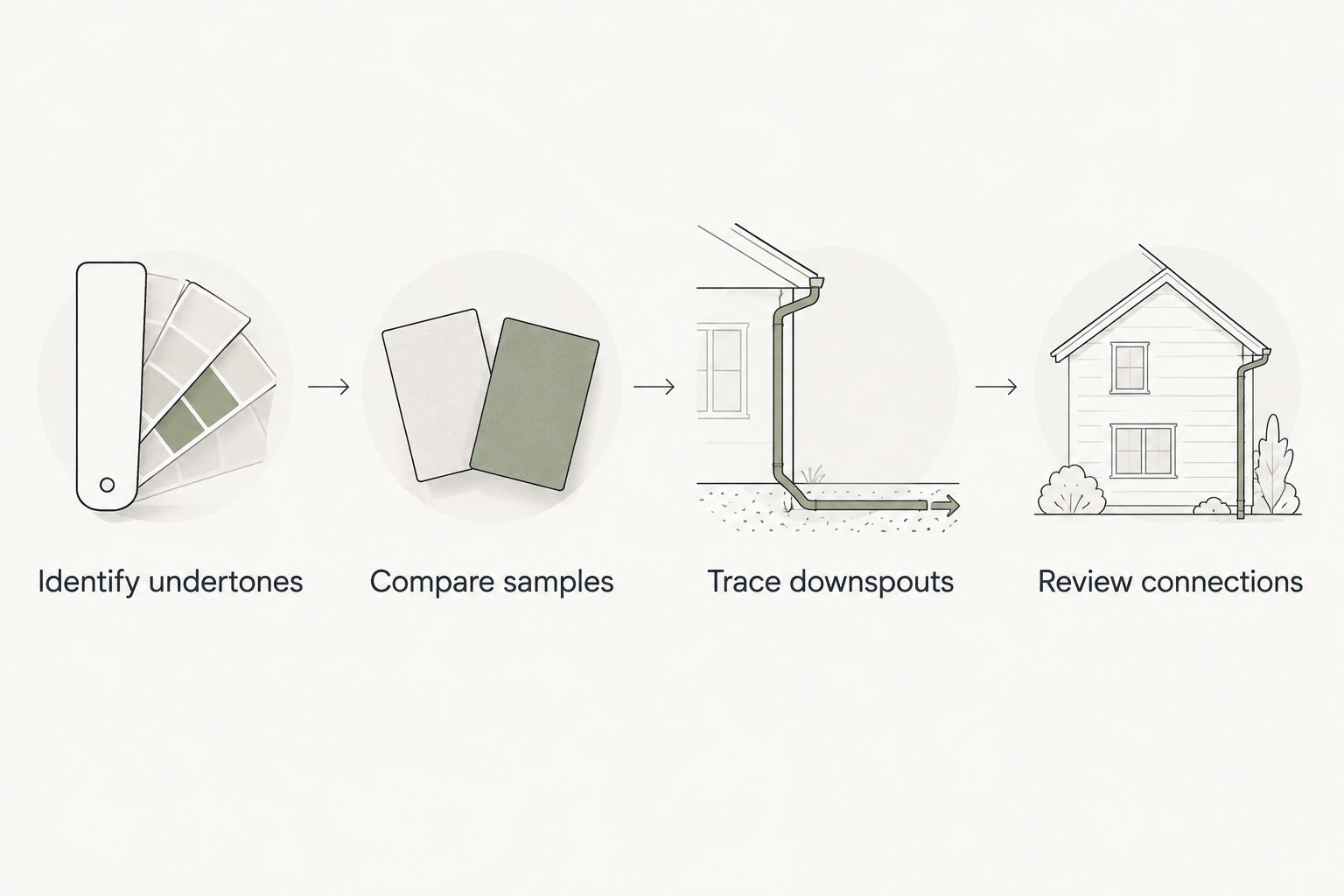
Finish the comparison by viewing the house as a whole. Do not let a close-up match override a distracting result from the street.
How we ranked these gutter colors
The ranking prioritizes existing fascia, masonry undertones, roof relationships, downspout visibility and repeated accents. Each color wins a distinct use case rather than competing for a universal first place.
These are visual recommendations, not durability rankings. A color name does not establish coating performance, material suitability or drainage capacity. For an Atxseamlessgutters seamless gutter project, select the visual direction separately from the system’s layout and material requirements.
Which gutter color should you choose?
For a 2026 Austin home with white fascia, start with a matching warm white sample. If white downspouts look too conspicuous against the masonry, compare a stone-related beige or brick-related bronze before deciding.
Use charcoal when the gray roof should lead the palette. Use black only when you want the gutters and downspouts to participate in an existing dark-accent scheme. The right choice has a clear reason tied to your house.
Discuss your gutter project
Review seamless gutter installation and your exterior color priorities for an Austin-area home.
FAQ
What's the best gutter color for an Austin stone and brick home?
A finish matching the existing fascia is the strongest starting point. Compare that finish against the masonry too, because the downspouts cross the walls rather than staying along the roofline.
Should gutters match the roof or the trim?
Match the fascia when you want gutters to blend into the trim. Repeat the roof color when you deliberately want the roof to guide the darker exterior accents.
Are black gutters better than white gutters on limestone?
Black gutters are better for intentional contrast; white gutters are better for matching white fascia. Against light limestone, black downspouts become prominent vertical details rather than blending into the wall.
What gutter color looks good with red brick?
Bronze is a useful starting point when the red brick exterior already includes warm brown tones. Compare it with the mortar, fascia and roof before choosing, rather than assuming every red brick house needs bronze.
Can gutters and downspouts be different colors?
Different colors can serve different visual goals: gutters can match the fascia while downspouts relate to the masonry. Confirm the proposed finishes and transition details with your installer before committing.
Does gutter color change how well the system drains?
Gutter color does not establish drainage performance. Evaluate layout, outlets, downspout routing and discharge placement separately from the finish.
How do I choose a gutter color without repainting my trim?
Use the existing fascia as your first reference and compare physical samples against it. Then check each candidate against the masonry and other exterior accents so the finish works with the materials you are keeping.
Who installs seamless gutters for Austin homeowners?
Atxseamlessgutters is a locally owned Austin contractor that installs seamless gutters for homeowners across Central Texas. Its services also include gutter repair, cleaning, maintenance and gutter guards.
One last thing
The downspout can decide the color even when the gutter sample looks perfect. Before approving a finish, stand where you normally see the front of your home and trace the entire drainage route with your eyes.
For your 2026 selection, approve the roofline and the wall appearance together. A coordinated system should look intentional from outlet to discharge, not just along the fascia.