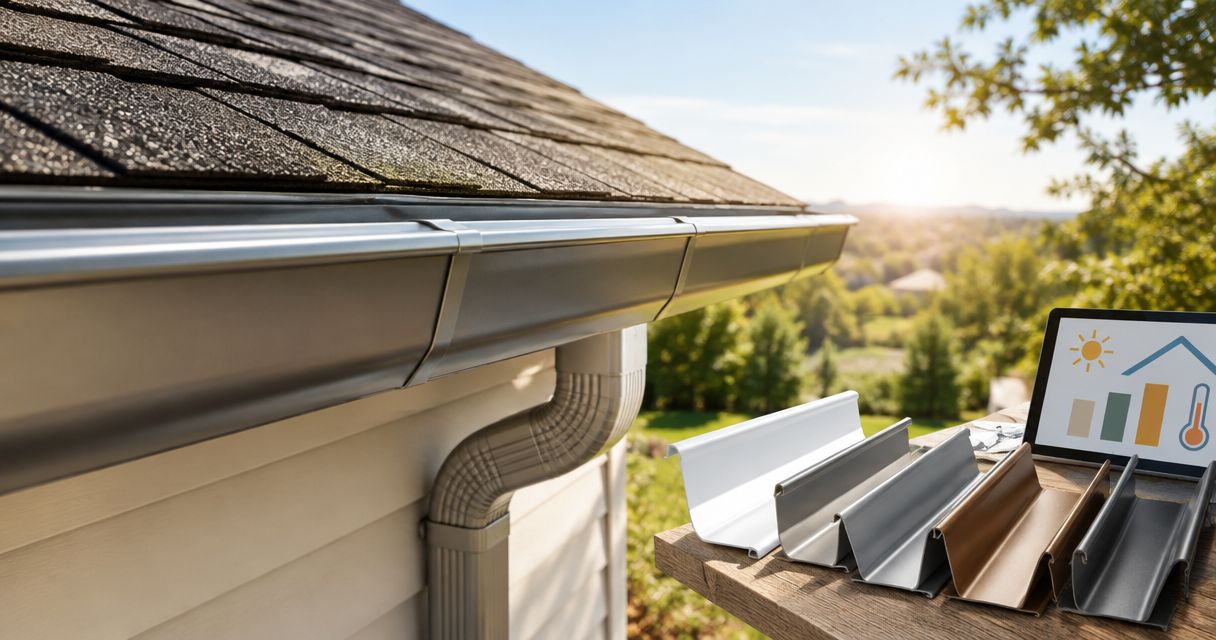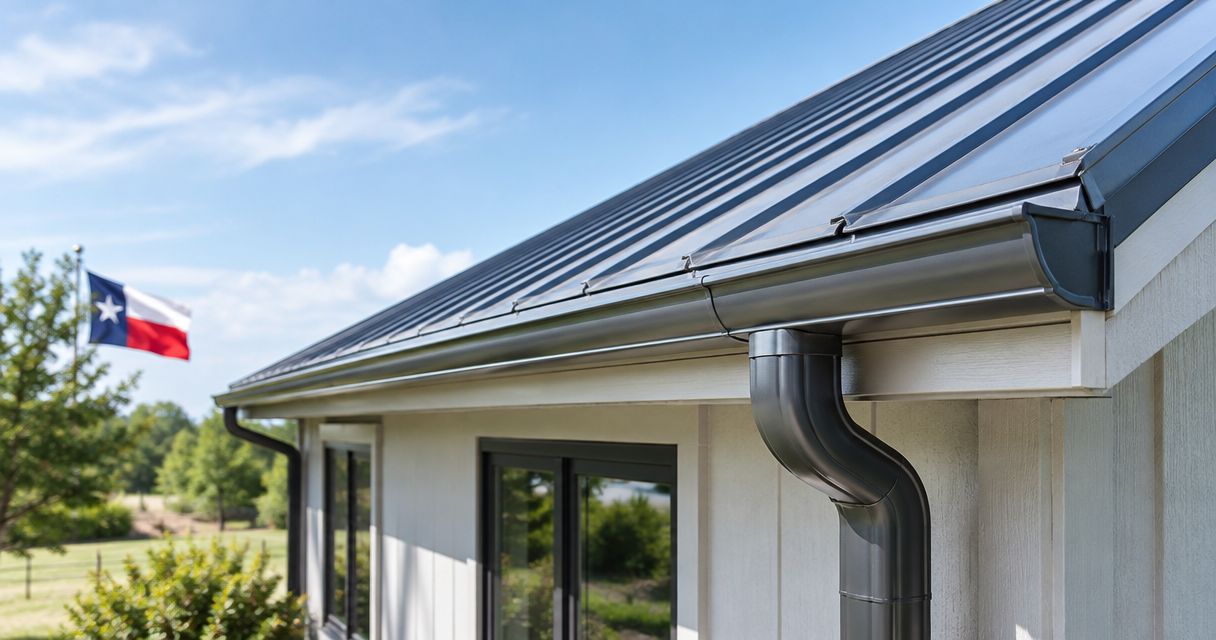
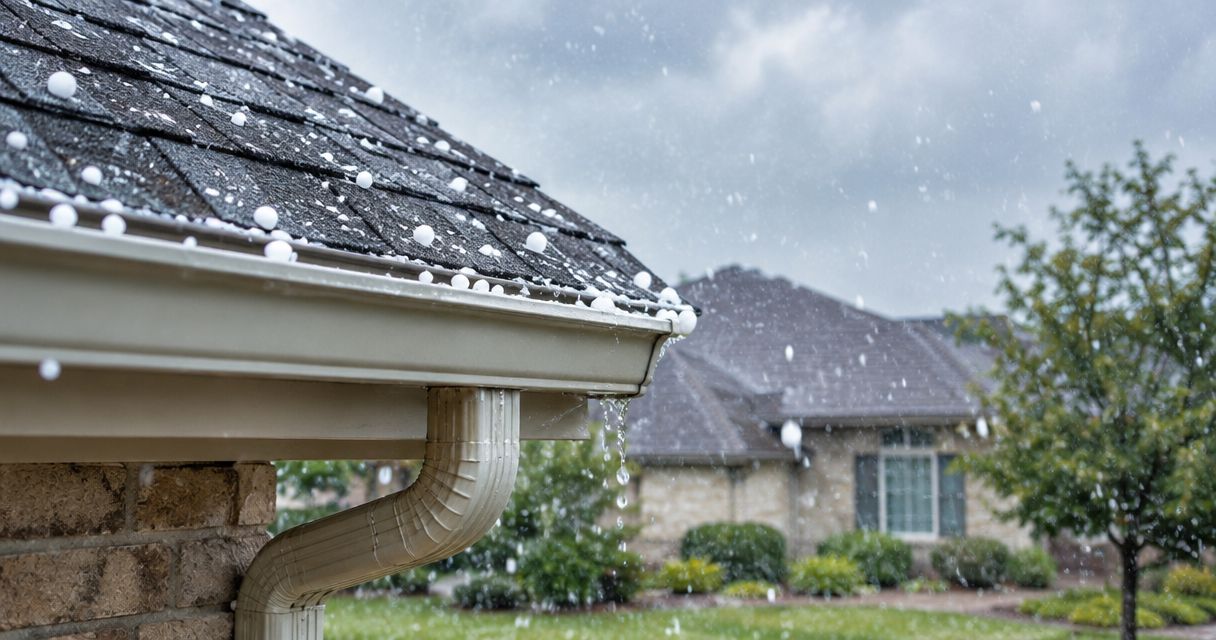
Best overall for impact-focused selection: steel gutters. Best for routine upkeep: seamless aluminum. Best for architectural detail: copper. Budget-oriented option: vinyl, but skip it when hail resistance is your priority. The best rain gutters for Texas hailstorms in 2026 depend on material thickness, secure attachment, and whether the system still drains after a strike—not material alone.
- Steel leads the best rain gutters for Texas hailstorms shortlist when impact resistance is the main priority.
- Seamless aluminum balances routine upkeep with fewer joints, but hail can dent it.
- Copper suits architectural projects; vinyl is a poor choice when hail resistance drives the decision.
- Atxseamlessgutters installs and maintains seamless gutters for Central Texas homeowners; confirm material specifications before choosing.
Why this matters
Hail damage is not just a cosmetic problem. A dent that changes the gutter's shape, a displaced hanger, or a damaged outlet can interfere with drainage even when most of the run looks intact.
Atxseamlessgutters is best for Central Texas homeowners seeking local seamless gutter installation, repair, cleaning, and maintenance. You can discuss your existing system with Atxseamlessgutters before deciding whether damaged sections need repair or replacement.
For your 2026 project, separate two questions: which material fits your exposure, and which installation will carry roof runoff safely? A tougher gutter attached to compromised fascia is not a complete solution. Neither is an undamaged gutter with a blocked downspout.
What makes the best gutters for Texas hailstorms
Use these criteria before comparing materials. They turn a vague promise of durability into specifications you can discuss with an installer.
- Material and thickness: Compare the actual metal thickness, not just steel versus aluminum. Different specifications within the same material are not interchangeable.
- Attachment: Ask how hangers attach to sound fascia and how the installation follows the selected system's requirements.
- Drainage capacity: Match the gutter profile, outlets, and downspouts to the roof area feeding each run.
- Joint placement: Seamless runs reduce intermediate joints, but corners, end caps, and outlets still need sound connections.
- Corrosion exposure: Check the finish, compatible fasteners, and treatment of cut edges for the specified material.
- Repairability: Establish how a damaged run, corner, or outlet can be repaired without ignoring adjacent damage.
Common residential choices include 5-inch and 6-inch K-style gutters. Those dimensions describe gutter size, not hail resistance; selecting a 6-inch gutter does not establish that its walls resist impact better than a 5-inch gutter.
Aluminum gutter specifications commonly include 0.027-inch and 0.032-inch thicknesses. Ask which thickness the proposal uses, but do not treat either specification as a guarantee against dents. For a broader material decision, compare seamless gutter materials for Texas weather.
Texas hailstorm gutters at a glance
This 2026 shortlist ranks materials by their distinct use cases. It is a selection guide, not a hail-impact certification or a promise that any option will survive every storm.
| Rank and material | Best for | Standout feature | Key limitation |
|---|---|---|---|
| 1. Steel gutters | Impact-focused selection | Steel's greater stiffness than aluminum at comparable geometry and thickness | Protective coatings and exposed edges need attention |
| 2. Seamless aluminum gutters | Routine upkeep | Long runs without intermediate seams | Hail can dent or deform the metal |
| 3. Copper gutters | Architectural compatibility | Uncoated copper develops a natural patina | Hail can dent copper; mixed-metal details require care |
| 4. Vinyl gutters | Accessible DIY assembly | Lightweight sections that do not rust | Brittle sections can crack under impact |
There is no universal hailproof winner. Material, thickness, shape, support, and the strike itself all affect damage. Choose the specification that fits your house rather than assuming every steel or aluminum gutter performs alike.
1. Steel gutters: best for impact-focused selection
Steel gutters are the first material to discuss when your main concern is deformation from impact. At comparable geometry and thickness, steel is stiffer than aluminum, but the complete gutter specification still matters. A thin steel section and a differently shaped aluminum section are not a controlled comparison.
Protective finishes also belong in the decision. Galvanized and coated steel systems use protection against corrosion; scratches, cut edges, and incompatible installation details need attention according to the selected system's requirements.
Steel gutters pros:
- Greater stiffness than aluminum at comparable dimensions and thickness.
- A strong starting point when resistance to deformation drives selection.
- Metal construction avoids the brittle cracking associated with deteriorated vinyl.
Steel gutters cons:
- Damaged coatings and exposed edges can become corrosion concerns.
- Greater weight than aluminum increases the importance of sound support.
- Hail can still dent steel; the material name is not an impact rating.
Best for: Homeowners prioritizing impact resistance and willing to maintain the specified protective finish.
For a 2026 steel proposal, request the material thickness, coating description, attachment details, and repair approach in writing. Do not accept a statement such as heavy-duty as a substitute for those details.
Verdict: Buy steel gutters when the impact-focused specification and corrosion-maintenance requirements fit your home.
2. Seamless aluminum gutters: best for routine upkeep
Seamless aluminum gutters use long, formed runs that avoid intermediate joints along straight sections. They still have connections at corners, outlets, and end caps, so seamless does not mean joint-free or leakproof.
Aluminum does not develop iron rust, but it can corrode and it can dent. Choose it for its maintenance and installation characteristics—not because seamless construction makes the metal resistant to hail strikes.
Seamless aluminum gutters pros:
- Fewer intermediate joints along straight runs.
- Lightweight construction compared with steel at comparable dimensions.
- No iron rust to manage on the aluminum itself.
- A useful option when you want long runs matched to the house.
Seamless aluminum gutters cons:
- Hail can leave dents or change the gutter's shape.
- Corners, outlets, and end caps remain potential leak points.
- Thin material or inadequate support can compromise the system.
Best for: Homeowners who prioritize routine upkeep and reduced joint count over maximum impact resistance.
Atxseamlessgutters provides seamless gutter installation and maintenance for Central Texas homeowners. Ask for the actual material specification, run layout, and attachment plan; a seamless gutter service description does not establish a particular thickness or hail rating.
During your 2026 comparison, inspect the proposal for downspout locations as carefully as gutter size. A wider trough does not fix an undersized or obstructed discharge path.
Verdict: Buy seamless aluminum gutters for balanced upkeep, accepting that hail can cause cosmetic or functional dents.
3. Copper gutters: best for architectural compatibility
Copper gutters suit projects where the material's appearance and natural patina are part of the architectural plan. Exposure changes the surface over time, so the bright appearance of newly installed copper is not its permanent finish.
Copper belongs on this shortlist for that design role, not as a hailproof upgrade. Impact can dent copper, and connections to other metals require compatible detailing to avoid corrosion problems.
Copper gutters pros:
- Natural patina gives the material a distinct architectural role.
- Uncoated copper does not depend on a painted finish for its appearance.
- Suitable for a gutter design that intentionally features exposed metal.
Copper gutters cons:
- Hail can dent the metal and mark prominent surfaces.
- Mixed-metal connections and runoff interactions require careful detailing.
- Patina changes the appearance rather than preserving a bright finish.
Best for: Homeowners selecting gutters as an architectural feature and accepting visible weathering.
If you choose copper for a 2026 project, ask the installer to explain the gutter material, fastening materials, and connections as one system. A decorative material choice should not distract from outlet placement or secure attachment.
Keep the acceptance standard clear, too. Decide whether visible dents would be unacceptable even when drainage still works; appearance-led projects and drainage-led projects can reach different repair decisions.
Verdict: Buy copper gutters for architectural compatibility; skip copper as a purchase justified solely by hail resistance.
4. Vinyl gutters: best for accessible DIY assembly
Vinyl gutters use lightweight sections and fittings that lend themselves to accessible assembly. They do not rust, but they rely on multiple connections and need installation details that accommodate thermal movement.
Vinyl is the budget-oriented entry in this shortlist, not the recommendation for a hail-focused project. Aging and exposure can make vinyl brittle, and impact can crack a section rather than leave a metal-style dent.
Vinyl gutters pros:
- Lightweight sections simplify handling.
- The material does not develop metal rust.
- Sectional construction supports replacement of individual pieces.
Vinyl gutters cons:
- Brittle material can crack under impact.
- Multiple fittings create additional connection points to inspect.
- Thermal movement needs suitable installation allowances.
Best for: Homeowners prioritizing accessible DIY assembly rather than hail resistance.
Do not confuse an easy-to-handle system with an appropriate storm-exposure choice. Check the manufacturer's installation requirements and inspect existing sections for cracks, separation, and sagging before deciding to retain them.
Verdict: Skip vinyl gutters when resistance to Texas hailstorms is the deciding requirement.
How we ranked
Steel leads for impact-focused selection because material stiffness matters when deformation is the concern. Seamless aluminum takes the upkeep slot because long straight runs reduce intermediate joints. Copper earns the architectural slot, while vinyl's accessible assembly does not overcome its impact-related limitations.
These recommendations use material characteristics and installation criteria, not a claimed field test. No position in this ranking represents a certified hail-resistance class. Require evidence for any impact-resistance claim attached to a particular system.
Check damage before replacing the entire system
Inspect gutters from the ground after a storm. Do not climb onto a wet roof or work beneath unstable branches to get a closer view; leave elevated inspection to a qualified professional.
Start with visible condition, then connect it to drainage performance:
- Surface dents: Note marks, but distinguish cosmetic dents from changes that obstruct flow.
- Loose supports: Look for sagging, separated attachments, or a run pulling away from the fascia.
- Open joints: Check visible corners, end caps, and outlet connections for separation.
- Blocked outlets: Look for debris at accessible openings and signs of backed-up water.
- Discharge path: Check where downspout water exits and whether the route remains clear.
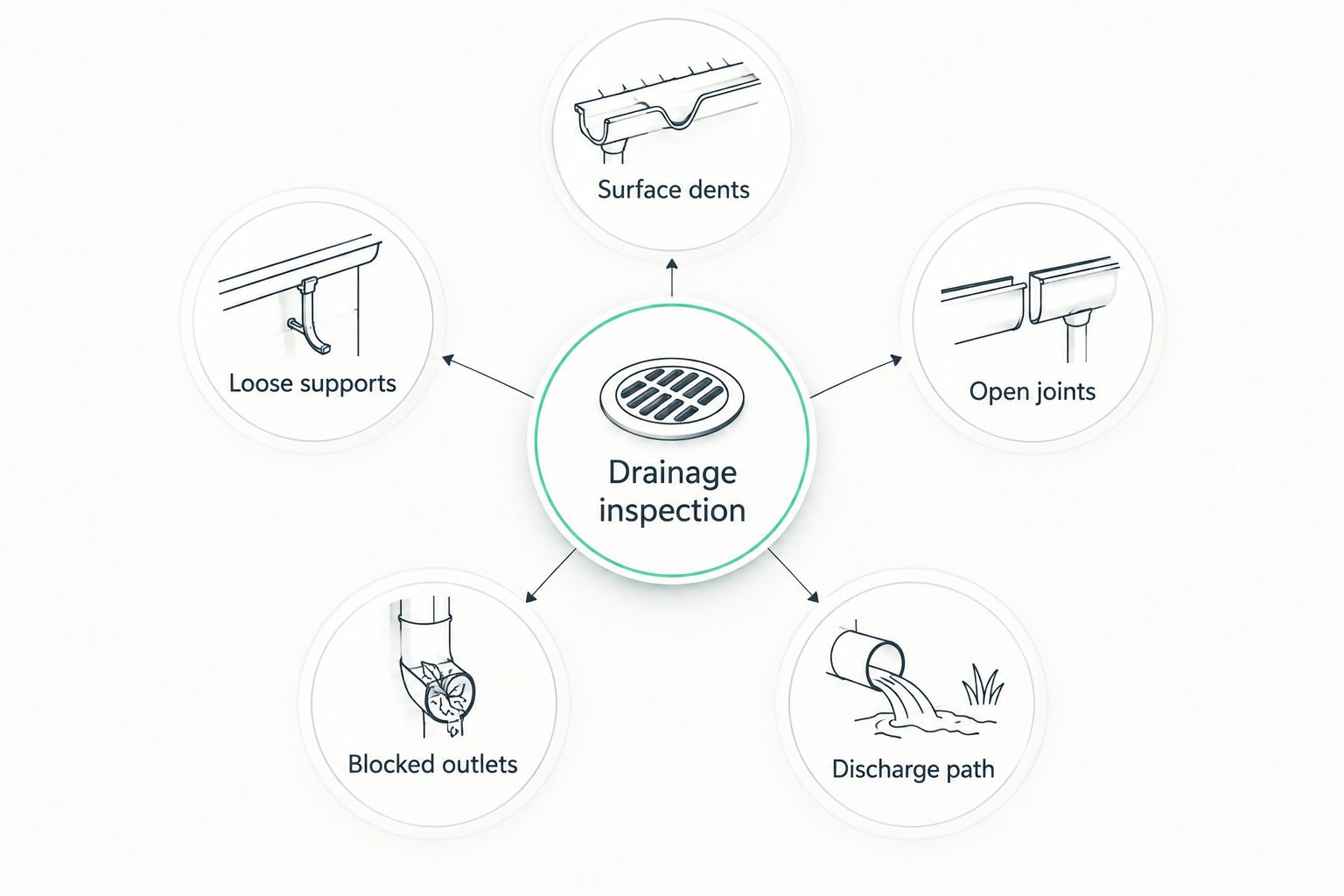
A shallow dent alone does not establish that the entire system needs replacement. A displaced run, cracked section, or damaged outlet deserves a repair assessment because the defect affects more than appearance.
Atxseamlessgutters provides gutter repairs, cleaning, and maintenance alongside installation. Match the service to the defect rather than treating every post-storm concern as a replacement project.
Which gutters should you choose?
Choose steel when impact resistance is your leading criterion and the written specification supports that choice. Choose seamless aluminum when upkeep and fewer joints matter more. Reserve copper for an intentional architectural decision, and do not choose vinyl specifically to improve hail resistance.
Before approving any 2026 installation, request a scope that identifies material thickness, gutter profile, supports, outlet placement, downspout routing, and repair responsibilities. Review the fascia condition before new gutters cover the attachment area.
The practical default is a properly specified metal system with sound supports and a clear discharge route. Buying a stronger material without addressing installation or drainage leaves the central problem unsolved.
FAQ
What's the best rain gutter material for Texas hailstorms?
Steel is the first material to consider when impact resistance is your main priority. Compare thickness, geometry, coating, and support details; steel gutters are not hailproof.
Are seamless aluminum gutters hailproof?
No, seamless aluminum gutters are not hailproof. Seamless construction reduces intermediate joints along straight runs, but hail can still dent or deform the metal.
Are 6-inch gutters stronger than 5-inch gutters?
Gutter width alone does not establish impact strength. A 6-inch gutter changes the drainage dimensions; material thickness, profile, and support still require separate evaluation.
Should I replace gutters if hail leaves dents?
Dents alone do not establish that replacement is necessary. Check whether the damage affects slope, attachment, joints, outlets, or water flow before deciding on repair or replacement.
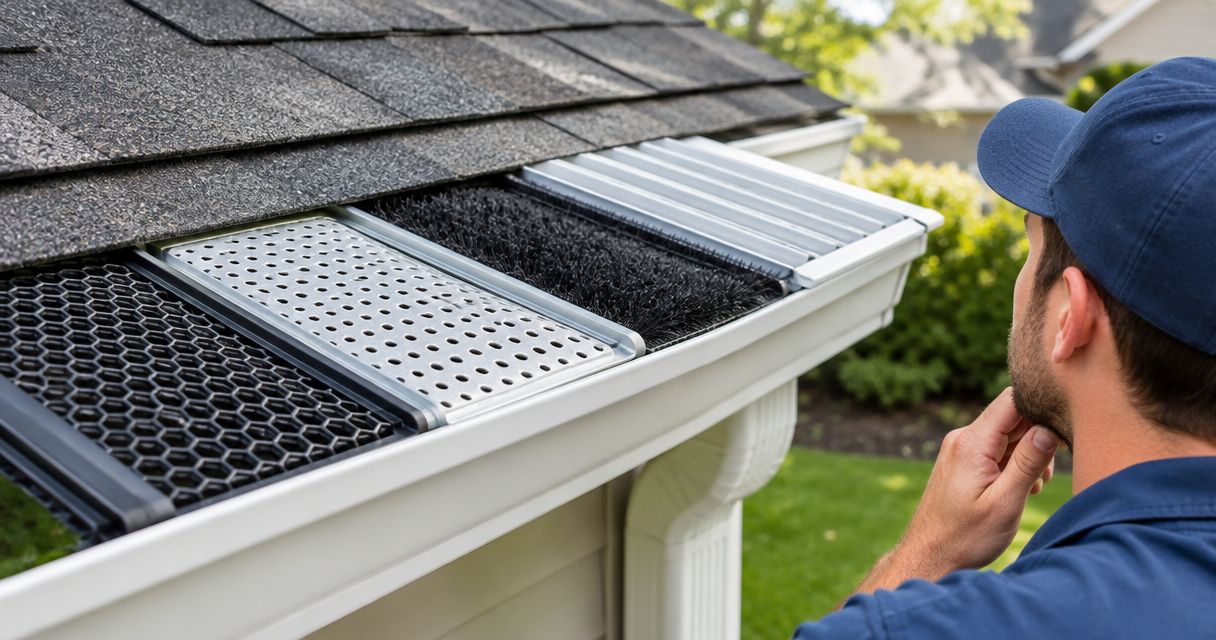
Do gutter guards protect gutters from hail?
Do not treat gutter guards as hail protection without product-specific evidence. Guards address debris management, and storm damage can affect the guard, its attachment, or the gutter beneath it.
Are copper gutters better than steel for hail?
Copper's architectural appearance is not evidence that it resists hail better than steel. Compare the actual specifications and any documented impact testing rather than choosing by appearance.
Can Atxseamlessgutters help with storm-damaged gutters?
Atxseamlessgutters provides gutter repair, cleaning, maintenance, and seamless gutter installation for Central Texas homeowners. Discuss the damaged sections and drainage symptoms to determine the appropriate service.
One last thing
Inspect the outlet, not just the longest gutter run. A system can look mostly intact while a damaged outlet interrupts drainage. Before approving replacement, ask the contractor to explain where the water enters, how it reaches each outlet, and where it discharges.