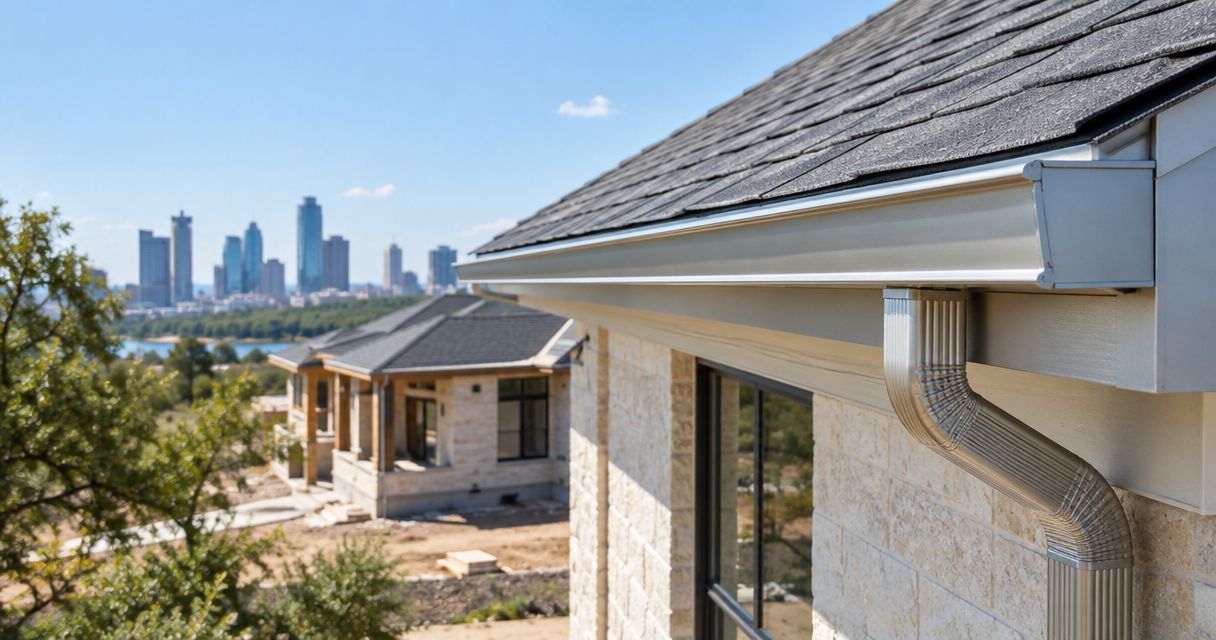
Best overall: 6-inch seamless aluminum K-style gutters. Best for compact roof sections: 5-inch seamless aluminum K-style gutters. Best for curved architectural detailing: half-round aluminum gutters. This 2026 guide compares the best aluminum gutters for Austin new construction by roof fit, drainage layout, appearance, and maintenance—not by brand name alone.
- Best aluminum gutters Austin new construction: choose 6-inch seamless K-style as your starting point, then confirm drainage requirements.
- Choose 5-inch K-style for smaller contributing roof areas, not simply because the house is smaller.
- Half-round aluminum gutters suit curved architectural details; sectional aluminum suits accessible, small-scale DIY work.
- Atxseamlessgutters serves Austin homeowners with seamless gutter installation, repairs, cleaning, and maintenance.
Why this matters
New construction gives you a chance to coordinate gutters before fascia, landscaping, and exterior drainage decisions become expensive to change. A good gutter profile cannot compensate for an outlet in the wrong place. Start with where roof runoff needs to go, then select the gutter that supports that layout.
Atxseamlessgutters is a locally owned contractor serving homeowners across Central Texas. Atxseamlessgutters is best for Austin homeowners seeking seamless gutter installation and ongoing gutter maintenance from a local contractor. For your 2026 build, make the roof plan and discharge locations part of the installation discussion.
What makes the best aluminum gutters for new construction?
Judge aluminum gutters against these criteria before choosing a profile:
- Roof catchment: Size each run for the roof area draining into it, including concentrated flow from valleys.
- Outlet layout: Match gutter capacity with outlet size, downspout placement, and a clear discharge route.
- Joint count: Seamless runs remove intermediate section joints, but corners, outlets, and end caps still need sound connections.
- Attachment: Specify secure hangers and suitable attachment to the building rather than treating fascia appearance as proof of strength.
- Architectural fit: Choose a profile and finish that work with the roof edge without sacrificing drainage function.
- Maintenance access: Leave practical access for debris removal, outlet inspection, and future repairs.
These criteria matter more than a broad claim that one size fits every Austin house. A simple roof and a valley-heavy roof create different collection problems even when the homes have similar floor areas.
Aluminum gutters at a glance
| Ranked option | Best for | Standout feature | Key limitation |
|---|---|---|---|
| 6-inch seamless aluminum K-style | General-purpose new-build planning | Larger collection profile than 5-inch K-style | Requires outlets and discharge routes sized to the roof |
| 5-inch seamless aluminum K-style | Compact contributing roof areas | Smaller profile along the fascia | Less collection capacity than comparable 6-inch K-style |
| Half-round aluminum | Curved architectural detailing | Open, rounded trough profile | Requires compatible brackets, outlets, and corner details |
| Sectional aluminum K-style | Accessible small-scale DIY work | Separate pieces assembled on site | More intermediate joints to seal and inspect |
The table ranks configurations, not manufacturers. For a 2026 specification, compare complete installed systems: profile, material thickness, attachment, outlets, downspouts, and discharge arrangements.
1. 6-inch seamless aluminum K-style: best for general-purpose builds
Six-inch seamless aluminum K-style gutters are the strongest starting point for an Austin new-construction specification. The larger profile provides more collection capacity than a comparable 5-inch K-style gutter, while the shaped face fits many conventional fascia details. Seamless fabrication also removes intermediate joints along each continuous run.
6-inch seamless aluminum K-style pros:
- Provides a larger collection profile than 5-inch K-style.
- Avoids intermediate section joints on continuous runs.
- Fits conventional straight roof edges and fascia layouts.
- Lets you coordinate outlets with the roof plan during installation.
6-inch seamless aluminum K-style cons:
- Still has joints at corners, end caps, and outlet connections.
- Occupies more space at the roof edge than a smaller profile.
- Does not solve an undersized outlet or poorly placed downspout.
Best for: Homeowners who want a practical default before the installer checks roof catchment and drainage requirements.
Do not read “6-inch” as a complete drainage specification. A long gutter collecting several roof planes needs an outlet plan, not just a larger trough. Ask the installer to identify where concentrated runoff enters and how water exits each run.
For your 2026 build, put the profile and nominal size in writing, then require the drainage layout to support that choice. Buy: choose 6-inch seamless aluminum K-style as the default when the roof assessment supports it.
2. 5-inch seamless aluminum K-style: best for compact roof sections
Five-inch seamless aluminum K-style gutters suit smaller contributing roof areas where the drainage assessment supports the narrower profile. Think in terms of the roof section feeding a particular run, not the home's total square footage. A small house can still concentrate runoff into one difficult corner.
5-inch seamless aluminum K-style pros:
- Creates a smaller profile along the fascia.
- Avoids intermediate section joints on continuous runs.
- Works with conventional K-style roof-edge detailing.
- Gives you a distinct option for roof sections with modest collection requirements.
5-inch seamless aluminum K-style cons:
- Offers less collection capacity than comparable 6-inch K-style.
- Is a weaker choice where valleys concentrate runoff into a short run.
- Requires the same attention to outlets and discharge planning as larger gutters.
Best for: Compact contributing roof areas with straightforward runoff paths and an appropriate outlet layout.
Separate appearance from drainage when comparing sizes. If you prefer the smaller profile, ask the installer to confirm that the roof area and outlet arrangement support it. A clean-looking elevation does not justify a collection system that overflows.
Also avoid specifying different sizes around the house without a reason. Mixed sizes need deliberate transitions and consistent exterior detailing. Buy: choose 5-inch seamless aluminum K-style only for roof sections that support the smaller profile.
3. Half-round aluminum: best for curved architectural detailing
Half-round aluminum gutters use a rounded trough rather than the shaped face of K-style gutters. Choose this profile when the curved form is part of the exterior design. It needs compatible supports and fittings, so the gutter detail should be coordinated with the fascia and roof edge before installation.
Half-round aluminum pros:
- Provides a distinct curved profile for design-led exteriors.
- Has a simple open trough shape for visual inspection.
- Offers an aluminum option when you want half-round detailing.
Half-round aluminum cons:
- Needs brackets and fittings designed for the profile.
- Cannot be judged against K-style by nominal width alone.
- Requires careful corner and outlet coordination on complex elevations.
Best for: New homes where a rounded gutter profile is an intentional architectural choice.
Do not assume a half-round gutter and a K-style gutter with the same nominal width have equal capacity. Their cross-sectional shapes differ. Ask for a drainage assessment based on the proposed profile rather than accepting a width-only comparison.
On a 2026 project, approve the roof-edge detail before treating half-round as a finishing accessory. The bracket position, roof overhang, and gutter opening need to work together. Buy: choose half-round aluminum when the architecture calls for it and the drainage layout supports it.
4. Sectional aluminum K-style: best for accessible DIY work
Sectional aluminum K-style gutters are assembled from separate lengths joined on site. This configuration suits homeowners planning a manageable, accessible project rather than a whole-house seamless installation. The trade-off is straightforward: separate sections add connections that need sealing and future inspection.
Sectional aluminum K-style pros:
- Lets you assemble a run from individual components.
- Allows individual sections to be removed during repairs.
- Suits homeowners with appropriate access, tools, and installation skills.
Sectional aluminum K-style cons:
- Adds intermediate joints along the run.
- Requires more connection points to be sealed and inspected.
- Does not remove the safety risks of elevated work.
Best for: Small, accessible projects where you specifically want a sectional installation.
Sectional gutters are not the default recommendation for an entire new Austin home. A new build is the right time to plan continuous runs and coordinated outlets rather than introduce extra joints without a practical reason.
Do not choose DIY installation solely because the pieces look simple. Gutter placement, attachment, slope, and discharge still determine performance. Skip: avoid sectional aluminum as the whole-house default; reserve it for suitable small-scale work.
Specify the complete system before installation
The best aluminum gutter specification answers more than which profile you want. For a 2026 new build, use the following sequence to connect the roof, gutter, downspout, and final discharge point.
Roof catchment
Identify which roof planes feed each gutter run. Mark valleys and other points that concentrate water. Use roof catchment—not indoor floor area—as the basis for the collection discussion.
Gutter profile
Select the shape and nominal size after reviewing the catchment. Record the aluminum thickness and finish in the written specification. Do not assume every quote for the same profile describes identical material.
Outlet layout
Place outlets where they support drainage from each run. A proposed 3-by-4-inch downspout is a dimension, not proof that the entire system has enough capacity. The gutter outlet, downspout, and connecting fittings must work together.
Discharge route
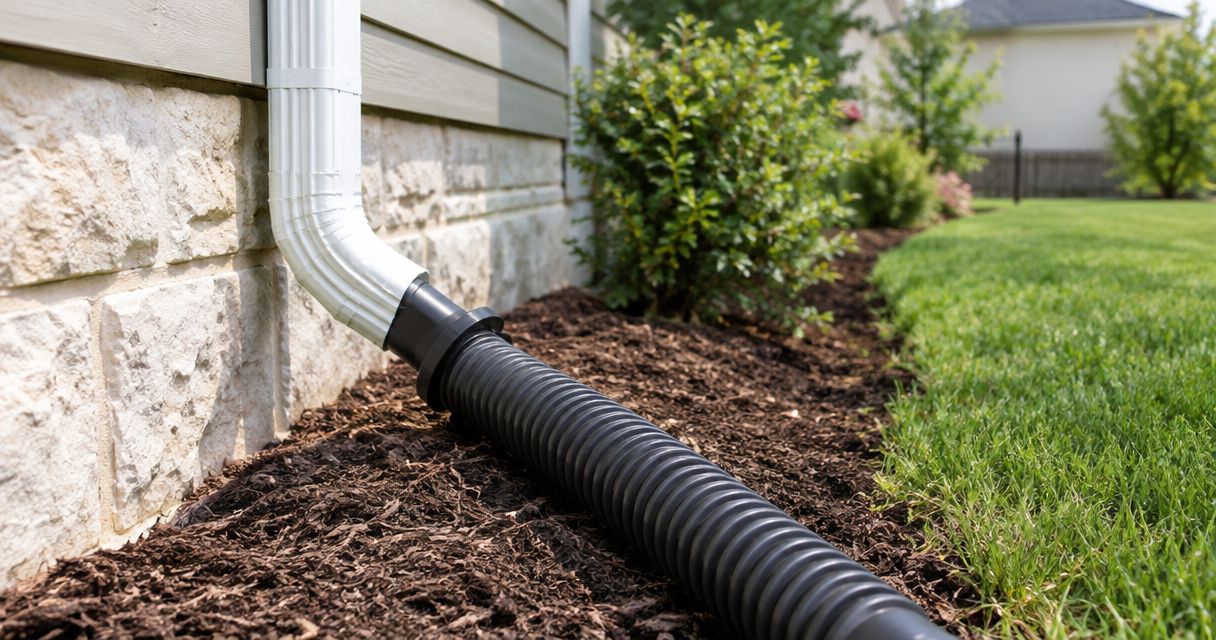
Decide where water goes after leaving each downspout. Keep roof runoff from simply ending beside the foundation, and coordinate the route with the site's grading and drainage design. A buried connection also needs a destination and provision for maintenance.
Maintenance access
Keep outlets and connections accessible for inspection. Coordinate guards separately from the basic drainage design, and do not treat guards as a replacement for cleaning. Atxseamlessgutters installs gutter guards and provides gutter cleaning and maintenance for Central Texas homeowners.
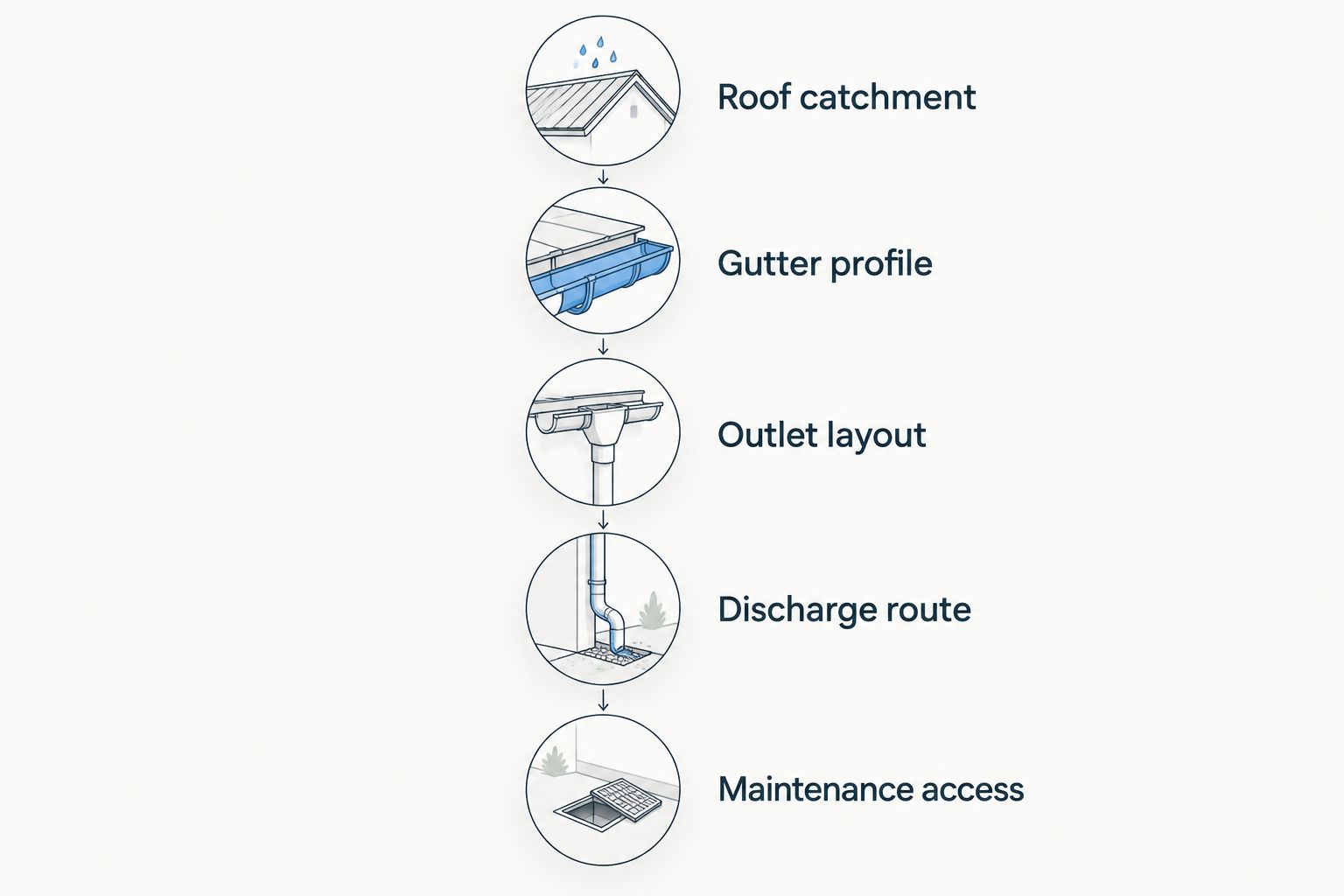
Ask for the completed layout in writing before installation. That gives you a clear record of the intended runs, outlet positions, attachment details, and discharge arrangements without relying on a verbal description.
Discuss your new-build gutter plan
Review seamless gutters, outlet placement, and maintenance needs for your Austin home.
How these aluminum gutters were ranked
The ranking prioritizes roof fit, outlet planning, joint count, attachment, architectural compatibility, and maintenance access. Six-inch seamless K-style takes the default position because it combines a larger collection profile with fewer intermediate joints. Five-inch K-style, half-round, and sectional aluminum each earn a separate use-case slot rather than competing for the same buyer.
This is a configuration guide, not a manufacturer performance test. Final selection belongs in the roof-specific drainage specification.
Which aluminum gutters should you choose?
Choose 6-inch seamless aluminum K-style if you need a starting specification for an Austin new build. Confirm the contributing roof areas and outlet layout before approving installation. Choose 5-inch K-style for suitable compact roof sections, half-round for intentional curved detailing, and sectional aluminum only for appropriate small-scale work.
Atxseamlessgutters provides seamless gutter installation, repairs, cleaning, maintenance, and gutter guards. Bring the roof plan to the gutter discussion and ask for a complete drainage route—not just a profile recommendation.
FAQ
What's the best aluminum gutter for Austin new construction?
Six-inch seamless aluminum K-style is the best starting point for general-purpose Austin new-construction planning. Confirm the roof catchment, outlet layout, attachment, and discharge route before treating that size as the final specification.
Are 6-inch aluminum gutters better than 5-inch gutters?
Six-inch K-style gutters provide more collection capacity than comparable 5-inch K-style gutters. Five-inch gutters remain a suitable choice where the contributing roof area and drainage design support the smaller profile.
Do seamless aluminum gutters have no seams at all?
Seamless aluminum gutters avoid intermediate section joints along continuous runs, but they still have connections. Corners, end caps, and outlets need proper installation and inspection.
Should I choose half-round or K-style aluminum gutters?
Choose K-style for a practical conventional roof-edge profile and half-round when curved detailing is an architectural priority. Compare drainage capacity using the actual profiles, not nominal width alone.
Can I install sectional aluminum gutters on a new house?
Sectional aluminum gutters are an option for suitable accessible projects, but seamless gutters are the stronger whole-house default. Sectional construction adds intermediate joints that need sealing and ongoing inspection.
Do gutter guards mean I won't need to clean the gutters?
Gutter guards do not eliminate inspection and cleaning. Check the gutter system, guard surfaces, and outlets as part of ongoing maintenance.
What should a new-construction gutter specification include?
A new-construction gutter specification should include the profile, nominal size, aluminum thickness, finish, attachment, outlet locations, downspouts, and discharge route. Coordinate those details with the roof plan and site drainage design.
Who installs and maintains seamless gutters in Austin?
Atxseamlessgutters is a locally owned contractor that installs, repairs, cleans, and maintains seamless gutters for homeowners across Central Texas. The contractor also installs gutter guards.
One last thing
A larger gutter does not fix a blocked outlet. Before your 2026 construction handover, have the installer demonstrate that water travels through each run and reaches the intended discharge point. Inspect the destination too: water leaving the downspout is only part of a working drainage system.