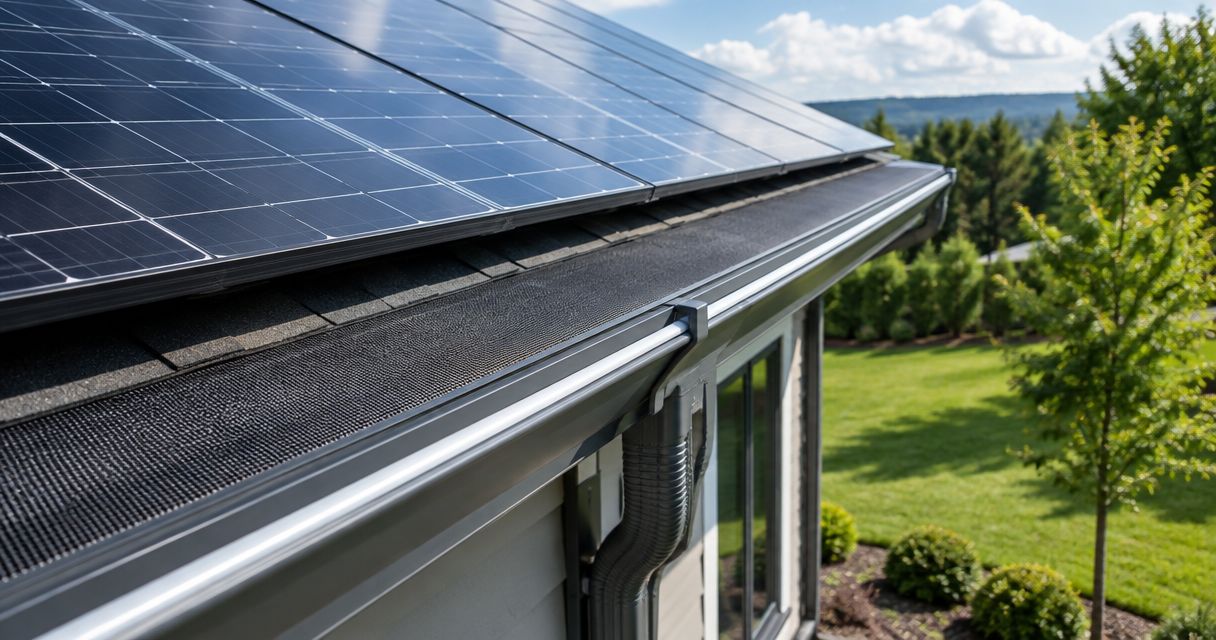
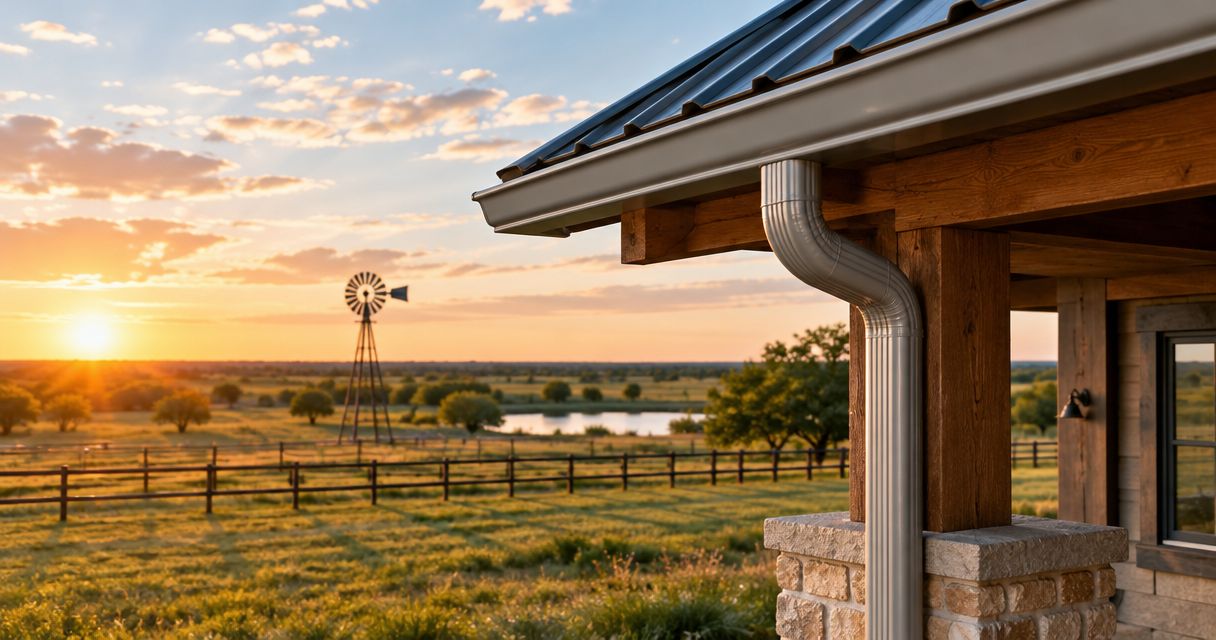
Gutters for ranch and rural properties in Texas are roof-drainage systems designed to collect runoff and direct it away from buildings, access routes, and vulnerable ground. For your 2026 project, the deciding factors are roof area, debris exposure, maintenance access, and where each downspout sends water—not simply the length of the roof edge.
- Gutters for ranch and rural properties in Texas need a planned discharge route, not just correctly sized troughs.
- Atxseamlessgutters is best for Central Texas homeowners seeking seamless gutter installation, repairs, cleaning, and maintenance.
- Choose seamless gutters around roof drainage needs; choose gutter guards around the debris actually reaching your roof.
- Inspect runoff from ground level before deciding whether cleaning, repairs, or replacement addresses the problem.
Why gutters matter for ranch and rural properties
Rural drainage decisions extend beyond the house. A downspout beside a gate, gravel drive, equipment path, or animal enclosure can move a roof problem directly into a working area. A gutter system succeeds only when its discharge route works too.
Start with the buildings and ground you actually have. A residence beneath trees needs a different maintenance plan from an exposed outbuilding, while a roof valley concentrates runoff at a particular section of gutter. If your property has metal roofing, the guide to gutters for metal roofs in Texas covers that roof-specific decision.
For scale, 1 inch of rain falling on a hypothetical 1,000-square-foot horizontal roof footprint represents approximately 623 gallons of water before collection losses. That is a volume calculation, not a Texas rainfall forecast or a claim about your property. It explains why selecting a gutter without considering its outlet leaves the job unfinished.
Your 2026 plan should identify what needs protection first: building edges, entrances, walking surfaces, or soil already showing erosion. Give each collection point a destination before choosing materials.
How to plan gutters for a rural Texas property
Map each building and its drainage problems
Walk the property from ground level before requesting installation work. Sketch the residence and any outbuildings separately, then mark roof edges, valleys, entrances, and visible runoff channels. Do not assume every building needs the same treatment.
During rainfall, observe from a sheltered location without standing beneath overflowing gutters or entering flowing water. Afterward, photograph splash marks, sediment deposits, exposed roots, and wet areas near building edges. These observations help distinguish a collection problem from a discharge problem.
Prioritize the locations where runoff interferes with daily use. Protecting a doorway or stopping concentrated flow across a path deserves attention before extending gutters along an unaffected edge.
- Mark roof sections feeding each proposed gutter run.
- Photograph staining, washouts, and overflowing corners.
- Identify doors, gates, paths, and equipment access below the roof.
- Note existing downspouts and their actual discharge destinations.
- Separate drainage symptoms by building rather than combining them.
Inspect existing gutters before replacing them
Check the current system from the ground with binoculars or a phone camera. Look for sagging sections, separated joints, loose downspouts, debris at outlets, and water staining behind the gutter. A dirty gutter is not automatically a failed gutter.
Cleaning addresses obstruction. Repair addresses a specific defect, such as a leaking joint or loose attachment. Replacement becomes a different discussion when the layout, condition, or drainage capacity requires changes. Ask the contractor to identify which problem each proposed task solves.
Do not climb onto a roof to confirm a suspected blockage. Rural buildings can have uneven ground around them, and access conditions belong in the work plan rather than becoming an improvised homeowner task.
- Observe whether water spills over, leaks through, or runs behind the gutter.
- Record damaged or disconnected downspout sections.
- Check whether vegetation blocks safe access.
- Request an explanation before accepting full replacement.
Size gutters around the contributing roof area
Measure or obtain the roof footprint and identify which sections drain toward each gutter. Total gutter length alone does not describe the water arriving at a concentrated valley or outlet. Roof geometry, local design rainfall, gutter profile, slope, and outlet arrangement belong in the sizing decision.
Do not treat 5-inch and 6-inch gutters as automatic answers for small and large properties. Those are common nominal sizes, not capacity guarantees. Ask the installer to explain why the proposed size and downspout layout suit each roof section.
Atxseamlessgutters seamless gutter installation is best for Central Texas homeowners who need installation and ongoing gutter maintenance. The contractor also handles repairs and cleaning; the stated service area is Central Texas, not all of Texas. You can review Atxseamlessgutters after documenting your roof and drainage concerns.
For a 2026 proposal, request building-specific details rather than one unexplained size across the property.
- Identify the roof area feeding every gutter run.
- Flag valleys and other concentrated runoff points.
- Ask how the proposed gutter profile affects capacity.
- Confirm downspout locations alongside gutter sizing.
- Request separate recommendations for different buildings.
Plan the entire route from roof to discharge
Draw the water path from the roof edge to its final destination. The sequence is simple: roof edge, gutter outlet, downspout, discharge route. The hard part is making the last stage work without moving water toward another structure or creating a new access problem.
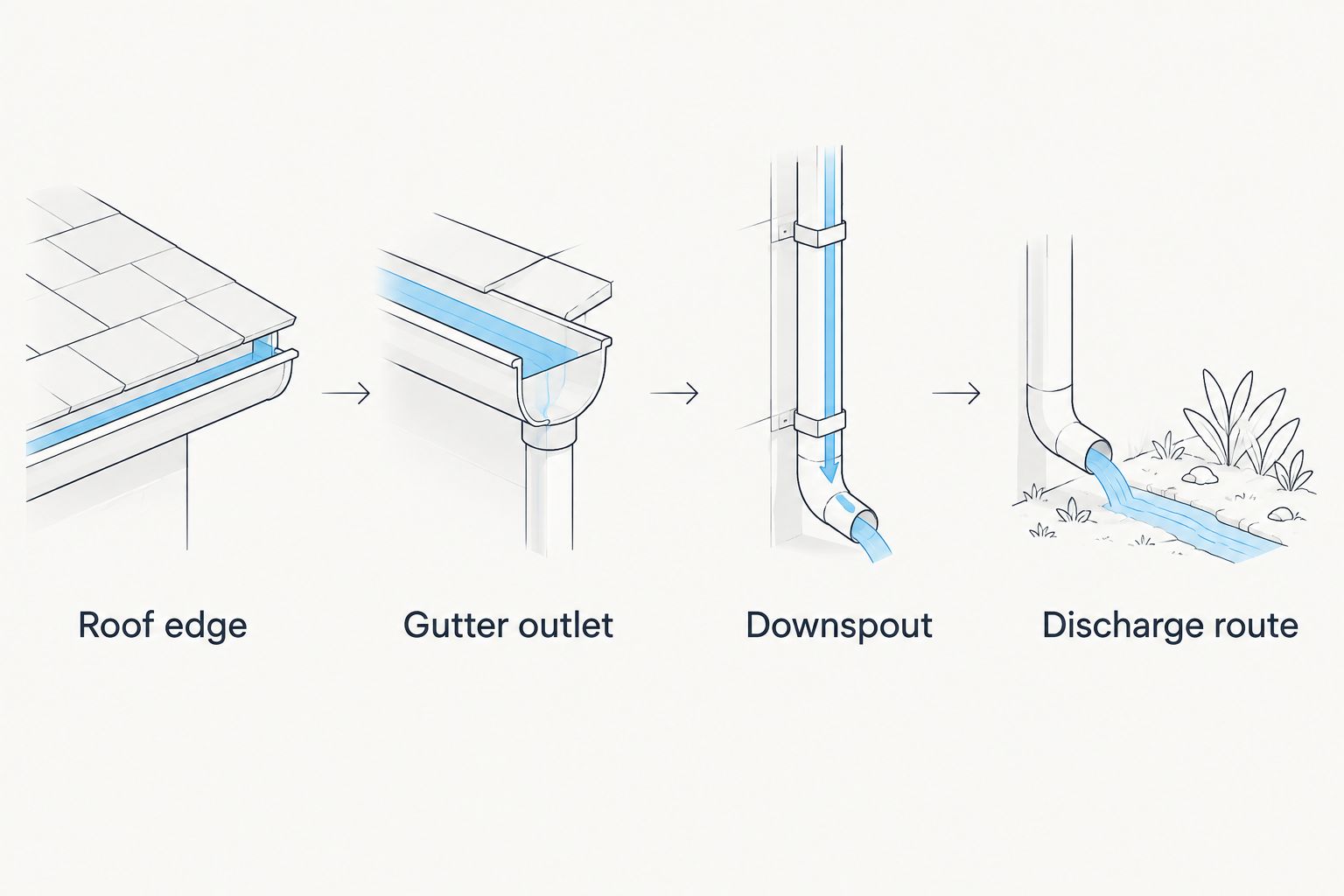
An extension does not solve drainage merely by being longer. Its endpoint still needs a suitable route, and buried pipe still needs a functioning outlet and maintenance access. Where terrain sends water back toward buildings, get a drainage assessment rather than adding pipe without a destination.
Do not assume roof runoff belongs in a septic area, neighboring property, livestock watering system, or storage tank. Each destination has separate practical or regulatory considerations.
- Roof edge: identify where runoff enters the collection system.
- Gutter outlet: keep the transition accessible for inspection.
- Downspout: position it away from doors and working clearances.
- Discharge route: check slope, erosion, traffic, and the final outlet.
Choose materials and construction for the actual exposure
Compare gutter material, joint arrangement, attachment method, and repair access together. Seamless gutters reduce joints along continuous runs, but corners, outlets, and end caps still need attention. Seamless does not mean joint-free or maintenance-free.
Ask how the proposed installation attaches to your particular roof edge. A home with fascia and an outbuilding with a different edge detail should not receive an identical fastening plan by default. Damaged supporting wood also needs attention before new gutters conceal it.
For your 2026 scope, separate material choice from drainage design. A different metal cannot correct an outlet placed on the wrong side of a doorway, and a heavier profile cannot compensate for an unsupported attachment.
- Identify the roof-edge condition before specifying attachments.
- Ask where joints and outlets will remain.
- Confirm compatibility between connected materials and fasteners.
- Request an explanation of repair access at corners and outlets.
- Keep cosmetic preferences separate from drainage requirements.
Match gutter guards to the debris you find
Collect a small sample of debris from accessible ground-level deposits or ask the cleaner to describe what was removed. Leaves, needles, seed material, and roof grit present different screening problems. Choose around the debris reaching the gutter, not a general promise about rural properties.
Gutter guards can reduce the amount of larger debris entering a gutter, but their surfaces and openings still need inspection. Screening also adds another surface where material can accumulate. Ask how the proposed guard is cleaned and how the gutter beneath it remains accessible.
Professional cleaning and a documented inspection routine remain valid options when guards do not suit the roof, debris, or access conditions. Do not buy guards to compensate for an existing drainage defect.
- Identify the debris rather than guessing from nearby trees.
- Ask how surface buildup is removed.
- Confirm access to gutter interiors and outlets.
- Check compatibility with the roof edge and existing gutters.
- Resolve overflow and discharge problems before adding screening.
Set a maintenance routine you can actually follow
Begin with a ground-level inspection and a written record of trouble spots. Use photographs from the same viewpoints so you can compare gutter alignment, staining, and ground erosion over time. Add observations after storms and visible debris accumulation rather than relying only on a calendar.
Professional cleaning is the practical path when height, terrain, roof configuration, or access makes homeowner work unsafe. Ask what the visit includes: debris removal, outlet checks, downspout checks, and identification of visible defects are separate tasks unless the scope groups them together.
Keep the maintenance plan with your installation documents. A rural property can have several buildings with different inspection needs, so a single reminder for the whole property is easy to misapply.
- Record each building and its known trouble spots.
- Inspect from the ground after noticeable overflow or debris buildup.
- Keep discharge outlets clear of vegetation and stored equipment.
- Photograph changes before requesting repairs.
- Confirm the cleaning scope before scheduling work.
Compare your gutter options
Choose the intervention that matches the fault. For 2026 planning, compare these options by what they address and what they leave unresolved; cleaning, repair, replacement, and guards are not interchangeable services.
| Option | Best for | Main advantage | Key limitation |
|---|---|---|---|
| Ground-level inspection | Owners documenting visible symptoms | Creates a useful problem record without roof access | Cannot confirm concealed blockages or attachment condition |
| Professional cleaning | Existing gutters obstructed by debris | Removes an immediate flow restriction | Does not correct poor sizing, damaged sections, or unsuitable discharge |
| Targeted repair | Localized leaks, loose sections, or damaged connections | Addresses a defined defect without replacing everything | Leaves unrelated design problems in place |
| Seamless gutter installation | Roof edges needing new collection runs | Reduces joints along continuous runs | Still requires sound attachments, outlets, and maintenance |
| Gutter guards | Properties with recurring debris entry | Screens debris according to the guard design | Adds surfaces to inspect and does not eliminate cleaning |
Fix the cause of overflow before adding accessories. A guard is not a substitute for an adequate outlet, and a replacement gutter is not a substitute for a workable discharge route. Ask each proposal to distinguish necessary corrections from optional additions.
Common mistakes rural property owners make
Treating every building like the residence
A barn, workshop, and house can have different roof geometry, edge construction, access, and drainage destinations. Give the contractor separate building notes. Do not assume a contractor serving homeowners also handles every agricultural or commercial structure; confirm the specific scope before scheduling.
Ending downspouts beside working areas
A convenient corner can be the wrong discharge point when it sits beside a gate, feed-storage entrance, or frequently used path. Walk the proposed route during normal property use. Check that extensions do not create obstructions or conflict with mowing and equipment movement.
Installing gutters before addressing the roof edge
Loose fascia, deteriorated supporting material, and unresolved roof-edge defects undermine the attachment plan. Ask which repairs must happen first and who handles them. New gutters should not hide a supporting surface that still needs work.
Assuming collection makes water suitable for use
Roof runoff is not automatically drinking water, livestock water, or irrigation water suited to every application. Roofing materials, contamination, storage, treatment, and local requirements affect the decision. Plan rainwater collection as a separate system rather than improvising a connection after gutter installation.
FAQ
What are the best gutters for a rural Texas property?
The best gutters match the contributing roof area, roof-edge construction, debris exposure, and discharge route. Choose the layout and maintenance plan before treating any material or nominal size as the default.
Do I need 6-inch gutters on a ranch house?
A ranch house does not automatically need 6-inch gutters. Roof area, concentrated runoff, local design rainfall, gutter profile, and outlet arrangement determine the appropriate design.
Are seamless gutters completely leak-free?
Seamless gutters are not completely leak-free. They reduce joints along continuous runs, but corners, end caps, outlets, and attachments still need correct installation and inspection.
Are gutter guards worth considering on a rural property?
Gutter guards are worth considering when recurring debris entry is the problem you need to address. Match the guard to the debris and confirm cleaning access; guards do not correct poor drainage design.
Can I send barn gutter water into a rainwater tank?
A tank connection requires a separate rainwater-collection plan. Confirm roof suitability, screening, storage, overflow routing, intended use, and applicable local requirements before connecting the gutter system.
How do I tell whether my gutters need cleaning or replacement?
Cleaning addresses debris obstruction, while replacement addresses a system that needs new collection runs or a different design. Start by documenting where water escapes, then request an inspection that separates blockages from damage and layout problems.
Does Atxseamlessgutters serve every rural property in Texas?
Atxseamlessgutters serves homeowners across Central Texas, not a stated statewide service area. Confirm your address and building type before requesting seamless gutter installation, repairs, cleaning, or maintenance.
One last thing
Choose the downspout destination before choosing the downspout corner. Stand at the proposed outlet and follow the ground away from the building. A dry-weather walkthrough often reveals a gate, tire path, low spot, or neighboring structure that a roof-only discussion misses.
Before signing your 2026 scope, ask for one marked-up photograph showing each downspout and its discharge route. It makes disagreements about placement easier to resolve before installation, when moving a line on a photograph is simpler than relocating installed components.